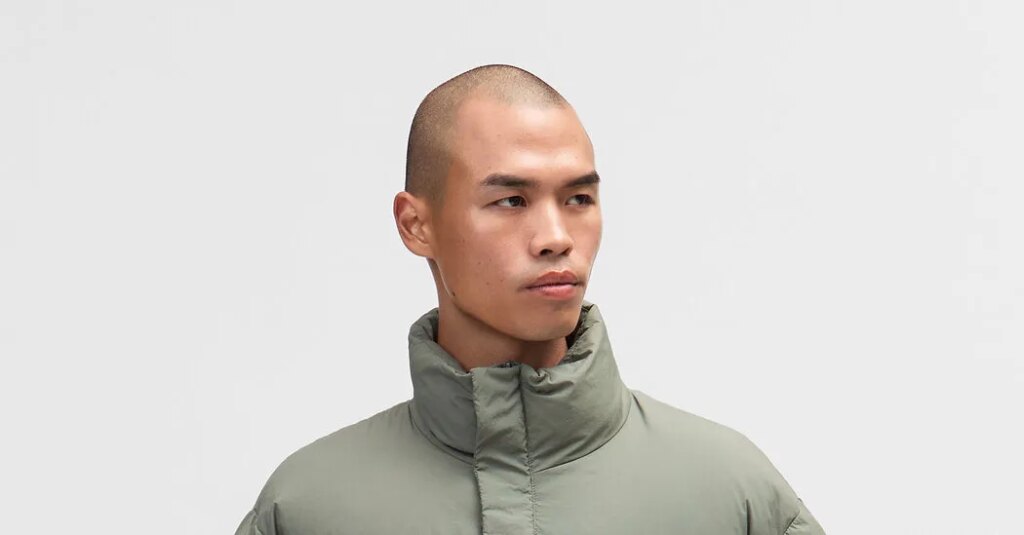
The designer Reese Cooper was sitting on his couch at home in Los Angeles on Monday, browsing Ssense, the luxury fashion retailer, when he noticed something off about his designs on the site.
In one image, details on a puffer coat for his brand RCOS, or Reese Cooper Outdoor Supply, looked almost cartoonlike to him. A hook on the chest of the coat appeared much bigger than it was in real life.
“To me that hook is like our logo,” Cooper said.
Wanting to set the record straight, he began posting on his Instagram page, pointing out the discrepancies to his followers. “So Ssense is all A.I. now?” he wrote in one of his posts.
A spokeswoman for Ssense, which filed for bankruptcy protection last year and has been struggling under President Trump’s tariffs, said the company, which is based in Montreal, laid off employees over the summer in its visuals department.
Some photos that appear on its site are the result of its “virtual try-on” technology, the spokeswoman said. The spokeswoman wouldn’t answer questions about whether the technology relied on artificial intelligence.
But the virtual try-on industry is largely fueled by A.I., according to Daina Burnes, the chief executive and co-founder of Bold Metrics, an A.I. company that helps build try-on tools for other companies.
Burnes said Bold Metrics typically uses a “machine-learning A.I. system” that takes a series of survey questions and generates detailed body measurements to create a person’s “digital twin” wearing the clothes.
Burnes said there had been “so much progress” made with this technology. But some designers fear that online retailers using it will misrepresent the garments they spent years making.
Ssense reached out to Cooper and took the listings down, he said, but he worried his potential customers would be left with the wrong impression.
He wasn’t the only one who noticed something odd about Ssense this week.
Sage Toda-Nation, the British designer behind Sage Nation, also accused Ssense of depicting a flawed image of a pair of trousers from his brand. In the Ssense listing, which is no longer available on the retailer’s website, he said the trousers were less voluminous and appeared more cropped than the original garment.
“As a brand we’re very focused on fit and silhouette,” he said. “So when that’s not reflected, you can tell straight away.”
Toda-Nation said he was used to seeing unflattering depictions of his clothing on other retailer’s websites, where garments are “not shot the way you want it to be” — not necessarily because of A.I. The retailers purchase the stock, and “it’s up to them what they want to do.”
In a statement to The New York Times, Ssense said that “some recent e-commerce imagery did not meet” its standards but declined to share the cause of the issues.
Ssense was founded in Montreal in 2003 by the brothers Rami, Bassel and Firas Atallah and is known as a purveyor of trendy clothing and accessories by independent designers like Simone Rocha and Rick Owens.
Selling clothes wholesale with Ssense has been an aspiration for many designers, including Toda-Nation, who described the retailer as being “at the forefront of e-commerce.”
Ssense has stood out because it placed small, independent brands alongside luxury behemoths, he said. “And they were all shot in the exact same way, with the same kind of level of detail and the same level of models,” he added.
Ssense, though, has not been immune to the pressures facing other online luxury retailers and department stores, and has, over the years, struggled with falling sales.
As fashion has cozied up to big tech, it has caused occasional discord. Some influencers have accepted gifts and invitations to events sponsored by Meta and OpenAI, as those companies extend their reach into the fashion world.
But many industry figures remain staunchly against A.I., arguing that fashion, as a creative field, thrives on original ideas. That debate is also spilling over to shoppers, some of whom are vocal online whenever A.I. technology appears to tread on fashion.
Still, the industry is far from reaching a consensus.
Toda-Nation said he was not against A.I. and saw potential for the technology to speed up internal processes that could be helpful for small brands. When it comes to online images of clothes, though, he maintains that “there’s still an art form to making clothes look good.”
Cooper pointed out that this is the primary way most customers will encounter a brand’s designs.
“We’re not selling anything that people need,” Cooper said. “You have to make people want something.”
E-commerce photography “is the touch point, at the end of the day,” he added. “A photo on a website is the same as you feeling the sleeve of this jacket while you’re browsing.”
The post Can You Trust the Clothes You See Online? appeared first on New York Times.