Germany and the European Union are advancing a global initiative to tackle the world’s most potent greenhouse gas, after warnings that temperature increases can no longer be prevented from crossing a crucial threshold.
Sulfur hexafluoride, or SF6, traps about 24,000 times more heat than carbon dioxide over its first 100 years in the atmosphere and is used extensively in electricity grid infrastructure. The damaging gas is of increasing concern as nations seek to build out networks to meet rising demand for power, and climate advocates promote electrification of transportation and heavy industry.
The pledge announced Thursday, which has the backing of the U.K., France and Nigeria, among others, aims to use switchgear free of SF6, where possible, and stop leaks in infrastructure.
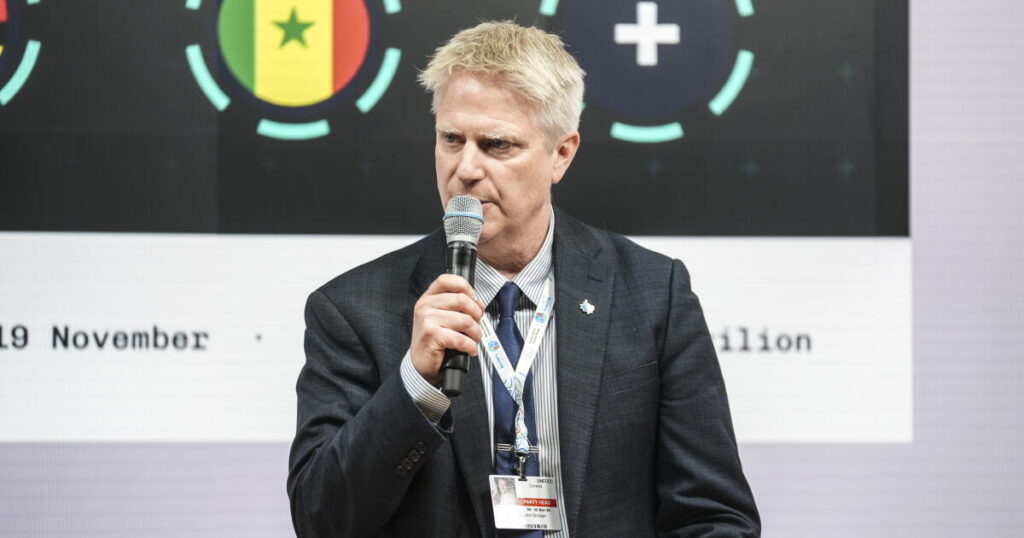
“We must together do everything we can to stop any rise in highly warming SF6 emissions as we roll out more electrical switchgear,” Wopke Hoekstra, the EU’s climate commissioner, said Thursday at the United Nations COP31 climate summit. “We do have a window of opportunity.”
Curbing superpollutants such as SF6 and methane has become a priority to deliver more immediate gains in the fight against global warming, particularly after the U.N. warned that the world would now inevitably miss the Paris Agreement goal to limit temperature increases to 1.5 degrees Celsius (2.7 degrees Fahrenheit). Immediate action to curb emissions is needed, the U.N. said in a report last month.
German Environment Minister Carsten Schneider met Thursday with Li Gao, head of China’s delegation at COP31 to invite the nation to also back the initiative. “China is very important to the growing grid,” Schneider said. “It would be great to have them on.”
Emissions of the gas in China nearly doubled in the decade ending in 2021, when the country accounted for an estimated 57% of the global total, according to a study published in Nature Communications.
China pledged to tackle SF6 emissions in a five-year plan released in July, and at the COP31 talks, both Environment Ministry officials and State Grid Corp. of China executives have outlined efforts to capture and recycle the gas, and to substitute switchgear. State Grid had deployed 9,000 switchgear units using a mix of SF6 and nitrogen to lower emissions as of last year, according to the power utility.
Ainger writes for Bloomberg. Lili Pike of Bloomberg contributed to this report.
The post The world’s worst climate change gas is hiding in power lines. Nations take aim appeared first on Los Angeles Times.