This is an edition of Time-Travel Thursdays, a journey through The Atlantic’s archives to contextualize the present. Sign up here.
The most cherished recipes are usually the hardest to follow. They live on stained index cards and notes worn thin at the creases, in handwriting so faded you have to squint to read it. That handwriting belongs to a grandmother or a distant relative, and it was meant for someone who already knew the dish: Add a pinch of this, a teacup of that; bake until done.
I’ve spent a lot of time in The Atlantic’s archives, and I kept running into such recipes tucked into letters, essays, and memoirs, rarely where you’d expect them. I was curious to know whether they still work—and, more important, how they taste. The further back I went, the less my finds looked like recipes. They read like stories, and you had to read closely to find the instructions.
Take this “Letter to a Young Housekeeper,” from November 1865, written by C. P. Hawes to “M.,” a bride newly married to “H.” Hawes spends most of the letter arguing that cooking is a fine art and a science, which the woman of the house should learn for herself. She is funny about it, and a little grand. Recalling one early success at the table, Hawes reaches for Henry David Thoreau, whose essays had recently run in this magazine, to describe the dishes: “We ate, lingered, and revelled in them, thus becoming epicures at once … They were as great a revelation to the palate as Bettine or Thoreau might be to the mind.”
Only at the very end does she mention a “well-tested” recipe for bread: a quart of milk, a teacup of “hopyeast,” and enough flour “to make it quite stiff.” How much flour? How hot an oven? And how long does it bake for? Hawes doesn’t say.
For much of history, recipes moved from one cook to another by word of mouth and by experience: watching a mother at the stove, having a neighbor ask for a missing ingredient. Cookbooks didn’t exist simply because, for centuries, most women couldn’t read, Sarah Lohman, a culinary historian, told me. As literacy spread in the 18th century, women began keeping handwritten notes of family recipes to pass down or to copy for a daughter when she was married. Those recipes were light on instructions by design. They expected you to rely on your instincts “to know when the batter looks right or to know when the cake is done,” Lohman said.
By the early 20th century, written recipes had become something to amass, and cookbooks were treated as literature. “It was with something of a shock that I woke one morning and found myself a collector of cookery books,” the American writer Elizabeth Robins Pennell wrote in The Atlantic in 1901. What she prized most were the traces that earlier owners of the books left behind.
Her copy of The Queen-Like Closet, a 17th-century cookbook by Hannah Woolley, had several owners before it reached her—one of whom was a young woman named Mary Halfpenny, who had received it as a gift in 1678 and went on to add her own recipes to its pages. A century later, another family used it as their “Bible,” recording their children’s births in the margins. Pennell loved those scribbles: “They add a distinctly personal charm to the shabby little old cookery book.” And sometimes, the actual Bible held recipes too. In 1910, a writer in this magazine’s Contributors’ Club described the family Bible as a place where you might find anything tucked between the pages, from a father’s old report cards “to mother’s recipe for sponge-cake.”
But around midcentury, the American recipe changed shape, in part due to technology. I asked Lohman why some of the 19th-century recipes I’d baked didn’t call for butter or eggs. Before the advent of the refrigerator, Lohman explained, these ingredients were seasonal: Cows give milk after calving, from late winter into summer, and hens tend to take a break from laying in winter. Sure enough, the 19th-century recipes missing those ingredients were fall and winter dishes. By the mid-1950s, the majority of American homes had a refrigerator.
As kitchens changed, recipes changed with them: more exact, more complete, easier for a stranger to follow. But the story behind the food has never quite gone away. Even as recipes grew more precise and the ingredients in them stopped shifting with the seasons, the people who wrote them kept reaching for memories. In 1985, Corby Kummer, then an editor at The Atlantic, began an essay on pie not with flour or butter but with a tale about his mother’s pie crust, an unforgettable taste that “has driven me to pursue the elusive art of making pastry.”
And as recipes moved online, the stories came with them. Food blogs, and later videos, wrapped their instructions in anecdotes; anyone who has looked up a recipe on their phone knows the feeling of scrolling past several paragraphs of backstory before the ingredient list appears. Some of that is less sentimental than it seems (long blocks of text help a recipe rank higher in search results and make more room for ads). Still, it is telling that when food writers have space to fill, they fill it with stories.
I have been baking since I was a child, learning from my mother and grandmothers and from recipes handed down for generations. I was curious whether the recipes I found from over the decades still hold up today. So I baked my way through the archives, beginning with Hawes’s 1865 biscuits and ending on a batch of brownies from 2010. Where an ingredient or instruction was missing, I filled in what I thought each recipe left out and made my best guess about certain directions (what it means to age in a tin, or to roll to “exactly the right thickness”). The recipes below are adapted from the originals, based on my own testing (I’ve indicated any discrepancies with the original recipes by adding “modified” to the ingredients list). Here’s what happened—and my honest assessment of how it all tasted.
Biscuits, 1865
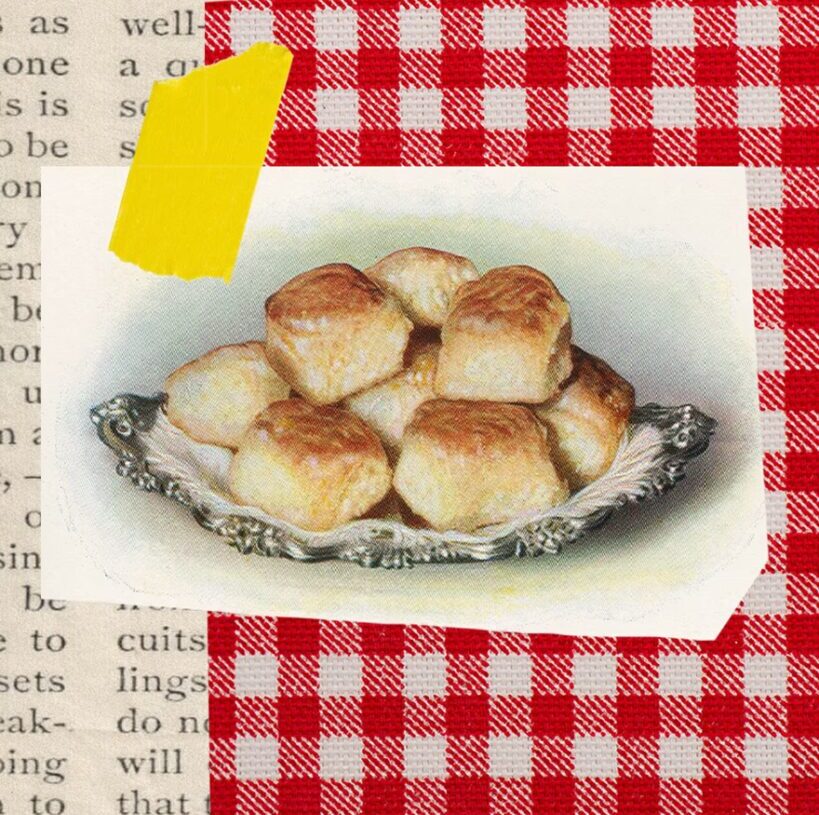
In C. P. Hawes’s Atlantic story, she promises her dough will make “two small loaves and a half-dozen biscuits.” What came out of my oven were plain dinner rolls, and only about a dozen (there was no dough left for the loaves). Today’s biscuits are made with butter; Hawes’s dough is mostly milk, flour, and yeast. And not the yeast we buy now. Home bakers used to make their own, often by brewing it with hops. Hawes calls for a teacup of this so-called hop yeast—I used a packet of active dry yeast instead.
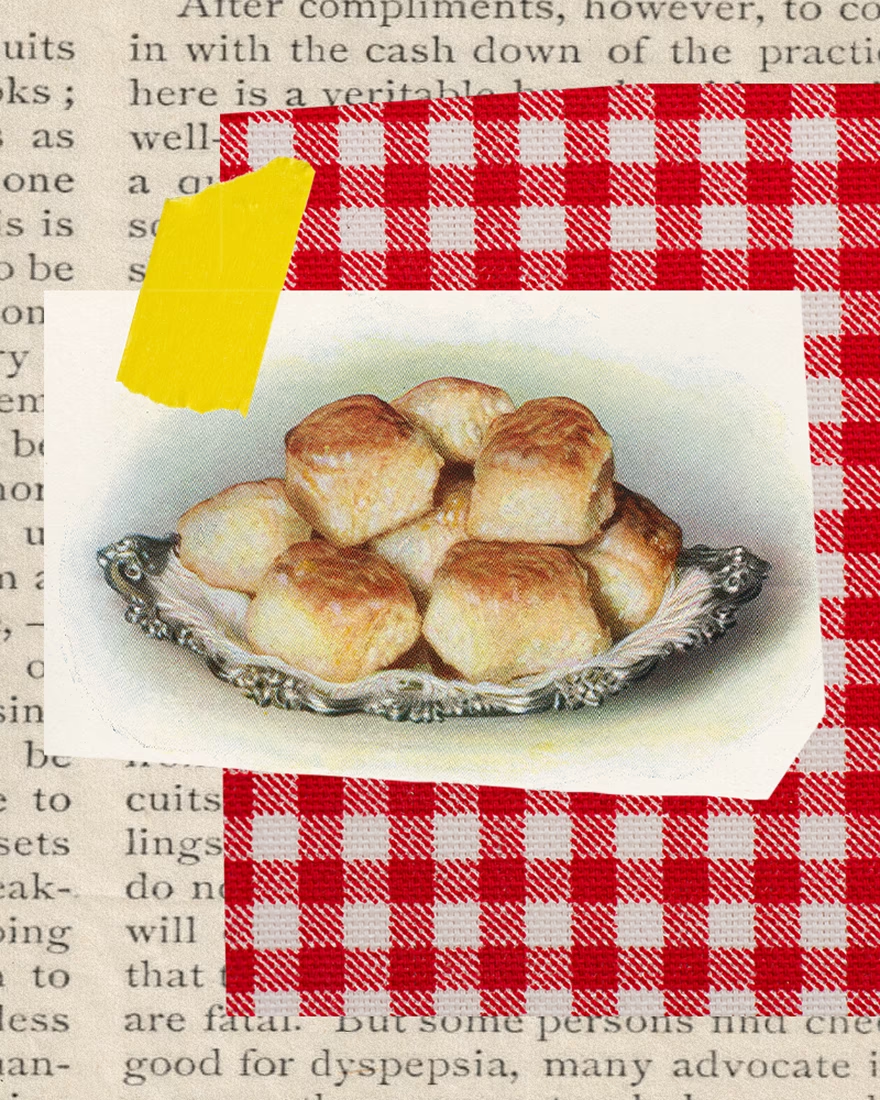
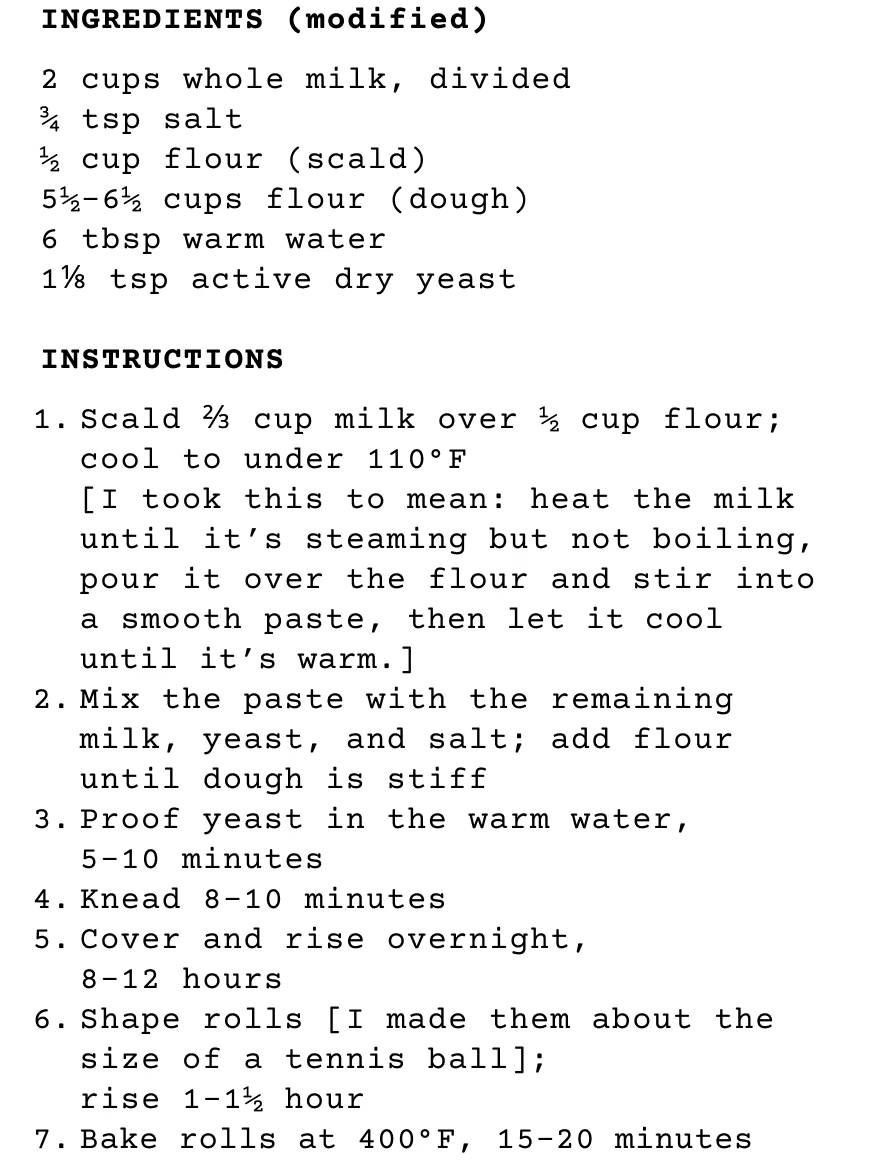
The result: a simple bread roll with a slightly floury taste. Not quite a Thoreau-level revelation. But if you want a very simple dinner roll for the table, this is the recipe for you. (And if you’re after a tall, fluffy biscuit, Amanda Mull cracked the code in 2018.)
Apple Dowdy, 1936
The cook and writer Della T. Lutes, whose Atlantic essays became part of her award-winning 1936 book, The Country Kitchen, calls her Apple Dowdy “a homely dish,” and she wasn’t being modest. A cross between an apple pie and an apple cobbler, mine came out of the oven looking exactly as advertised. At first, I wondered whether the Dowdy came before the pie, but not quite: Sarah Lohman told me that by the end of the 18th century, pies were “pretty much how they are today.” The pandowdy is just a less fussy way to get to a similar place.
Lutes gives no quantities at all—she just writes that the dish needs a deep bed of sliced, spiced, buttered apples under a thick crust, baked “at least an hour, very slowly.”
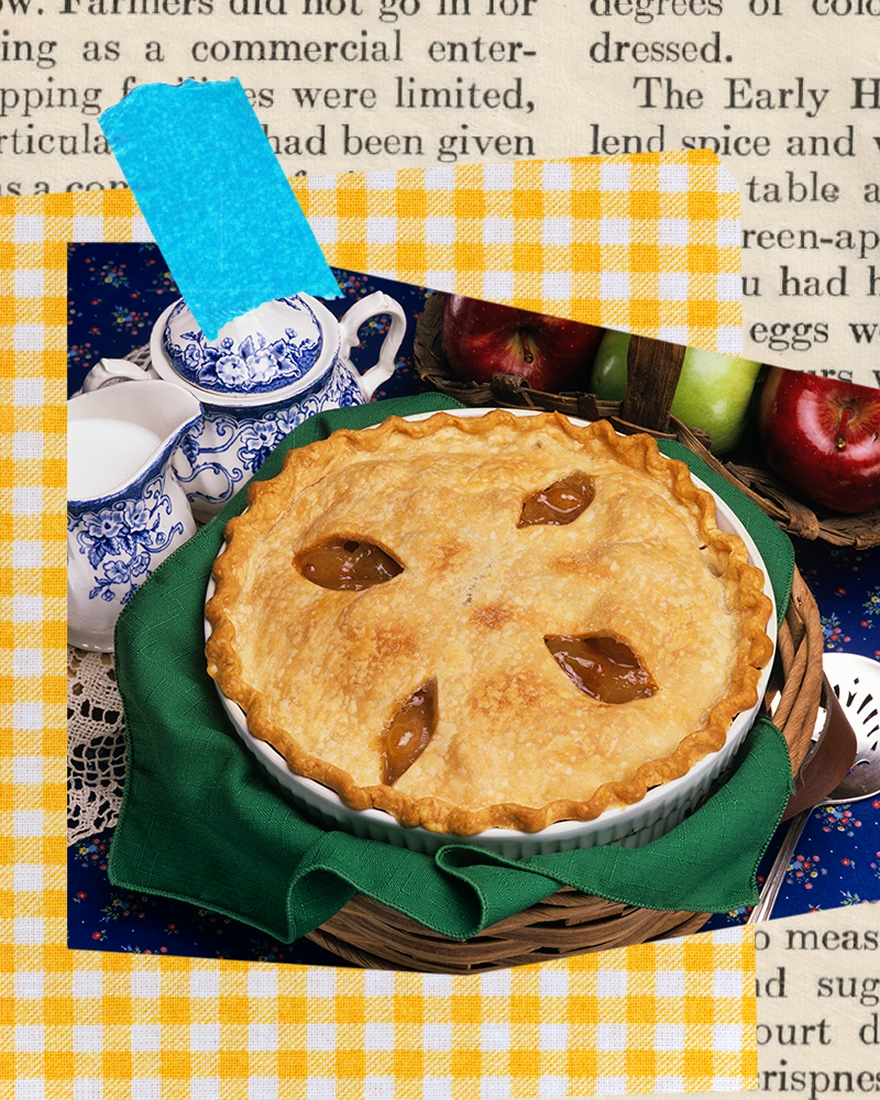
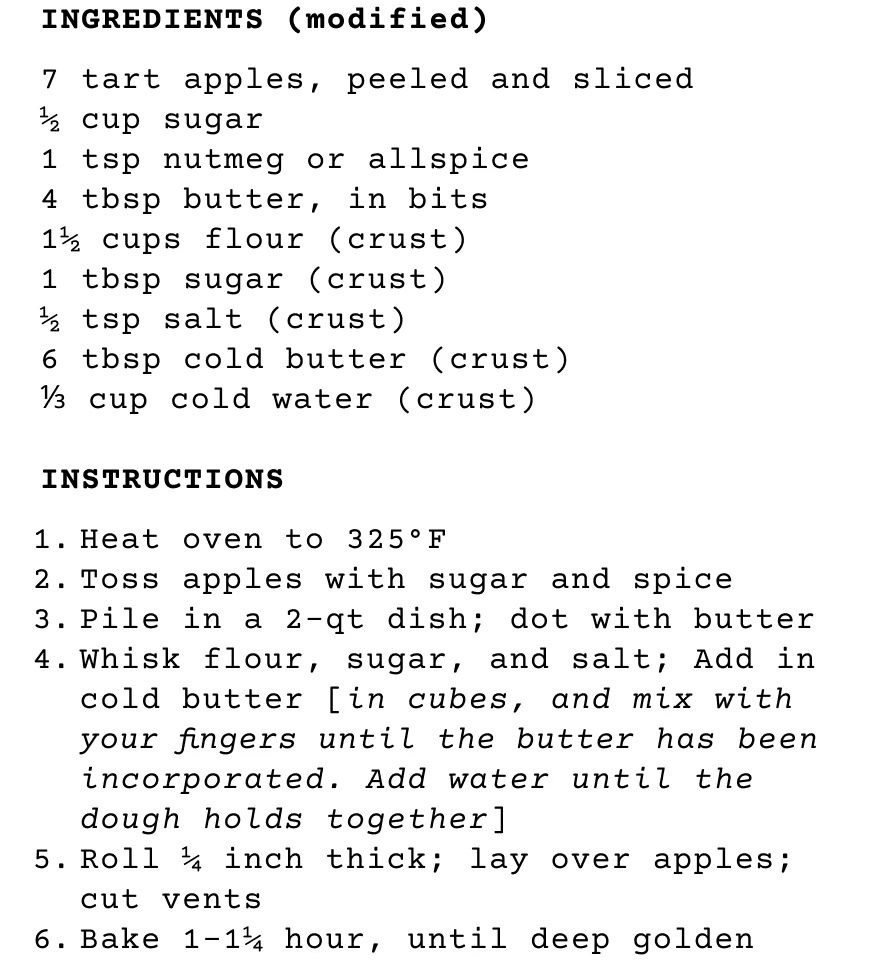
The result: a slightly watery dessert that isn’t the prettiest, but tastes decent. The consistency of the filling needed improvement, and it also could have used more flavor (I’d recommend going heavier on the spice).
Lebkuchen, 1949
In 1949, the cookbook author Virginia Pasley described a holiday tradition that began with a search. Her mother “tried recipe after recipe” for Lebkuchen, a spiced German honey cookie, “like Mother used to make.” The Lebkuchen that finally passed the test came from Mrs. Schmidt next door. The writer and her siblings, who wanted to help, were allowed only to sliver the almonds and cut up the citron. Now I understand why. The recipe calls for so much honey that it ended up all over my kitchen, and stirring the stiff dough with 9(!) cups of flour was an arm workout.
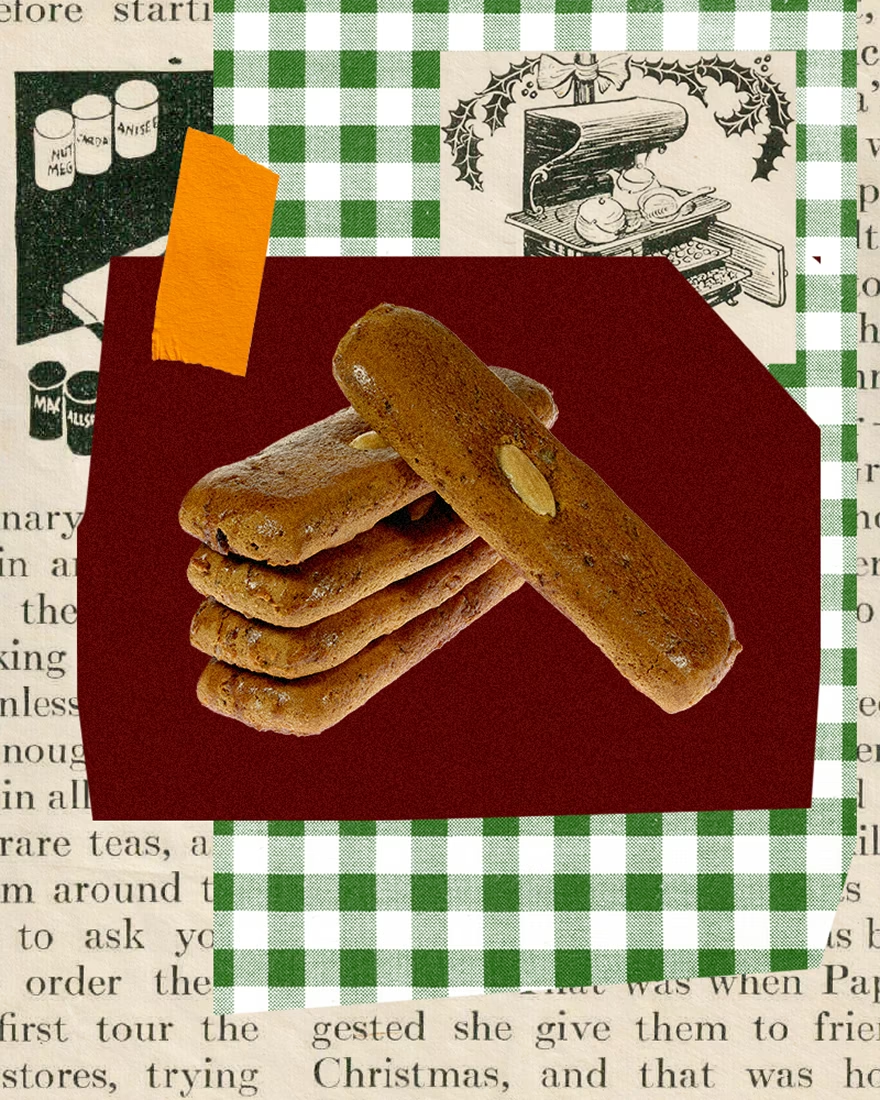
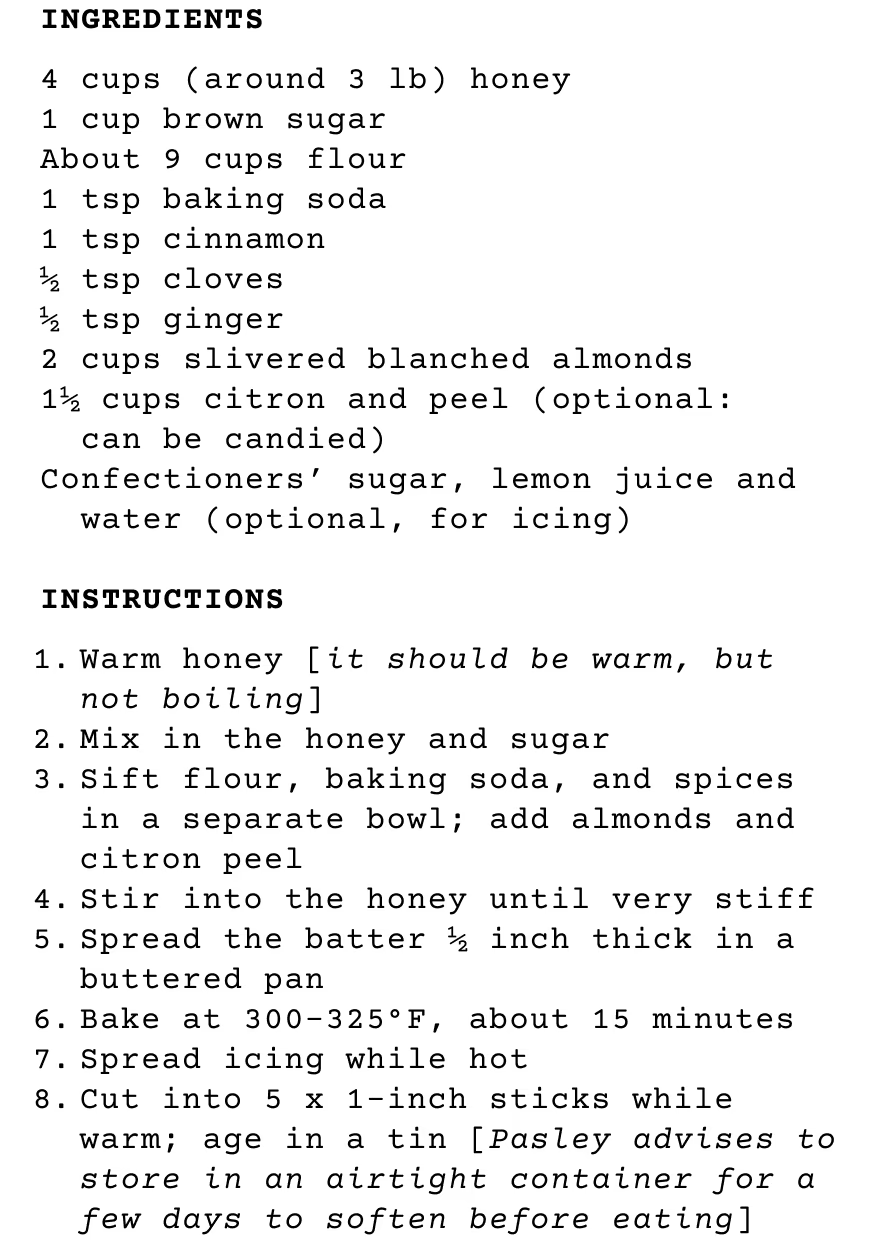
The result: this one was divisive among my taste-testers. The Lebkuchen is dense and very chewy, a workout for your jaw too. But if you like something not too sweet or soft to dunk in tea, this could be your cookie.
Apple pie, 1985 and 2009
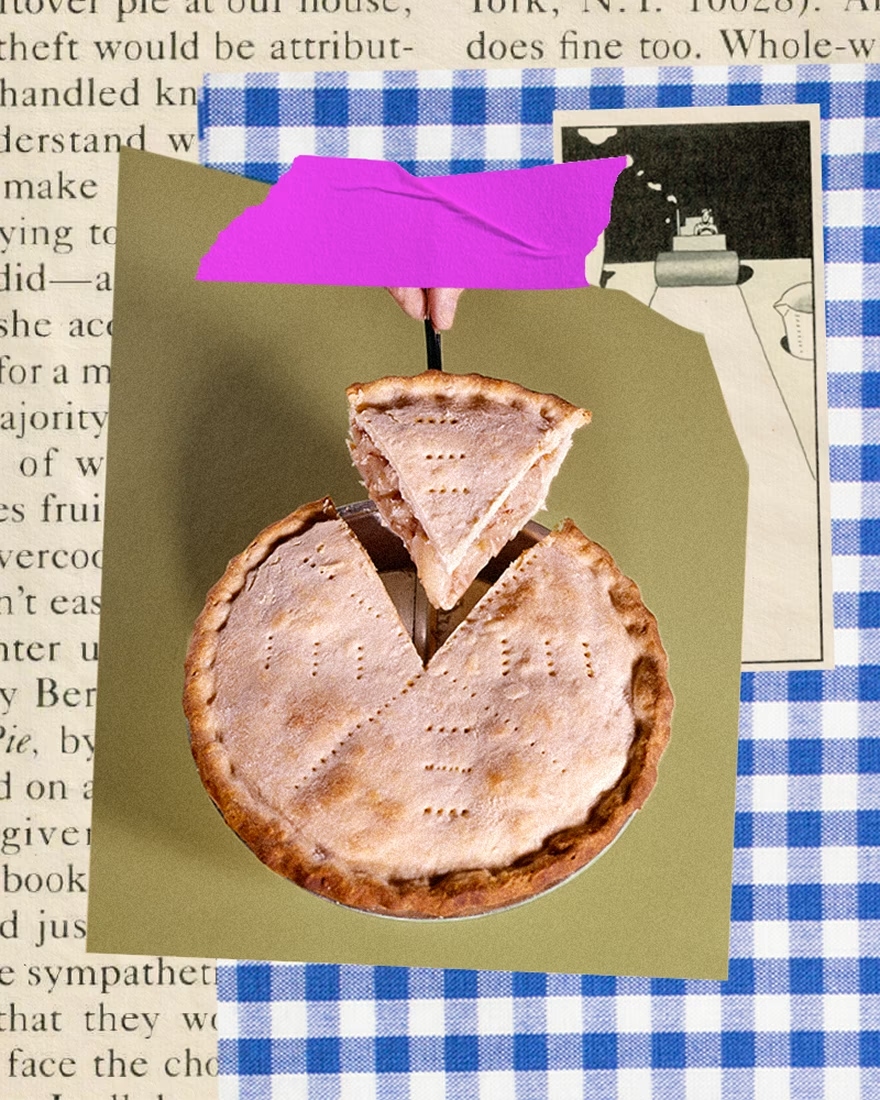
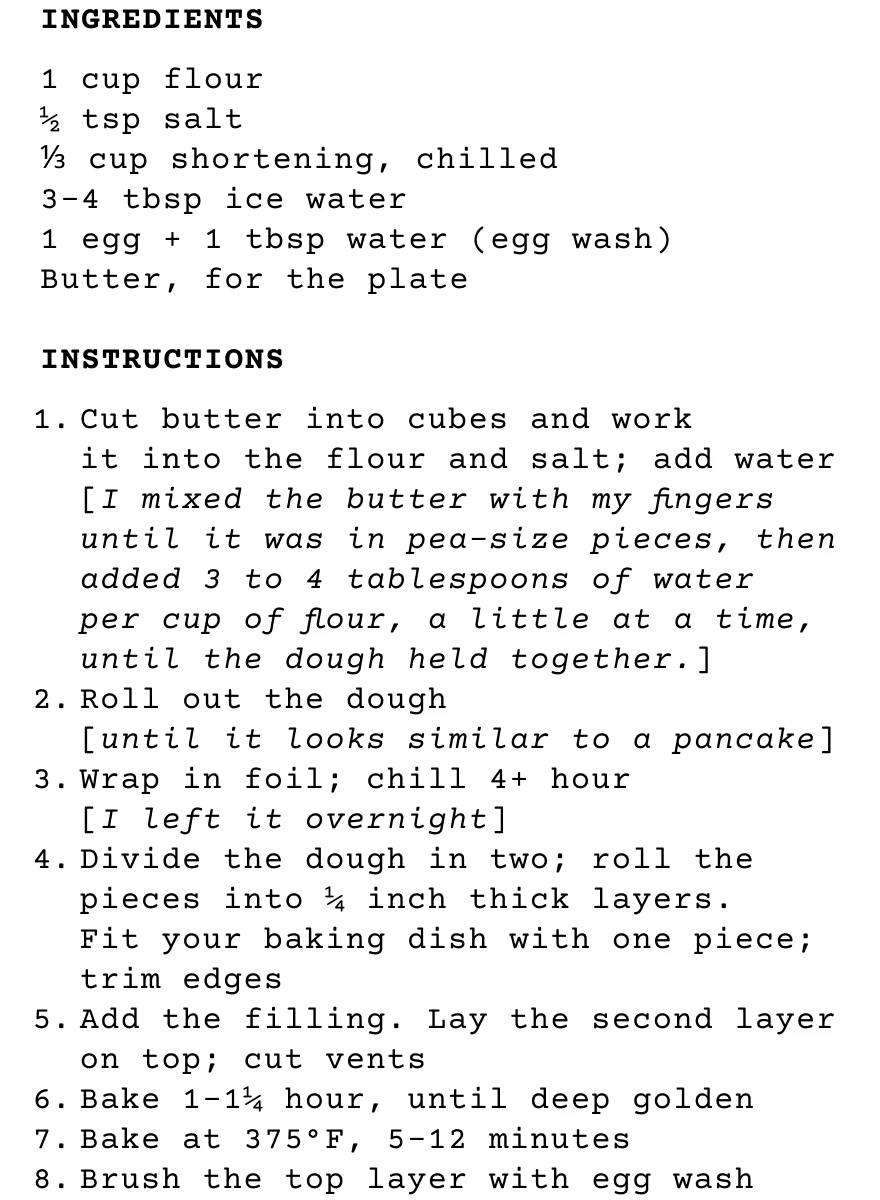
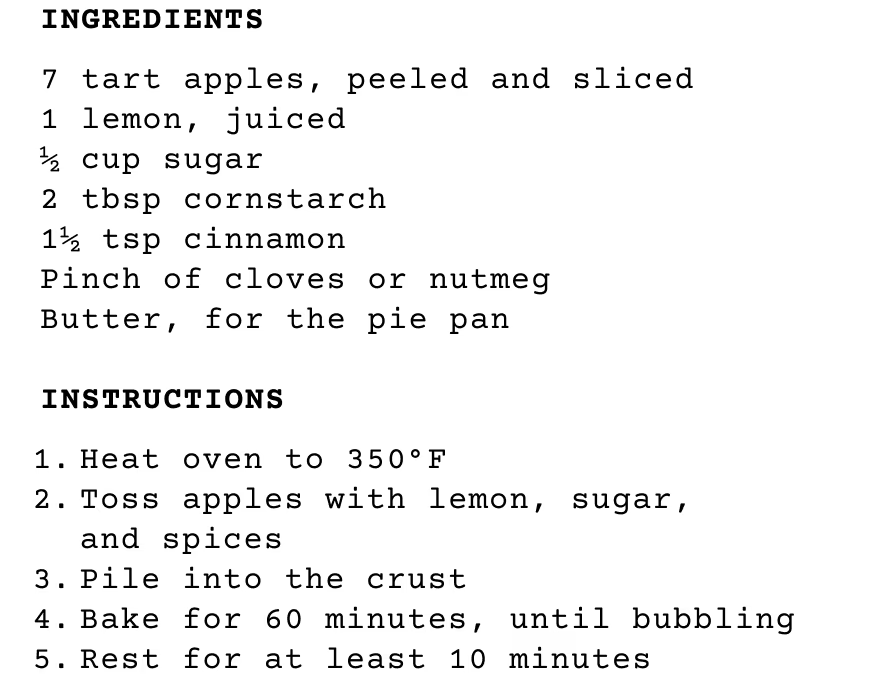
For this one, I paired two recipes from two eras. The crust comes from Corby Kummer, who opens his 1985 essay dismissing store-bought crust as tasting “like the box it came in.” His own recipe is the opposite: flaky, rich, and well worth the effort. The filling is from Ezekiel Emanuel’s 2009 apple-crisp recipe, which was helpful enough to provide me with a list of ingredients, a pan size, and the oven temperature.
Pie crust
Apple crisp filling
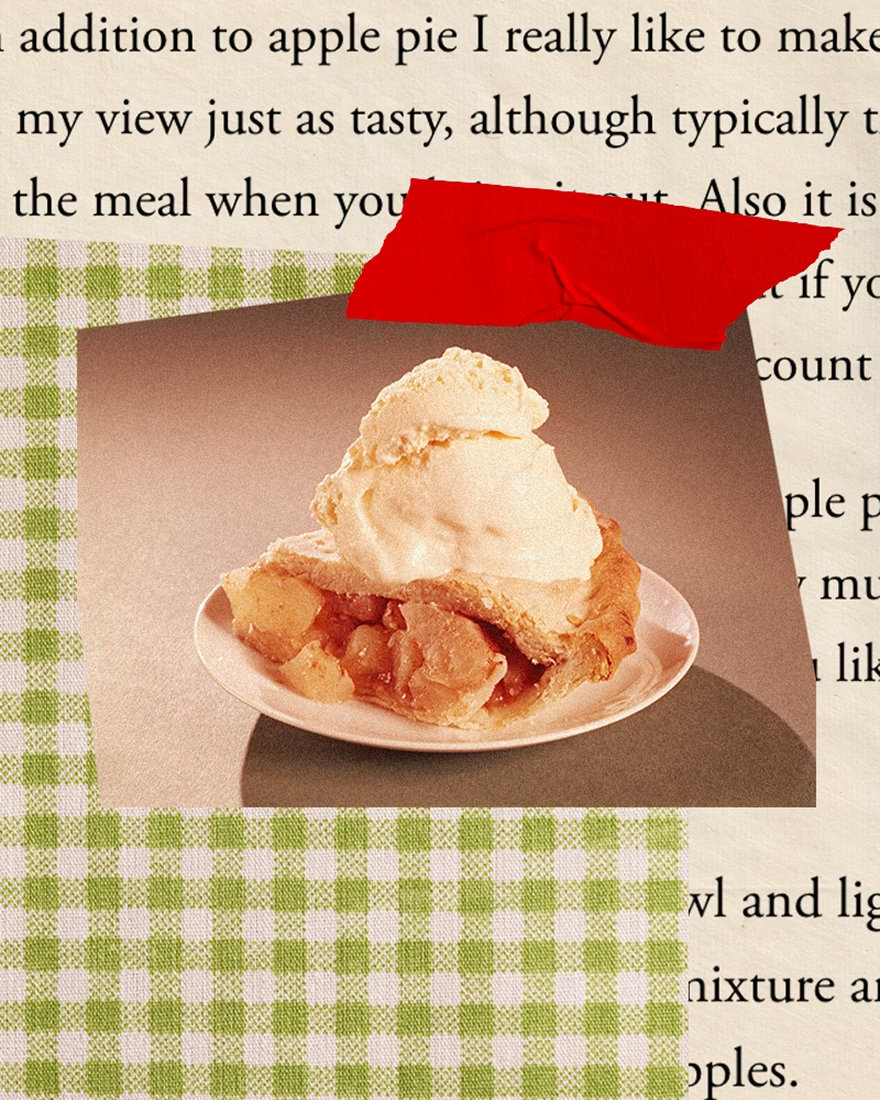
The result: Kummer’s crust was so good that it stood out to the people who tried it. (Store-bought just doesn’t compare to his recipe.) The filling was a big step up from Lutes’s Dowdy. Emanuel himself says his filling is “almost identical to the one for apple pie,” and that’s how it tasted: like a solid, classic apple pie. Overall, a satisfying combination of recipes.
Brownies, 2010
The newest recipe on my list comes from my colleague Eleanor Barkhorn, a senior editor at The Atlantic. It was part of a weekly series she wrote while training for a marathon. Unlike the older recipes, it leaves almost nothing to the imagination: There are eight ingredients and exact measurements. When I reached out to Eleanor, she had a few updates to the instructions: She sometimes ups the chocolate to 10 ounces, and she no longer recommends the mixer, because it can overmix the batter. Instead, she said it’s better to sift the flour onto the batter and then fold it in carefully with a spatula.
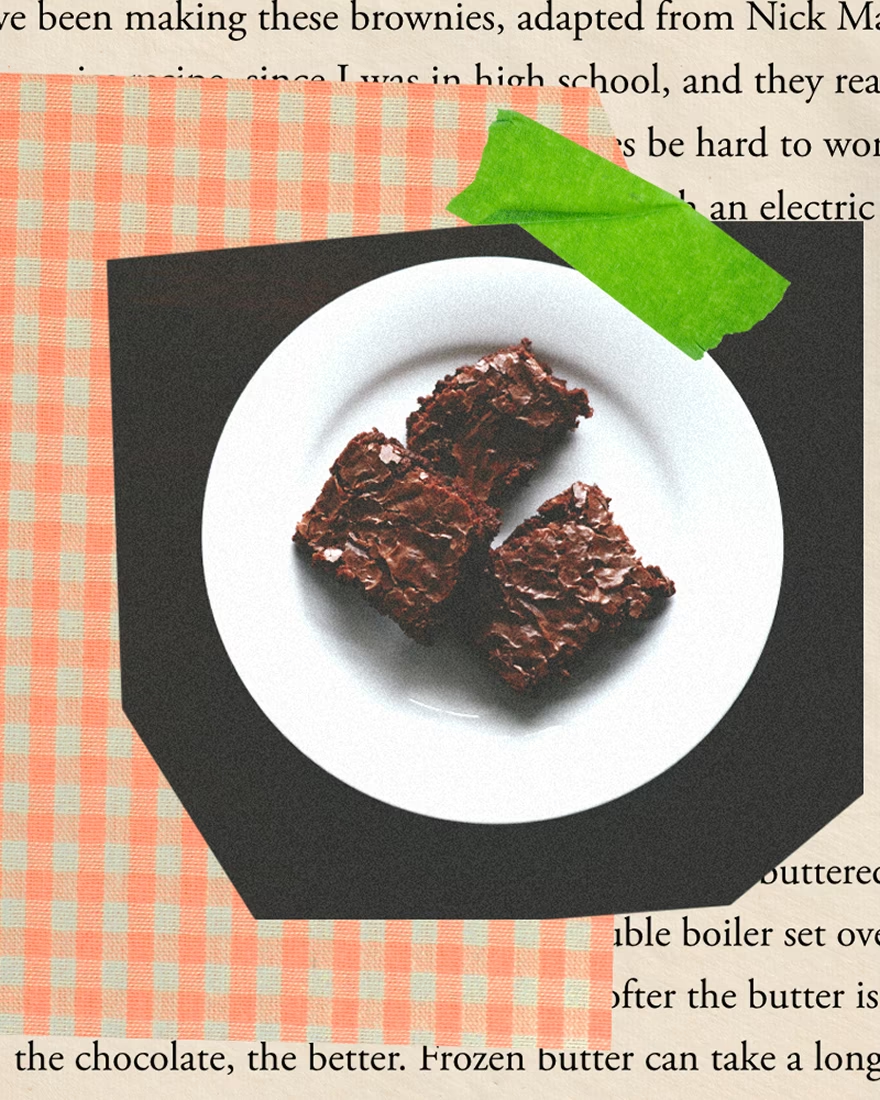
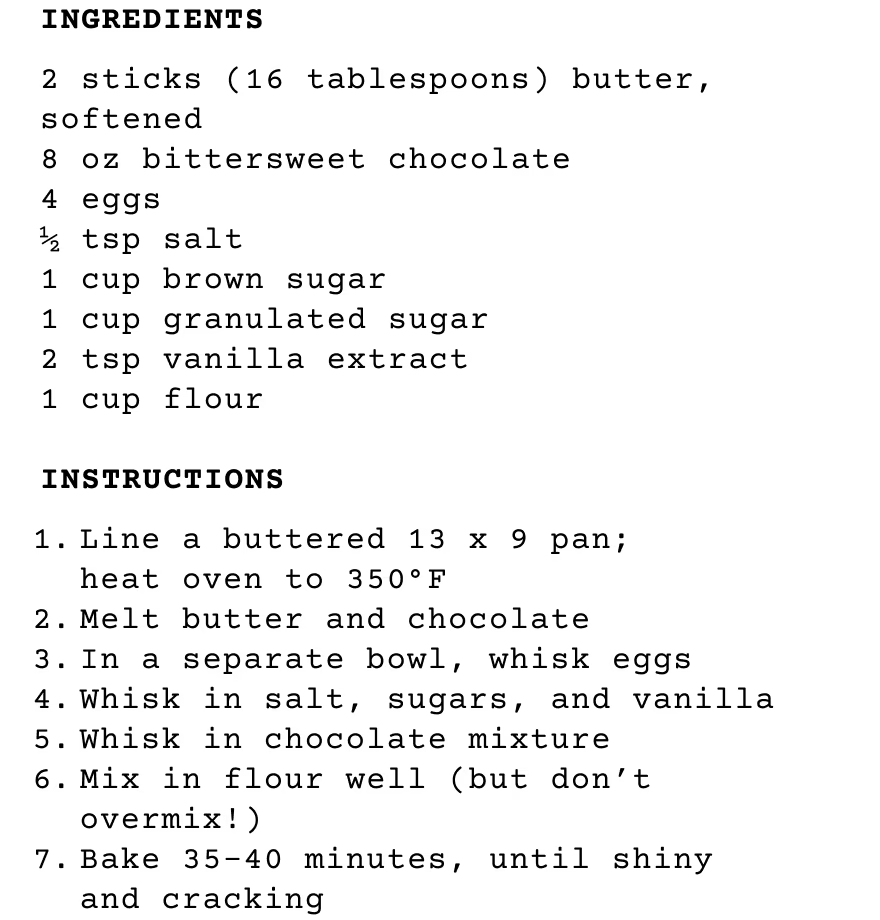
The result: very good brownies with a perfect texture that were not hard to make. They were a favorite with my tasters. Definitely worth baking a batch.
PS
Family recipes are still finding their way into the pages of The Atlantic. For the December issue, Danyel Smith wrote about her Aunt Louise’s famous mac and cheese and the unexpected ingredient that set it apart. Does your family have a recipe like that, with a secret, a story, and one person who makes it best? I’d love to hear about it. Let us know in the comments. (We may share your answer, including your first name and last initial, age, and/or location, with fellow readers in a future edition of this newsletter or on our website or social-media platforms.)
— Rafaela
The post I Baked My Way Through The Atlantic’s Archives appeared first on The Atlantic.