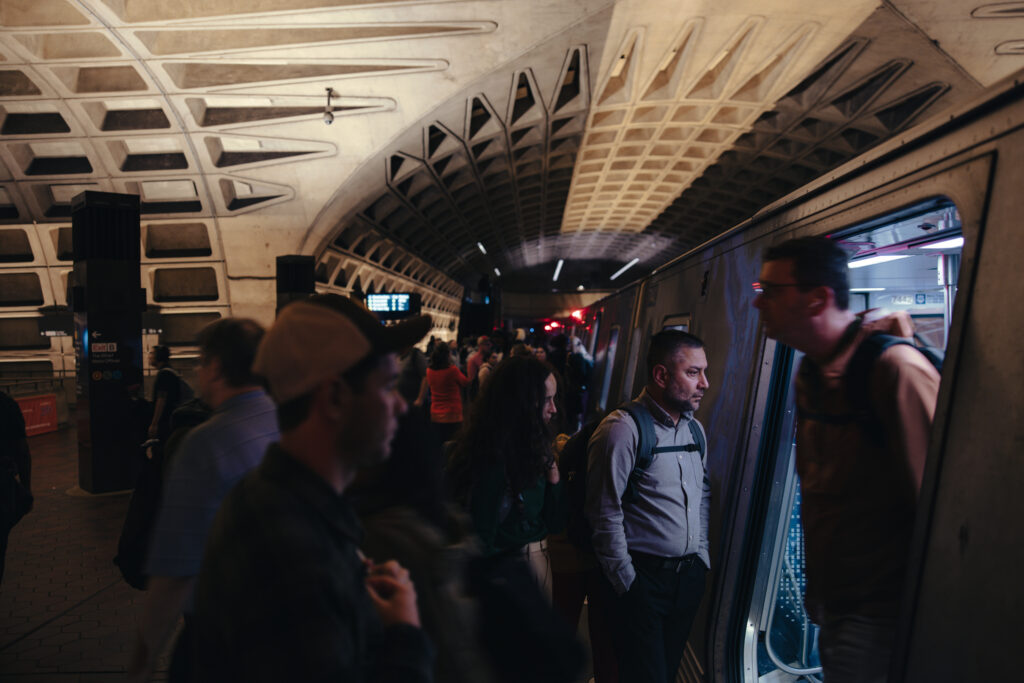
To help close a more than $130 million funding gap, the Washington Metropolitan Area Transit Authority is considering significant service cuts and higher fare hikes than previously proposed.
Among the cuts under consideration: eliminating or reducing the frequency of some bus routes, halting 24-hour service on 17 bus routes and adjusting weekend hours for rail, according to Metro documents outlining the proposals.
Metro said it’s approaching a “fiscal cliff” because of an up to $132 million budget gap for fiscal 2028.
“Metro is running well right now, but it’s a good feeling that’s fragile,” WMATA board member Tracy Loh said at a meeting Thursday. “I’m hearing the staff sounding the alarm, and we can’t say we didn’t know.”
Being strapped for cash is a perennial predicament for the transit system, which doesn’t have a consistent budget and instead relies every year on asking the District, Maryland and Virginia for funding.
Still, this year’s problem isn’t as bad as the one in 2024, when Metro described a $750 million budget gap as tantamount to a “death spiral.”
To address the current shortfall, Metro is also considering reducing weekday and weekend rail services. The proposed bus and rail service cuts would save up to $40 million.
“These are major reductions. Customers would experience longer waits,” Tom Webster, Metro’s planning chief, said at the board meeting.
Operating efficiencies, such as overtime management and modernizing Metro’s paratransit call center, could reduce the budget gap by about $15 million, according to the documents.
In October, Metro said it was considering a roughly 11 percent, inflation-based fare increase, which would bring standard bus fares to $2.50 while raising rail fares to between $2.50 and $7.50 depending on the length of the trip.
But now Metro is weighing an increase of up to 22 percent, which would increase fares to between $2.75 and $8.25. Those hikes would generate about $85 million, Metro said, compared with the estimated $45 million that would have been raised from an 11 percent fare bump.
Metro fares last increased in 2024.
At this point, WMATA General Manager Randy Clarke said, the proposed cuts and fare increases were just ideas to consider. Clarke said that he didn’t think anyone on WMATA’s board wanted to cut service or raise fares but that doing so may be necessary.
“The numbers are just obviously not lining up,” Clarke said at the board meeting.
Metro said its budget gap was a result of inflation, lower subsidies from regional partners and bus fare evasion.
The problem of riders not paying fares has plagued the transit system for years. In 2024, Metro said about 70 percent of bus riders didn’t pay. Earlier this year, Clarke said bus fare evasion was down 10 to 12 percent after an anti-evasion campaign was launched.
But the transit system is still losing $57 million per year because of the bus fare evasion, according to the Metro documents.
The consideration of bus service cuts comes less than 18 months after WMATA launched its Better Bus Network. The initiative was the first major overhaul to the Metrobus system in 50 years and aimed to create a faster and more reliable bus network that’s easier to understand and better connected to the rail system.
“The Better Bus Network redesign and the fact that we don’t have the budget to run service are like apple and banana. They’re not the same thing at all,” Clarke said during a news briefing after the meeting.
The WMATA board is expected to adopt the budget for fiscal 2028 in April.
The cuts were proposed as Metro also is trying to line up money to launch the Gold Line, the first rapid bus system in the District.
Of the estimated $80 million-to-$85 million cost for the system’s first phase, only $5 million has been approved by the D.C. Council, according to Metro. Metro hopes to identify funding in the spring for the project’s final design and construction.
Since the Gold Line would be funded by D.C., Clarke said obtaining that funding is separate from Metro’s current budget deficit. “If D.C. comes back and says, ‘We have no funding for the Gold Line,’ then the Gold Line is not going to move forward,” he said.
The District is facing its own money problems, with an anticipated budget gap of up to $837 million for fiscal 2028.
Metro wants the Gold Line’s first phase — a roughly seven-mile route from Farragut Square to Benning Road — to be completed in time for the scheduled 2030 opening of the Washington Commanders’ new stadium on the former RFK Stadium site.
The post Metro considers service cuts, fare hikes to help close $100M-plus budget gap appeared first on Washington Post.