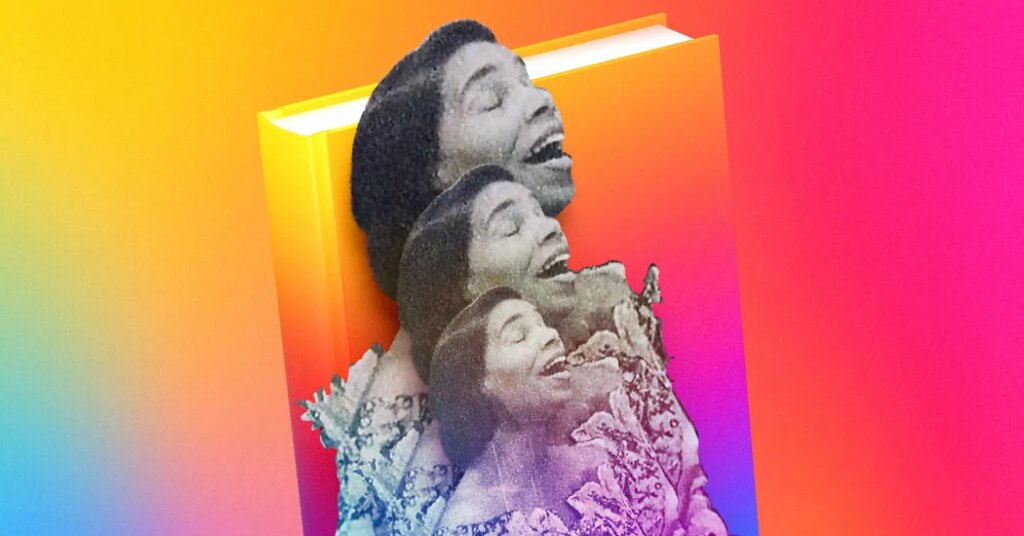
Marian Anderson had mixed feelings about the concert that was arranged for her on the steps of the Lincoln Memorial after the Daughters of the American Revolution had refused her the use of their performance hall because she was Black.
“I could see that my significance as an individual was small in this affair,” she explained in her autobiography, “My Lord, What a Morning.” “I had become, whether I liked it or not, a symbol, representing my people.”
She almost kept that groundbreaking event out of that book. Anderson wanted to be remembered not as an icon but for her chops, as it were.
That didn’t quite work out. Growing up, I knew Anderson as a Black history flashcard, the “pioneer” whose Lincoln Memorial concert was a signature, but by then remote, event. Anderson came along too early to have the career in opera she wanted, beyond small-scale Black opera companies. If she had been born in 1927 rather than 1897, she would have had the career Leontyne Price did.
Instead, Anderson made her career singing European art songs and Black spirituals. The top-class promoter Sol Hurok engaged her in 1935, booking her on successful national and international tours, making her both a celebrity and rich. But in the end, Schubert lieder are not the basis of a legend to resonate much beyond the classical music cognoscenti.
Anthony Tommasini’s new biography of Anderson, “Voice of a Century,” lets us see why there was once such a fuss about her and why she inspired the likes of Price. Tommasini adds loving descriptions of key recordings, including the Schubert works Anderson adored.
During much of her career, Anderson was both appreciated and treated as a kind of curiosity.
“Marion Anderson, a Negro contralto from Philadelphia,” won the 1925 Lewisohn Stadium talent contest. The virtuoso pianist Arthur Rubinstein described how “a tall, handsome Negro girl came out and walked with the grace of a queen to the curve of the piano,” as if grace in a Black person were noteworthy. The New Yorker had it in 1936 that “you’d have to go far to find a person more quiet and modest than Marian Anderson, the young Negress whose contralto voice is, as you probably know, the latest sensation of the musical world.” To reviewers, that a Black person would have such stunning ability was in itself a sensation.
Anderson was not fully seen. Even today, Black people can feel that whites see us through a kind of scrim, as something separate and somewhat indistinct. Hardly to the degree of what Anderson had to endure, but still not ideal. You get used to it.
But in Anderson’s day, white America could barely even pretend to “see” her. She herself didn’t feel, “Here I am, a Black person singing Schubert,” but it’s the only way non-Blacks could perceive her at the time. When you aren’t seen fully, one self-preservational response is to generate your sense of worth from inside and hold the outside world off.
It’s hard not to sense that even in her life story. She didn’t marry until she was 46, to a man whose affection in the three decades of their acquaintance had left her rather cool until then. In her 30s she held an infatuated Russian at a distance, with him writing, “Where are you now, my love? … How do you feel? Do you remember everything that happened between us? … Do you feel me as I feel you?”
At another time, she wrote to her sister, “Two men made violent love to me in one night,” but “make love” meant only “come on to” back then, something the rest of the letter makes clear.
Her letters even to intimates tended to sound almost oddly formal, such as when she wrote to the man she was about to marry, “I think it is imperative that either one place or another be decided upon during the week I have at home in March so that by the end of May it would be ready for occupancy.”
In interviews she tended to refer to herself from a distance as “one,” saying of the Lincoln Memorial concert, “There was an excitement that made one, well, one couldn’t say anything. … I had the feeling that everyone wanted to show their, well, how can I express that? They wanted to show that they were with one.”
And she often sang with her eyes closed. She could at least “see” herself.
It was perhaps a sign that America could see Anderson somewhat more clearly when she finally sang at the Metropolitan Opera in 1955. Before this, the Met’s impresario Rudolf Bing had made clear that he would not sacrifice standards for the sake of diversity.
“I will not exclude anyone because he is colored, nor will I engage anyone because he is colored,” he said. “I intend to do this on the basis of quality only. I am not straining every muscle to find Negro singers. I am looking for the best, regardless of race or creed.”
We might see Bing’s lack of interest in “straining every muscle” — what we today call outreach — as a tad unadvanced. But his focus on “quality only” was a proper North Star then and should be today. A Black person engaged because of his or her race when a white person of similar credentials would not be is not being fully “seen” as an individual.
In that vein, Anderson’s recorded legacy shows that tokenism had nothing to do with how admired her instrument was. I must admit that until now I had never gotten around to listening to her work, although I was always intending to, and had always hoped — quietly, and with guilt — that she hadn’t been overhyped.
I needn’t have worried — hers was a gift indisputably equal to that of her white peers and then some. By the time she sang at the Met, she was nearing 60 and her voice was no longer in its prime, and I wish recording technology before the 1950s had allowed richer sonic reproduction. But even as early as her first recording in 1923, the magic shows through.
That was of the spiritual “Deep River,” but I actually find the B side of that record, “My Way’s Cloudy,” just as interesting. She is up high-ish, out of her most natural range, and yet sounding as clear, confident and perfect as she does down low. In her quick jump into a line singing “Oh, brethren,” she manages the feat of both fluttering a bit and sounding like a real person. And the song’s setting is harmonically stirring — Black spiritual with a dusting of Ravel. It sounds like her.
In her signature set piece, Donizetti’s “O mio Fernando” from “La Favorita,” she feels the meaning of the Italian lyrics in a way that opera singers often do not, and sounds less interested in the ornamental “diva” aspects of the aria than in getting down to business and saying something.
Overall in her work, Anderson often “scoops” a bit, starting a slight pitch below where the note sits before settling into the “chair” of it. A certain kind of critic would see this as inexact, but it makes singing sound a tad — and a needed tad — like speech; it communicates.
In art songs like Schubert’s “The Trout,” Anderson’s German pronunciation is so good you would believe she grew up in Cologne. And in terms of pure interpretational genius, her rendition of the spiritual “Crucifixion” in 1941 is very much the stunner Tommasini considers it.
In Anderson’s lowest notes she is the equal of Aretha Franklin and Nina Simone in channeling plangent Black intensity, including a touch of a murmuring quality that conveys being viscerally transported. An audience in Salzburg was so stunned by her performance of it that they at first could not even clap, as I recently described happening at the first performance of the musical “Show Boat” in 1927.
Anderson spent her long life feeling like she was less seen than celebrated. We are today in a position to see her plain. I would start with “Crucifixion,” and then go back to “My Way’s Cloudy.” Her work demands the attention, and Tommasini’s book is a perfect guide.
***
I actually got to experience a performance recently that left me so stunned that I was unable to applaud. The Fiasco Theater and The Public are doing a production at the Public Theater of a tragically unknown play of 1921 by Susan Glaspell, originally performed with the Provincetown Players, who birthed Eugene O’Neill’s career. Glaspell’s play, “The Verge,” knocked me to the wall with its exploration of what it is to live an authentic life, and how doing so might alienate one from all around her. Glaspell did not let go of the audience’s neck in driving her point home, and at the end, I and the rest of the audience did not clap at first — being awed, a touch perplexed, and gratifyingly overwhelmed. Please try to see this.
The post Marian Anderson as Artist, Not Icon appeared first on New York Times.