Kelsey Lucca wanted to know what curiosity was worth to a child.
So the Arizona State University developmental psychologist devised a small mystery. She hid something behind a curtain and gave children a choice: They could find out what it was, but only if they surrendered some of the rewards they had just earned by doing a task.
Most of them paid. Eighty-seven percent gave up at least some of their reward to learn what was hiding.
The mystery test, published in August in the Journal of Experimental Child Psychology, is part of a new generation of deceptively simple experiments designed to measure qualities of the mind that traditional intelligence tests can miss.
The effort comes amid longstanding concerns that conventional test results can reflect socioeconomic and cultural advantages — and at a time when artificial intelligence can produce many of the answers those tests reward in seconds.
Lucca, who directs the school’s Emerging Minds Lab, said education needs to prepare children for “the problems they don’t know exist yet.”
“You have to feel comfortable with not knowing and lean into the uncertainty,” she said.
For generations, American schools have centered on the familiar fundamentals of reading, writing and arithmetic. Researchers increasingly argue those skills aren’t enough. Children also need curiosity, creativity and critical thinking.
The question has taken on new urgency as the United States considers how to cultivate its next generation of thinkers. A remarkable number of people now leading some of America’s most important technology companies spent their formative school years outside the American K–12 system, among them Elon Musk, Demis Hassabis, Sundar Pichai, Jan Koum, and Patrick and John Collison.
“This is a great country to be talented, creative, innovative in. It’s not a great country to learn how to do those things,” said Jonathan Plucker, a professor of education at Johns Hopkins University who studies creativity and gifted education.
Ariel Kalil, a developmental psychologist and professor at the University of Chicago, said qualities such as curiosity and creativity are often treated as “nice-to-haves” after mastering the fundamentals. She argues that gets the relationship backward: It’s curiosity that draws a child toward a book, creativity that links ideas in new ways as the child reads, and critical thinking that asks whether those ideas fit together.
“You don’t have to know the right answer all the time,” Kalil said. The point is “to be imaginative and think and be curious about the world.”
But there is reason to be wary of what a simple experiment can reveal about a complicated mind.
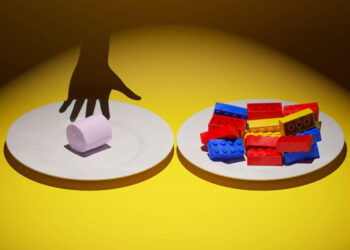
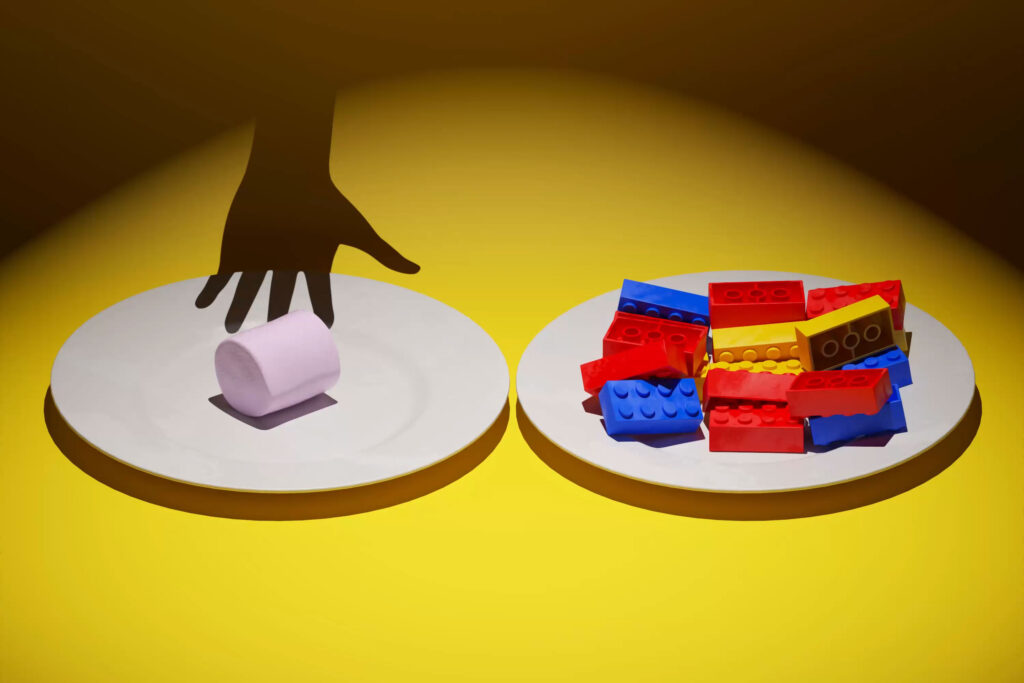
The famous marshmallow test once appeared to show that preschoolers who could resist eating a treat were more likely to fare well later in life, helping turn delayed gratification into a celebrated marker of self-control.
But later research found that a child’s willingness to wait was intertwined with family background, economic circumstances and other environmental factors. What looked like a measure of an innate quality might have been measuring the world a child had grown up in.
The challenge now is whether this new generation of experiments can reveal something meaningful about a child’s mind, without mistaking individual circumstances for personal ability.
Creativity
Most tests reward a child for finding the right answer. Creativity begins when there might be 50 answers.
For decades, psychologists have tried to measure “divergent thinking,” the ability to generate multiple, original solutions to an open-ended problem. One of the best measures researchers have of “creative potential,” or the capacity to generate ideas that might translate into creative work might involve asking children to come up with as many unusual uses for an everyday object such as a brick. Such tests have long had a place in gifted education, where they aim to spot abilities that might not show up on an IQ test. Now researchers are making a broader argument: Creative thinking isn’t just something to identify in exceptional children. It is something schools should cultivate in everyone.
Roger Beaty, an associate professor of psychology at Pennsylvania State University who studies creativity, has developed a test aimed at capturing students’ potential to pursue science. Students are asked to generate research questions, hypotheses and possible experiments.
The results suggest there is “something predictive” beyond simply “how smart you are,” Beaty said. It could eventually help identify students with the “latent potential to ask really interesting questions,” he added.
For Plucker, the larger question is: “What are you taking all this knowledge and using it for?” he said. “I think the overall goal truly is creative problem solving.”
The problem has always been one of scale. A math question can be marked right or wrong. A child asked to dream up questions they would ask on an unexplored planet, might produce dozens of answers that have to be judged for originality — a subjective evaluation that could change depending on who’s conducting the test. Now AI may change that. Researchers are developing systems that automatically score open-ended answers and closely track ratings given by people, potentially allowing schools to measure creative thinking in hundreds or thousands of children at once.
Curiosity
A child can learn the alphabet. Once she knows all 26 letters, the task is finished. Curiosity has no such endpoint: One question can lead to another and then another.
“I happen not to think it’s the key to life,” Kalil said. “I happen to think it’s the key to everything.”
Curiosity has been associated with benefits across the lifespan. Curious children tend to perform better in reading and math, while in older adults it has been associated with greater purpose, life satisfaction and healthier aging.
Lucca says psychologists have begun to tease apart different kinds of curiosity. There is “interest” curiosity, the pleasure of discovering something new, and “deprivation” curiosity, the itch created by realizing there is something you don’t know and wanting to resolve it.
The question is what a child does with that uncertainty. Lucca’s research suggests that helping children become comfortable with not knowing — and encouraging them to investigate rather than retreat — can increase how much they wonder about something.
But children may not get equal encouragement to develop it. In a survey of 2,000 Chicago parents, Kalil said, researchers found that college-educated parents were more likely to emphasize curiosity, while parents with less education placed greater importance on specific academic skills such as counting or knowing the alphabet. Kalil calls it “another dimension of inequality.” Some children are taught to master the answers. Others, to keep asking the next question.
Collaborative exploration
Imagine two children standing before a barrier that neither is tall enough to see over. One child gets down; the other climbs on top. Together, they can see what neither could see alone.
It’s a hypothetical Jan Engelmann, an associate professor of psychology at the University of California, Berkeley, uses it to illustrate what he calls “joint scientific reasoning: figuring out something together that neither person could figure out alone.
“What’s so special about humans is that we engage in collaborative knowledge seeking,” Engelmann said.
Disagreement can be part of that process. Encountering someone who sees the world differently can expose a gap in what we know and spur curiosity and learning, something Engelmann’s lab has been studying. In one experiment, young children tried to figure out which toys would make a machine play music. After they made their choice, an adult researcher introduced as an expert either agreed or disagreed with them. Children who encountered disagreement spent more time trying to find out if they were right.
The idea extends far beyond the classroom. Scientific breakthroughs are rarely the product of a single mind, Engelmann argues, with most scientific papers having multiple co-authors. Take a seemingly simple question: Does a drug work? One scientist might design the experiment, another run it, another analyze the data, while others challenge the findings and propose alternative explanations.
The answer emerges from what they discover, and dispute, together.
The post The new science of what makes kids smart appeared first on Washington Post.