This column is adapted from an episode of the “Dollars & Sense” podcast and has been lightly edited for clarity. Subscribe to “Dollars & Sense” on Apple, Spotify or YouTube.
It’s so easy to swipe and spend.
We are told that cashless payment methods are for our convenience — the faster, the better.
Tap your card or glance at your phone screen to pay for necessities or wants.
Here’s the problem when budgeting doesn’t come naturally to you: Effortless electronic payment methods remove the physical and psychological pain of parting with your money.
Fast transactions can create a financial fog. If you’re not paying attention, they can create a sinking hole of debt or a cash flow nightmare.
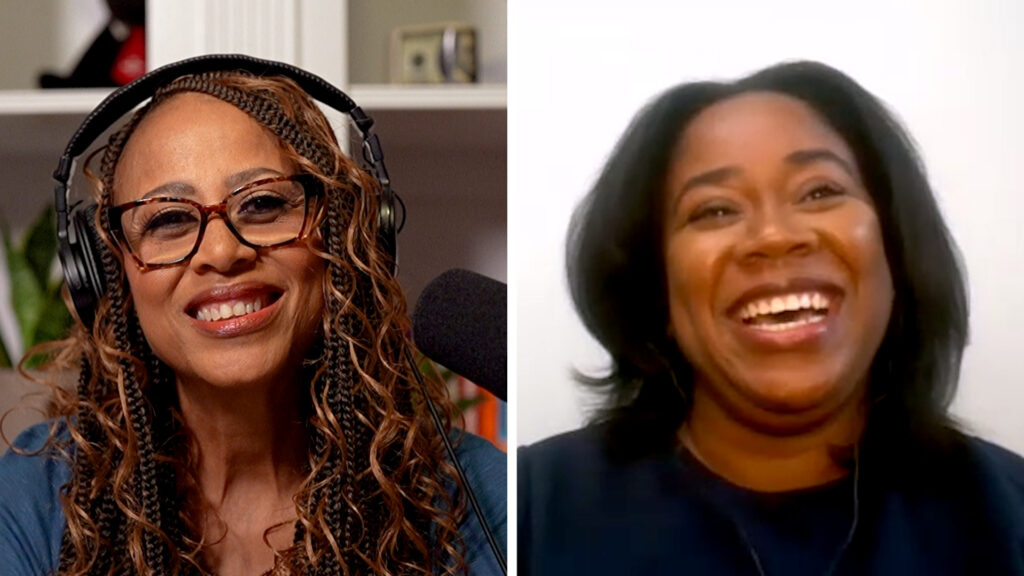
In this excerpt from “Dollars and Cents with Michelle Singletary,” I interviewed Ashlee, a local-government employee and single mom.
With undergraduate and graduate degrees, Ashlee’s student loan balance is nearly $230,000. Fortunately for her, she is close to eliminating much of that burden through the Public Service Loan Forgiveness program. The program was created in 2007 to encourage Americans to work in public service for a qualifying employer, such as a government agency or a not-for-profit university. After 120 qualifying monthly payments under an accepted repayment plan, the federal government forgives the balance.
Although Ashlee is on the verge of loan forgiveness, she’s stressed about the increase in her monthly payments from $300 to $800. Like millions of other borrowers, she was forced to switch to a more expensive repayment plan after court rulings and policy changes shut down the income-based program she had been using.
As I helped Ashlee review several months of bank statements line by line, it became clear that she had lost track of her spending.
Here’s an edited transcript of our conversation.
How much in credit card debt do you have?
I believe it’s about $16,000 total in credit card debt. … There did become a time where I was using a credit card to pay for day care when [my son] was younger, in order to kind of offset some of the expenses.
Would you be surprised to know that you actually have twice that amount?
Yeah, actually I would be surprised.
You have six [cards], and it totals a little over $31,000. I added it up, and you use your debit card quite a bit, right? Because it looks as if you were trying not to use credit anymore. But the problem is there are a lot of transactions. I looked at one month, and there were over 70 debit card transactions.
Maybe on a given day I would buy at least two meals a day if, for whatever reason, I didn’t cook.
So you know one month you’re tired, work was crazy. Let’s just go back and look at some other months. And what did you think I found?
It was probably a consistent pattern.
What do you think you are not paying attention to?
Probably the amount that you’re spending.
It’s about $700 every month just eating out. If you had to use cash, you probably would be more aware that you spend $700, right? It’s not like you were spending $200 eating out. It’s like $5 and $10 and $20. Do you look at your bank statements, and what’s happening with it on a monthly basis?
I would say no. I will check the app just to make sure … there’s nothing crazy. Or if someone didn’t, like, try to hack my bank account or something like that. But I’m not necessarily looking at the entire statement to calculate, “Oh, I spent this this month.” Or, “I probably overspent on this.”
I have a six-action plan for you. But one of those actions is that I want you, every single month from now on, to pull your statements and highlight them. And I want you to get to a month where you don’t have 60 or 70 transactions. I want you to have like less than a dozen. If you stop eating out for two months, some of the debt would be gone, and how would that make you feel?
It would, it would really feel great. Month to month, I’ve literally just been winging it.
So, we’re going to eliminate the [takeout chicken] wings and stop you from winging it.
Follow Michelle’s financial advice show, “Dollars & Sense with Michelle Singletary,” on Apple Podcasts, Spotify, YouTube or wherever you get your podcasts. Want Michelle to answer your money question on the show? Email [email protected].
The post Her credit card debt was double what she thought it was. Here’s why. appeared first on Washington Post.