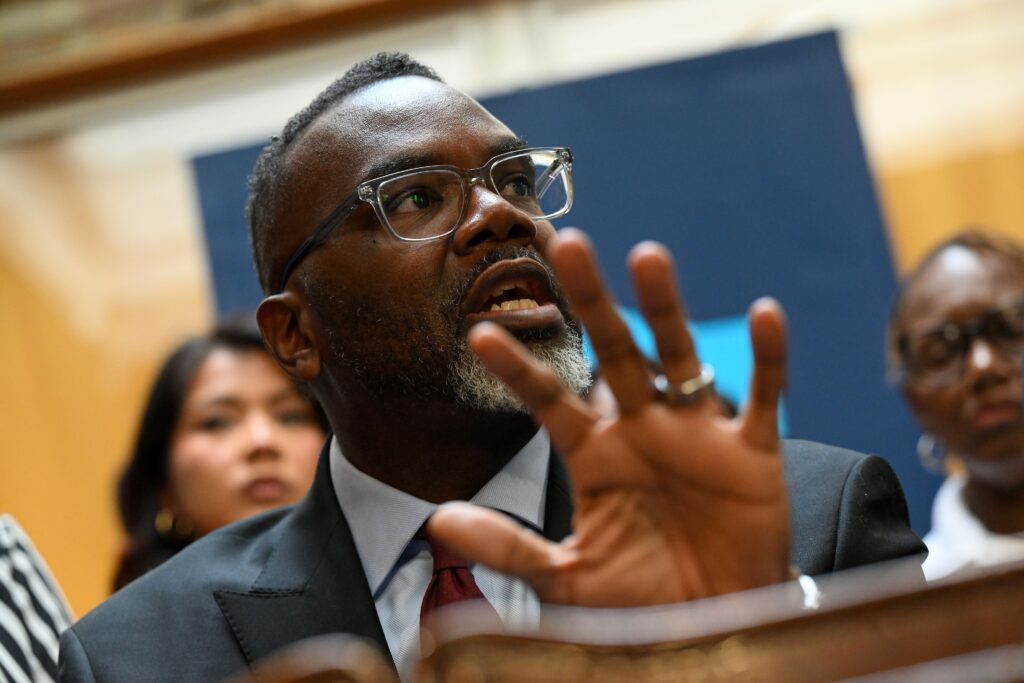
Chicago’s finance chief quit last week rather than, she said, “compromise my integrity and professional obligations.” On Wednesday, the City Council responded with a remarkable 45-to-5 vote to investigate Mayor Brandon Johnson’s financial stewardship. The review will examine whether the Democrat’s administration made “material or intentional misstatements” about Chicago’s financial condition to investors, aldermen or the public.
Ashlee Gabrysch was Johnson’s third CFO to leave in a year. Jill Jaworski, who had served since 2023, left in January. Her interim replacement, Steven Mahr, lasted less than eight months. Gabrysch made it three months. Before joining City Hall, she was a senior director at Fitch Ratings and its lead analyst covering Chicago and Illinois. When the numbers did not add up, her professional obligation was to say so — and she did.
The dispute concerned Johnson’s proposed $17.6 billion budget. His administration said 76 percent of the measures used to close an $882 million shortfall were structural fixes. Gabrysch said the real figure was 56 percent because, among other things, Johnson wants to borrow $481 million to cover police-misconduct settlements. Borrowing to cover such expenses sends the bill into the future, with interest. Gabrysch warned last month that the city would pay $190 million in interest over the next seven years to borrow $350 million in 2027.
The Chicago Sun-Times reported that mayoral aides froze Gabrysch out after she contradicted the administration’s claims. Johnson’s team says she improperly directed a $75 million pension payment and referred the matter to the inspector general. Gabrysch says the payment was authorized and calls the accusation an attempt to smear her. The outside review can establish the facts.
The larger fiscal problem is beyond dispute. Chicago’s four pension systems ended last year with $36.4 billion in unfunded liabilities. Taxpayers are scheduled to contribute a record $3.01 billion next year.
This didn’t happen overnight. Chicago’s net operating budget grew nearly 40 percent from 2019 through 2025, aided by temporary federal pandemic money. The federal windfall disappeared. Most of the spending continued.
Markets have already sent warnings. Earlier this year, two ratings agencies downgraded city debt, and Chicago postponed a $292 million bond sale. Pension payments and debt service consume almost 40 percent of the operating budget.
This week brought another awkward development. At the Johnson administration’s request, aldermen pulled a proposed $500 million sewer bond issue from Monday’s Finance Committee agenda. That spared acting CFO Michael Belsky from testifying and facing questions about Gabrysch’s resignation.
Johnson has repeatedly reached for higher taxes rather than exercising the spending restraint necessary to put Chicago on firmer footing. His latest proposal includes a new $25-a-month tax for every employee at companies with more than 125 workers. That is a peculiar way to encourage companies to employ more Chicagoans.
Markets eventually impose discipline that politicians avoid. Investors can demand higher returns or put their money elsewhere. Businesses and taxpayers can move.
Johnson is seeking reelection in a 16-candidate field. A University of Chicago-commissioned poll in July put Johnson’s approval at 23 percent. Only 14 percent of likely voters said they wanted him to seek reelection. Everyone running against him should explain how to make pensions sustainable and expand the tax base. Chicago can make difficult fiscal choices while those choices are still its own, or it can wait until creditors force them.
The post Chicago’s fiscal warning lights are flashing red appeared first on Washington Post.