Just over two weeks after Election Day, the outcomes of nearly all of this year’s congressional races have been determined. But a few of the tightest lower chamber races remain uncalled—and the trailing candidates in more than one are moving to request recounts.
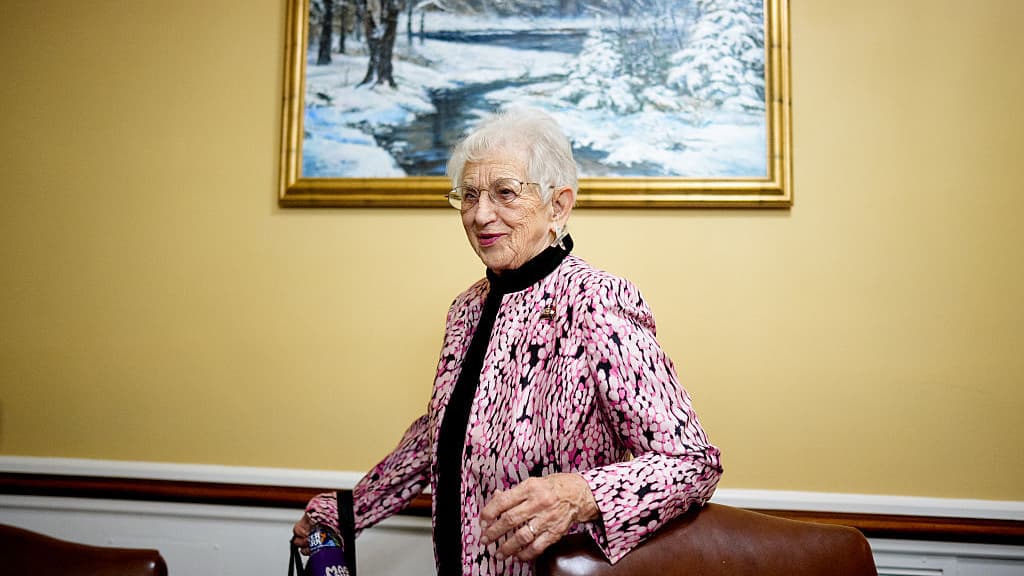
Two of those requests have come from candidates in North Carolina: Republican Representative Virginia Foxx of the state’s 5th District and Ashley Bell, a Democrat who ran in the 10th District. Foxx filed her request on Tuesday when her opponent, Chuck Hubbard, was beating her by just over 300 votes, under 1% of the total ballot cast. Bell was meanwhile trailing Representative Pat Harrigan by over 2,500 votes when she requested a recount in her race.
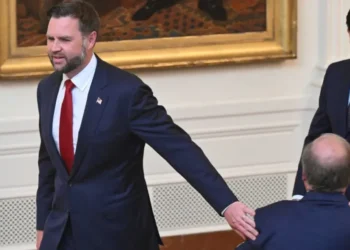
Minnesota Republican Representative Brad Finstad also said that he would request a recount in the state’s 1st District, where he trailed his opponent, Democrat Jake Johnson, by roughly 300 votes.
“We have close races, and when the races are close, you need to make sure that that margin is in fact still razor thin, and that there wasn’t something that was missed,” Tammy Patrick, the chief programs officer at the National Association of Election Officials, an organization that supports election administration around the country, tells TIME.
Here’s what to know about how recounts work—and how likely they are to change the results in these races.
How do recounts work?
Recount rules and procedures vary by state.
In 26 states and Washington, D.C., they are triggered automatically when results are within a certain margin. Recounts can also be requested in 41 states and in D.C. In Illinois, Mississippi, and Tennessee, in contrast, they are only available through court challenges.
The most common threshold to trigger an automatic recount is 0.5%—with 14 states using that bar—but the margin ranges up to 1%. Some states use a particular number of votes, as opposed to a percentage, to set the margin for triggering a recount.
Automatic recounts have already occurred in two House races this year.
Florida’s 27th District recounted the votes cast in the contest between Democrat Eliott Rodriguez and Republican Representative María Elvira Salazar, who led her opponent by 1,090 votes, or 0.44% of the vote, in the initial count. Florida requires a recount when the margin is 0.5% or less. After the roughly 18 hours it took for a machine recount, Salazar prevailed.
Another recount occurred in South Carolina’s 2nd District, where Republican Representative Joe Wilson led Democrat Zyon Khalifa by 2,926 votes after ballots were first counted, just under the 1% threshold to trigger a recount in that state. Wilson retained his lead following the recount, and declared victory.
Twelve states also require the vote margin to be within a specified range for a candidate to request a recount.
A number of other rules apply in various states. In Massachusetts and Pennsylvania, for instance, candidates must obtain a certain number of signatures from registered voters in order to file a petition for a recount. Election officials and voters themselves can also request recounts in certain states for political races or even ballot measures.
Oftentimes, what election officials are primarily doing when they administer a recount is verifying that voters’ intent in casting their ballots is accurately reflected in how those ballots are tabulated.
Patrick explains that voters commonly misinterpret how to properly mark their candidates of choice, and as a result, vote counting machines are unable to register their selections. For example, instead of filling in a bubble next to their preferred candidate as instructed on a ballot, a voter might instead circle their name. Or, for mail-in ballots, Patrick says, some voters might use crayon or a highlighter instead of the required black or blue pen, preventing the tabulation equipment from registering their choice or marking their vote correctly.
“That’s why when you do have manual intervention of looking at ballots, if a voter did not follow the instructions and made their selections in some alternative fashion, a manual intervention with human eyes on it would see those marks,” Patrick says. “Recounts have played this role historically to go back and make sure that all of the ballots were counted and all of the ballots were counted in a way that that correctly reflects the intent of the voter.”
In rare cases when a recount verifies a tie, Patrick says, “two candidates decide on a game of chance,” such as a high or low draw, or a roll of the dice, to decide who takes office. However, the rules for such instances vary widely by state and office, and many states require a runoff or alternative method.
Do recounts often change election results?
No—recounts rarely alter the results of elections.
FairVote, an elections research firm, conducted an analysis of statewide election recounts between 2000 and 2025. Out of the 7,437 statewide elections during that time period, 37 recounts occurred. Of those 37, only three resulted in the reversal of election results. And in all three of those cases, the initial vote margin was less than 0.06%. According to FairVote, statewide recounts on average shifted the vote margin by just 536 votes, or roughly 0.03% of the total vote count.
In fact, recounts are more likely to expand the winner’s lead than to reduce it.
The most recent time a statewide recount actually resulted in a reversal of the outcome in the initial count came in the 2008 Minnesota Senate race, in which Democratic challenger Al Franken trailed Republican incumbent Norm Coleman by 215 votes after ballots were first counted but prevailed by a margin of 225 votes following a recount.
After Finstad requested a recount in Minnesota’s 1st District, Johnson made a statement noting that “no U.S. House recount in over 40 years has resulted in a change that large to the vote totals.”
In the race for North Carolina’s 10th District meanwhile, where the margin in the initial count was notably wider, Harrigan said that he respected Bell’s right to a recount, though he stressed he remained “confident in the results.”
How long do recounts take?
Most states establish timelines for recounts to be completed in order to ensure that election results are finalized before candidates are sworn into office. The timeline is usually a week or two after the recount is initiated, according to the Election Assistance Commission.
The amount of time allotted for recounts is often related to the method of counting, whether it be by hand or machine. Some states mandate that all recounts be conducted by hand, which Patrick says is a “very lengthy process,” compared to when machines are used.
Because recounts often require many staff members to carry out the process, several states call for those who request a recount to put a deposit down to go towards covering the cost.
The results of the recount in the House race in South Carolina’s 2nd District were certified roughly one day after the recount was ordered. In North Carolina’s 5th and 10th Districts, the machine recounts are expected to begin next week and be completed by Nov. 23, according to the North Carolina State Board of Elections.
If Finstad requests a recount in Minnesota’s 1st District as he said he intends to do, the Minnesota Office of the Secretary of State predicts the process would take place the week of Nov. 30 to Dec. 4.
The post Recounts Are Set to Take Place in Some of the Tightest Uncalled Midterms Races. How Do They Work? appeared first on TIME.