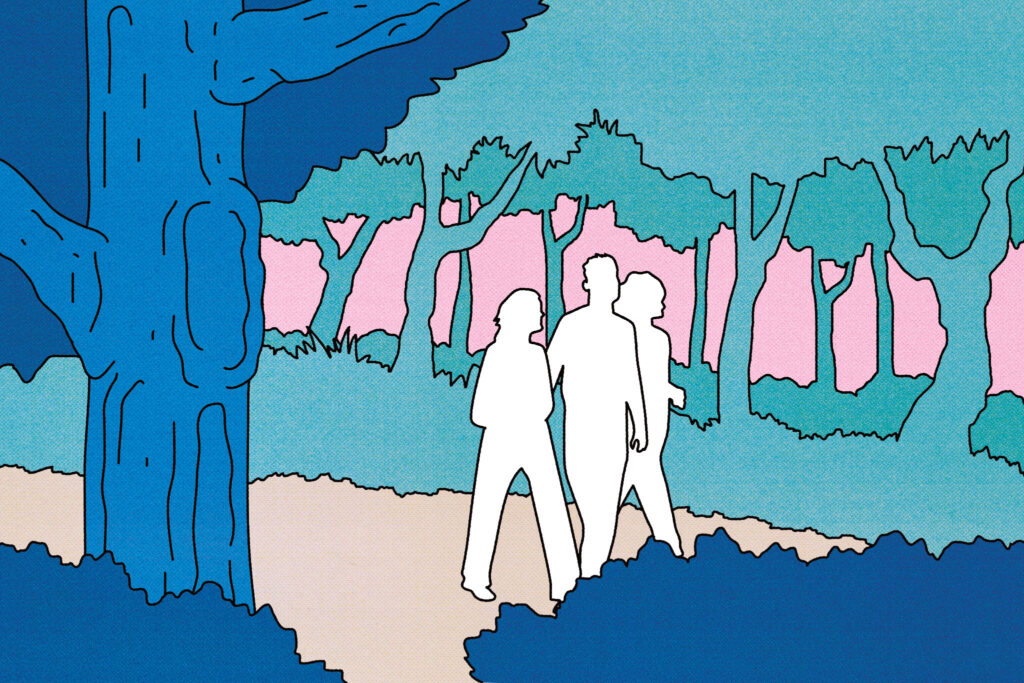
Loneliness is increasing worldwide. At the same time, we’re spending more time indoors — an estimated 90 percent of the day — disconnected from not only one another but also the rest of the natural world.
These trends may have a profound impact on our mental and physical health. Loneliness is linked with higher risk for mental and physical health conditions, including depression, anxiety and dementia, and a loss of the sense of connection and belonging that are fundamental to human flourishing.
But studies suggest there is a relatively simple solution: go outside, ideally to interact with other people.
In a recently published set of studies, researchers found that “prescribing” nature-based activities to people around the world can be a potent way to help them connect with others and alleviate loneliness. The activities included bike rides, craft-making using natural materials, forest bathing, caring for community gardens, exploring the nature around castles and doing tai chi in the park.
Of course, not everyone has easy access to natural scenery or organized activities. And safety may be a concern for some people. But taking small steps such as going for a walk in a leafy city park or joining a group of like-minded people on a hike may all help you feel more connected.
“The good news is you can intervene, and you can change the trajectory,” said Jill Litt, a senior researcher at the Barcelona Institute for Global Health and a professor at the University of Colorado Boulder in the Environmental Studies program, who conducted studies and randomized controlled trials on loneliness and nature-based activities.
Here’s what to know about how nature can benefit our health, and how to foster connection in the great outdoors.
The link between nature and connection
Nature is like “a cradle” for people to get more socially engaged, Litt said. When people are in nature, “they’re able to relax, open up a place in themselves” to new experiences and others, Litt said.
Some scientists think the reason is that nature can be very stress-relieving, shifting the nervous system from “fight-or-flight” to a calmer “rest-and-digest” state. When we’re constantly on edge, “it’s very hard to connect with anybody,” said Matthew Browning, an associate professor in the Department of Parks, Recreation and Tourism Management at Clemson University, who studies how nature can improve health.
Another theory suggests that nature can gently hold our attention with “soft fascination,” allowing our minds to wander and return refreshed to pay better attention to other things and people. In fact, research shows that being in nature helps people stop ruminating on negative thoughts and feelings about themselves.
An influential 2015 study found that people who walked 90 minutes in nature had both less rumination and decreased activity in the subgenual prefrontal cortex, a brain area implicated in rumination and major depression. But walking for the same amount of time in an urban setting had no effect on either.
It seems that nature helps us get out of our heads and reliably induces a sense of awe. This may help alleviate the social anxieties people may have about having casual conversations with people they don’t know well or joining a group activity.
That’s because awe takes our focus from ourselves to something greater and promotes more attention to others, according to a 2025 review. Research shows that this profound feeling makes others feel more human and also increases the likelihood of helping them.
It “reminds us that the world is bigger than us and we’re part of something bigger,” Browning said.
Prescribing nature to heal loneliness
So what would happen if lonely people were “prescribed” nature and connection?
In one recent randomized controlled trial, Litt and her collaborators set out to find out. They recruited 320 adults who said they felt lonely and were referred by health professionals. Over the course of a year in Barcelona, one group received peer support and was grouped with seven to nine other people and two facilitators. They participated weekly in nature-based activities that participants could select from a “menu” curated by locals.
The control group only received a detailed map for where to find these nature activities but did not have the built-in peer support.
People who received peer support and went on regular nature activities felt much less lonely, even months after the study ended. But surprisingly, so did the control group who only received the nature-based activities. “What we didn’t expect was that they really used the map,” Litt said.
When researchers followed up 12 months later, both groups answered a questionnaire that showed their loneliness had dropped by almost 17 percent.
The people who came in feeling the most lonely and needing the most support were also the ones who benefited most from the nature get-togethers, Litt said. For those who felt less lonely, just having access to nature activities was enough to get them back on track.
Litt and her colleagues ran similar nature-based programs for adults in five other cities across the world — Marseille, France; Helsinki; Prague; Cuenca, Ecuador; and Melbourne, Australia. And across the six cities, nature-based activities reduced loneliness, Litt said.
Of nature’s power to connect people and alleviate loneliness, this research is “some of the most reliable evidence for this to date,” said Browning, who was not involved in the studies.
How to get connected in nature
Being present matters. While time in nature is important, what matters most are not the minutes in nature, but the moments or experiences people have, Browning said. A gorgeous sunset probably does little if you’re staring at your phone.
Find your outdoor people. Notice who else is regularly out and about — people walking their dogs or going for jogs — and try to engage with them, Browning said. You can also join groups that engage in nature activities, such as hiking, birdwatching or even mushroom foraging.
Join a community garden. Volunteering can be a great way to engage with your community, said Litt, whose research found that community gardening grows a sense of belonging and opportunities to actively engage with both nature and other people.
Put up a bird feeder. This can be a “powerful” way to connect with nature by putting you in touch with “this community of birds around you. You may or may not know they exist unless they start visiting your feeder,” Browning said. It is also a chance to get the joy of giving back if you are feeling reclusive or burned out by people, he said.
Make time for outdoor walks. Litt tries to start her day with an hour-long walk, often grabbing a friend, to make sure she gets her outdoor time. But even short bouts outdoors can make a difference. Having walking meetings at work outdoors, even if it’s just 15 minutes, “really can change your whole mindset,” Litt said.
The post Here’s a science-backed way to counteract loneliness appeared first on Washington Post.