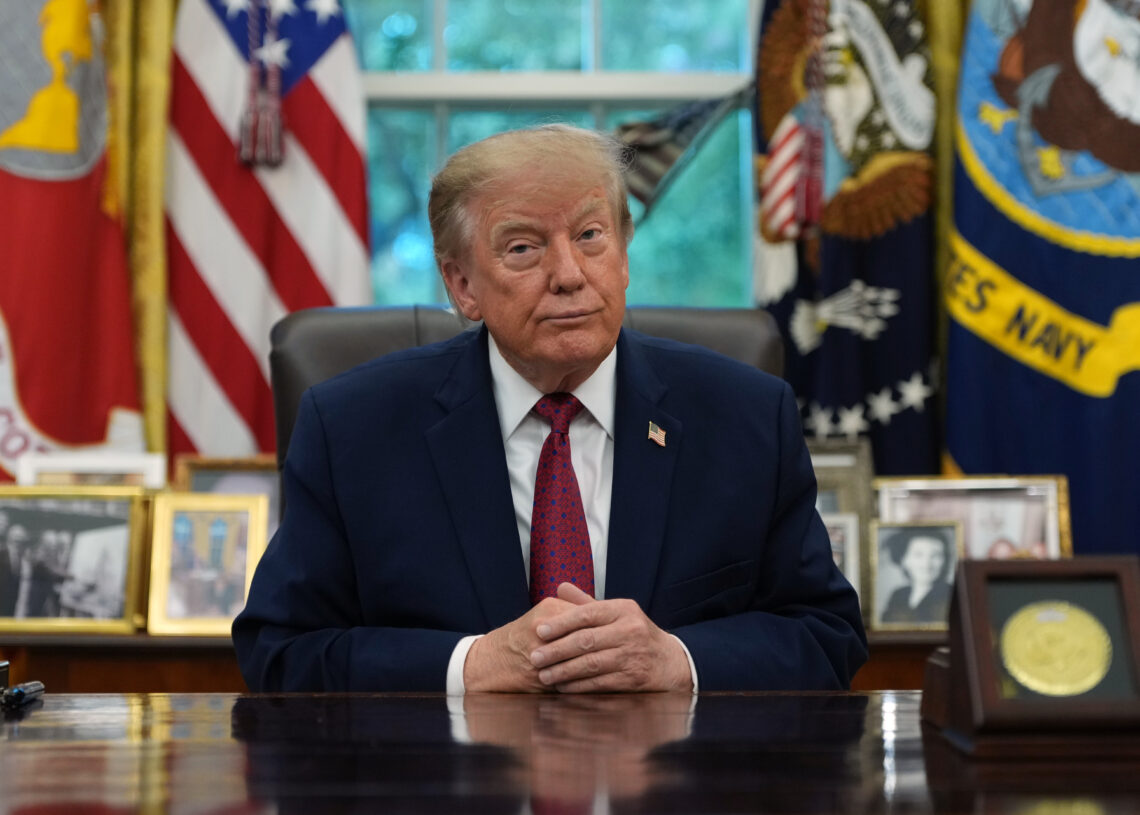
President Donald Trump presided over the Republicans’ largest midterm loss in years, helping to hand Democrats both the House and the Senate. How might this affect his policy positions during the last half of his term? Four Post Opinions writers share their predictions for Trump’s policy shifts.
Doubling down on anti-vaccine rhetoric
The midterm election results are likely to restrain much of the Trump administration’s agenda, but I fear the White House is preparing to go off the rails in one policy area: vaccines.
Trump’s selection of Stephen Miller as his chief of staff is the most ominous signal. Unlike his predecessor, Susie Wiles, Miller is a close ally of Health and Human Services Secretary Robert F. Kennedy Jr. He’s also an outspoken critic of the childhood vaccine schedule, which he has called a “medical travesty.”
Meanwhile, many of the GOP’s pro-vaccine lawmakers, such as Sens. Bill Cassidy (Louisiana) and Susan Collins (Maine), have been swept out of Congress. The new top Republican on the Senate’s health committee is likely to be Rand Paul (Kentucky), a regular immunization crank. That means fewer Republicans pushing against the administration’s policies and more cheering them on.
The Democrats’ Senate majority might help frustrate those ambitions, but Kennedy and his allies at the nation’s health agencies can still do plenty of damage by targeting key vaccine ingredients, slowing down new shot authorizations and undermining the system that protects manufacturers from lawsuits.
At the very least, I suspect the administration will amplify its anti-vaccine rhetoric, further undermining the public’s confidence in jabs. That alone would be a travesty.
— Robert Gebelhoff, editorial writer
Cutting deals on tariffs
Trump will pivot on tariffs — not because he has stopped believing in them, but because he’s constrained by a Democratic Congress and likes to cut deals that he can call victories.
Trump’s attachment to protectionism is sincere. He has said “tariff” is one of his favorite words and insists import taxes make America richer. The truth is that tariffs raise prices, punish American companies that rely on imported inputs and invite retaliation against exporters. The Yale Budget Lab estimates the tariffs will cost the average household more than $1,000 a year.
The president showed flexibility before the election, carving out exemptions to help vulnerable GOP senators such as Collins in Maine. That didn’t work.
But the gambit offers a road map for the next two years. Trump can use tariffs as bargaining chips, negotiating agreements that lower foreign barriers to American goods and then reducing U.S. tariffs in return. He would never need to concede that his trade war failed. He could declare that the tariffs worked because they forced other countries to the table. The president should start with Canada, ending a trade war that has made goods more expensive on both sides of the world’s longest undefended border.
— James Hohmann, deputy opinion editor
Finding a middle path on immigration
There’s a reason few Democrats ran against Trump’s border security measures. The Biden administration’s open-border policies weren’t just a political liability in border states; they created a domestic crisis that made the party look soft on crime.
By shutting down the border, Trump unwittingly did Democrats a favor by stripping away the taboo. James Talarico even ran for U.S. Senate as a “border security Democrat.” But he has also condemned deadly Immigration and Customs Enforcement operations and called for “more legal pathways for hardworking immigrants to come to this country.” He wants to “pass a pathway to citizenship for our neighbors who have been here for years.”
Those stances might be anathema to the nativist wing of Trump’s MAGA movement, but the president himself has expressed similar views. In his recent interview with “60 Minutes,” Trump said it’s “a tough thing” when workers are deported. He has repeatedly voiced support for “dreamers” and has sympathized with employers and workers in industries such as hospitality and agriculture.
Overlap between Trump and some sensible Democrats isn’t enough to bring about immigration reform — especially with extremists such as Miller lurking around the Oval Office. But if the president cares at all about salvaging his legacy on immigration, he will trust his instincts over Miller’s maximalism and pivot toward Democrats on the issue.
— Carine Hajjar, opinion journalist
Touting Medicaid reforms
One of the policy areas where Democrats will crank up the pressure on Trump is the Medicaid reforms he signed in the One Big Beautiful Bill Act in 2025. These were mostly the creation of Republicans in Congress and were never a priority for Trump. He’ll have to start defending them more, but he shouldn’t be ashamed to do so.
The law restricts Medicaid provider taxes, which are essentially money laundering schemes. State governments tax hospitals and some other health care facilities, then spend the revenue on health care, which sends it back to the hospitals. The only thing that happens is that money is moved around, yet states bill the federal government for reimbursement as though the spending were genuine. Provider taxes should be eliminated entirely, not merely restricted.
The law also requires that most able-bodied adults without young or disabled dependents work or volunteer for 80 hours per month to receive Medicaid. That’s a pretty light work requirement that would not affect any disabled people or children. Moving people from welfare to work was an achievement President Bill Clinton liked to brag about. It would serve Trump well to remind Democrats of that.
— Dominic Pino, editorial writer
The post ‘The most ominous signal’: Four ways Trump may pivot after the midterm rout appeared first on Washington Post.