Times Insider explains who we are and what we do and delivers behind-the-scenes insights into how our journalism comes together.
A man who cleans the reflecting pools at the 9/11 Memorial. A Broadway actress who has learned seven roles by heart, not knowing which, if any, she’ll be asked to play on a given night. A cyclist who measures the New York City Marathon route with a low-tech device and spray paint, inch by painstaking inch.
These are just some of the unsung jobs that make life in New York City go round.
“It’s like a person you met at your nephew’s wedding,” said Bill Ferguson, an assistant editor on The New York Times’s Metro desk, which in September began publishing a series of features on individuals who perform some of the city’s jobs that you might not have thought even existed. “It’s like: ‘Did you meet the guy who repairs Citi Bikes? Oh, my God!’”
The idea for the series, New York at Work, came about last year when the photographer Juan Arredondo, who lost a cousin in the Sept. 11 attacks, was visiting the reflecting pools at the 9/11 Memorial in Lower Manhattan. He noticed a toy floating in the water. He got to wondering: Who takes care of this place?
“I wanted to capture the labor and the workers who make a city possible, and whom most of us never see,” said Mr. Arrendondo, who photographs the series.
In interviews last week, Mr. Arrendondo; Mr. Ferguson, who edits the stories in the series; and Eve Edelheit, who edits the photos and videos, shared what they aim to capture about the city through the stories, how they select the people they profile and what they’ve learned working on the project. These are edited excerpts from the conversation.
This isn’t the first time the Metro desk has done a column about interesting jobs in New York City. How are you aiming to differentiate it from past efforts?
BILL FERGUSON Juan has the most voracious eye of any photographer I’ve ever encountered.
EVE EDELHEIT He grew up in Hackensack, N.J., as well as in Colombia, and this was really his love letter to New York City.
I think sometimes people forget that the photographers we work with at The New York Times are journalists. This was definitely one of those moments where I felt Juan was being a journalist-comma-photographer and really thinking about telling stories in different ways.
As a photographer, I remember what it felt like to be treated as window dressing. And so I don’t want people to think that just because it’s a visual project, that a reporter isn’t an equal team player. I want the reporters to have a moment in the story, too, where they really feel like they’re writing the way they want to write and finding things that the visuals don’t show.
Is this a specific effort to really capture something distinctive about the city?
FERGUSON We’d like to focus on jobs that can happen only in New York — or at least primarily in New York.
EDELHEIT We’re trying to show the surprising side of things that we all appreciate or utilize in the city, and maybe don’t take time to think about.
JUAN ARREDONDO I’ve lived in New York for more than 15 years, and I’ve always believed that the city’s true character lives in its workers, so many of them immigrants like me.
Do you find the people first, or do you identify interesting job titles and then search for people who do them?
FERGUSON It starts with: Here is a thing that’s built into our life. Who makes that work? The hard part comes after the bright idea — that falls to Eve and Juan, who have to track down all the relevant authorities and gain their trust so we can invade their lives for a while. I’ve seen the spreadsheet. It’s not glamorous work.
What have you learned working on this series?
FERGUSON Everybody’s interesting. Everybody has a story.
EDELHEIT It’s been a great learning opportunity about narrative structure in storytelling and how it all comes together. And it’s been fun to just let my curiosity about the city run wild. I’ll walk by something and think, “Would that be a good job?”
My husband’s a runner, and so the story about the marathon came from my curiosity about who paints the blue line that runs the length of the race. The people we’re approaching know their topics the best, and so it’s been like unwrapping a present each time.
ARREDONDO I’ve learned how much of the city is awake while the rest of us sleep. Many workers begin their shifts in the dark, in rain and snow, hours before the city notices them, so I plan my days around their rhythm, not mine.
We spend about two days with each worker or crew. On the first day, I shoot on my own, learning the routine and earning their trust. A Metro reporter joins on the second day for the interview. Nothing is staged, and we ask the workers not to change anything for us. The best moments rarely arrive in the first hour. They come once people forget the camera, and the day starts to speak for itself.
Many of these jobs involve extensive manual labor. Do you think they’ll still exist 20 years from now? Do members of Gen Z or Gen Alpha have the desire to fill them, given how device-heavy a world we live in now?
EDELHEIT New York is constantly changing, but there’s such an appreciation for where it’s come from, and the historic institutions we have, that there will still be an appreciation for having a nicely polished brass mailbox at Grand Central. And, you know, someone’s got to do it.
What’s the most interesting job you’ve ever had?
EDELHEIT Honestly, this is the best.
FERGUSON I had a work-study job in college at Syracuse University, where I was taking ethnographic tapes from Margaret Mead or her compatriots, of, say, Maori prostitutes, on quarter-inch reels and recording them onto a different tape deck in this basement studio. I was barely qualified, and I didn’t know how interesting it was at the time.
ARREDONDO Before photography, I was an organic chemist and research scientist at Merck, so moving from the lab to the camera was a big leap. In a way, both require close observation, patience and precision. Photojournalism has been the most interesting job I’ve had.
This series is meant to highlight underrecognized jobs in the city. For some New Yorkers, these jobs may not seem so new or novel. What’s your response to that?
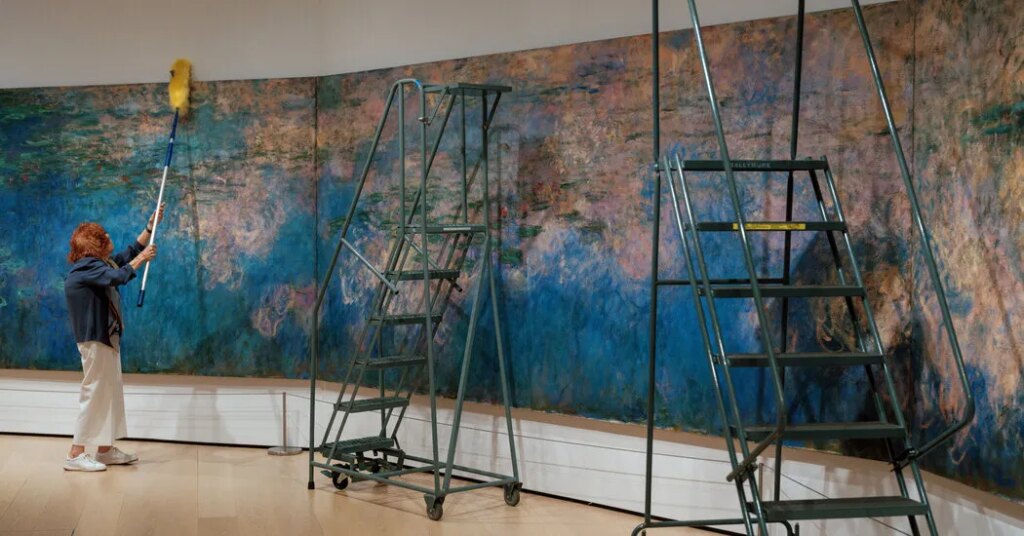
FERGUSON They may be right! Although the woman at the Museum of Modern Art who cleans van Gogh’s “Starry Night” by hand — that’s pretty novel.
But we’ve done only five so far, and we would love to have suggestions.
The post Capturing the Hustle of Unsung Jobs in New York City appeared first on New York Times.