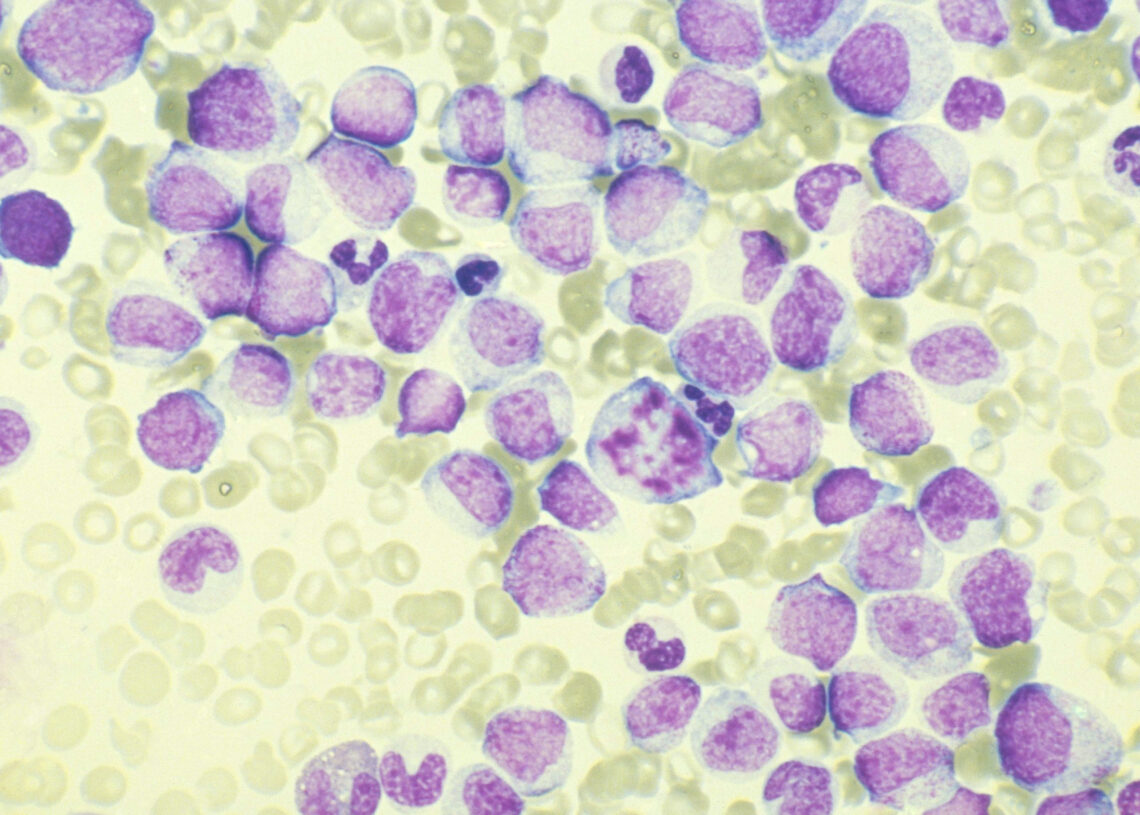
A first of its kind vaccine for acute myeloid leukemia, a deadly blood cancer, succeeded in a Phase 3 clinical trial, drugmaker Sellas Life Sciences and Memorial Sloan Kettering Cancer Center announced Tuesday, marking another positive result in a breakthrough year for cancer vaccines.
Patients given the vaccine, galinpepimut-S (GPS), had a 41 percent reduction in risk of death compared to those given other treatments for leukemia, according to Sellas, which presented initial data from a trial of 126 patients.
GPS was tested on patients who achieved a second or later complete remission for leukemia, meaning patients who were successfully treated for the disease at least twice. Acute myeloid leukemia, which affects around 20,000 people a year in the United States, is usually treated with chemotherapy, but remnants of the cancer often remain and recurrence is common.
The results come after another cancer vaccine, intismeran, succeeded in a Phase 3 trial for treating melanoma earlier this year. GPS differs from it in a key way — while intismeran is a personalized mRNA vaccine that requires a sample from a patient’s tumor to produce on a case-by-case basis, GPS is designed to treat all patients with the same drug.
“This is potentially an off-the-shelf vaccine, not one that you would have to reengineer each time for each patient,” said David Scheinberg, chairman of the Experimental Therapeutics Center at Memorial Sloan Kettering Cancer Center and the developer of GPS. (Scheinberg also sits on the board of directors of Sellas, which licenses GPS from Memorial Sloan Kettering Cancer Center).
Sellas will release full data from the trial, including data on secondary goals like leukemia-free survival and relapse-free survival, at a future medical conference, the company said.
The vaccine was “generally well tolerated” and side effects were most commonly local injection site reactions, according to Sellas.
The clinical trial for GPS investigated its effectiveness for acute myeloid leukemia patients who either went into complete remission twice or complete remission with incomplete recovery, when cancer cell levels drop but other types of blood cells have not returned to normal levels.
The patients also had to be ineligible for a bone-marrow transplant, a common treatment for leukemia.
Ravi Majeti, a professor of medicine and director of the Institute for Stem Cell Biology and Regenerative Medicine at Stanford University School of Medicine, said that group comprises a small subset of leukemia patients — but one that has had few lifelines until now.
“Those patients don’t have any good therapy options, and that’s where the current vaccine trial is placed to provide a benefit,” said Majeti, who was not involved with the trial.
He added that the vaccine should be evaluated with caution until full data from the trial is released.
Patients treated with GPS survived a median of 24 months compared to 14.7 months with other treatment, according to Sellas. Acute myeloid leukemia overall has a five-year survival rate of around 33 percent, according to the National Institutes of Health.
Like other cancer vaccines, GPS works by prompting a patient’s immune system to attack cancer cells, which it normally fails to target. That allows a patient’s body to “mop up” the small remnants of leukemia that chemotherapy misses and reduce the risk of recurrence, Scheinberg said.
While intismeran, the melanoma vaccine, used the burgeoning technology of messenger RNA that was more suited for quickly creating personalized vaccines, GPS is peptide-based. Peptide vaccines, a more established type of drug, deliver a protein to prompt an immune system response.
That both vaccines had successful trials this year suggests that there are multiple promising approaches to developing future cancer vaccines, Scheinberg said. He hopes to test GPS on other types of leukemia and other cancers in the future.
“It’s, I think, the beginning of a very promising era of cancer vaccine development that will evolve over the next few years,” he said.
Sellas plans to prepare to submit the vaccine for approval by the Food and Drug Administration in the first half of 2027, the company said.
The post Leukemia vaccine passes key trial, adding to breakthrough year for cancer drugs appeared first on Washington Post.