SAN FRANCISCO — The resignation of Nvidia chief executive Jensen Huang after he admitted to an affair with a woman suspected by U.S. officials of working with Chinese intelligence has shaken the chip company, Silicon Valley and the Trump administration over the past week.
On Nvidia’s quarterly earnings call Tuesday afternoon, Huang and the questions swirling around the company’s future were barely acknowledged.
“We will not be addressing or taking questions on today’s call regarding the circumstances of Jensen’s resignation and the ongoing investigation,” board chair Harvey Jones said at the beginning of the earnings call. The board had accepted Huang’s resignation and doesn’t intend to bring him back, Jones added.
Instead, Jones and interim CEO Colette Kress announced a new $150 billion share buyback and increased their forecast for how much Nvidia revenue would grow next year to 75 percent. Revenue in the last quarter was $116 billion, another record for the company, which has benefited hugely from selling the computer chips crucial to the work of building and running new artificial intelligence models.
“Our momentum is real. Our demand is accelerating. Our supply is growing. Our customers and partners are with us, and employees are committed. We’ve got this,” said Kress, who is also retaining her previous position as chief financial officer.
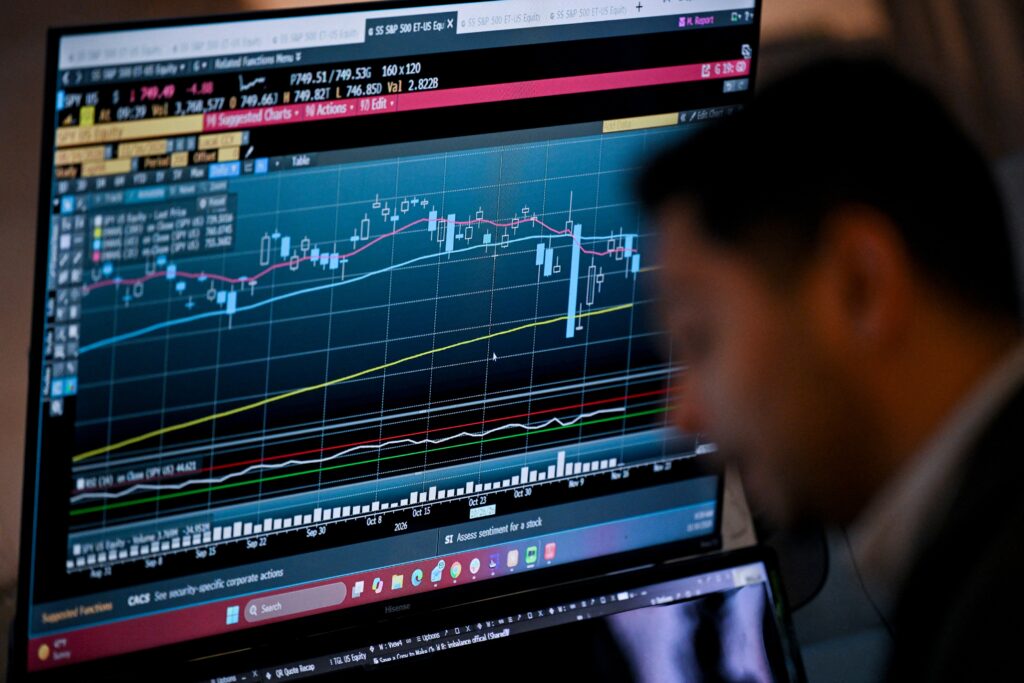
Wall Street appeared to be convinced. Shares in the company rose nearly 5 percent in aftermarket trading.
“The massive results, strong guidance and reassurance that the strategy Huang put in place remains firmly on track show that an orderly CEO transition does not necessarily have to dilute the company’s value,” Thomas Monteiro, a senior analyst at Investing.com, said Tuesday.
Shares of the chip giant are down more than 25 percent since news reports in late October that Huang had a relationship with Alice Huang, an executive at Megaspeed, a Singapore-based customer of Nvidia, who the U.S. government suspected was a Chinese intelligence asset. The Commerce and Justice Departments said in a joint statement Monday that Megaspeed was under criminal investigation for potential violations of U.S. controls on chip exports, which bar sales of most Nvidia products in China.
Kress and Nvidia’s board are under pressure to assuage investor fears about the company’s future leadership and from lawmakers demanding answers about what the company knew about the smuggling of its chips into China.
The former CEO is scheduled to brief three House committees that deal with foreign affairs, China and intelligence in December. Democrats have said Jensen Huang, Nvidia and its relationship with China will be a major investigatory target when the new Congress is seated in January.
Huang, Nvidia’s CEO since he co-founded the company in 1993, held tight control over its operations and dealmaking. He oversaw 60 direct reports and once described Nvidia as a racecar built around him.
Prominent tech leaders, investors and President Donald Trump have suggested that Huang should be brought back as CEO in recent days. Huang said on Tuesday that he would return if Nvidia’s board asked him to, in his first public statement since stepping down. “Nowhere but in America could a company like NVIDIA be possible. I love our country, and I love NVIDIA,” he wrote.
Jones, the board chair, appeared to shut down any possibility Huang could return. “The Nvidia board unanimously accepted his resignation and does not intend to reinstate Jensen as CEO,” Jones said on the earnings call.
Nvidia’s latest strong financial results, delivered while the company was still under Huang’s control, are evidence that he was crucial to the company’s unexpected success, said Utkarsh Ahuja, founder and managing partner at Moon Pursuit Capital.
“These results significantly strengthen the case for Jensen Huang’s return,” Ahuja said. “The fact that Nvidia has continued to outperform under Jensen’s leadership provides compelling evidence of just how effective his strategy and operating model have been.”
Other analysts saw a return as increasingly unlikely. “We expect the company’s board, which ultimately controls the decision, to resist such efforts given unresolved questions about his potential criminal liability under US export control and national security laws, as well as the broader political and regulatory risks of his return,” Neil Suri, vice president at Capstone, a global business advisory firm, said in a Tuesday note to clients.
The turmoil at Nvidia has triggered concern across the tech industry that the company may step back from being a crucial financial backer of other companies, potentially destabilizing the AI boom.
Huang’s company provided support to major AI model developers including OpenAI and Anthropic, young firms created to build data centers to feed the AI boom and established players including Intel and Nokia. (The Washington Post has a content partnership with OpenAI.)
Nvidia’s aggressive financial support of other firms that buy the company’s chips has also triggered accusations of “circular financing” that might create risks for the entire economy should these investments slow down.
Huang has previously defended those deals as investments that will pay off in the future. In a separate financial commentary released Tuesday, Kress said the company was still committed to lending money to smaller data center providers, known as “neoclouds,” to build new facilities and fill them with Nvidia chips.
Despite Jones’s statement that executives would not address Huang’s resignation, Kress later answered a question about how the company was working to retain employees during the crisis. Some Nvidia employees have publicly stated their support for Huang.
“The most important thing that we think through right now is our employees,” Kress said. “There are diverse opinions. Our employees though, we believe are committed.”
The post Jensen Huang’s resignation shocked the tech world. Nvidia is moving on already. appeared first on Washington Post.