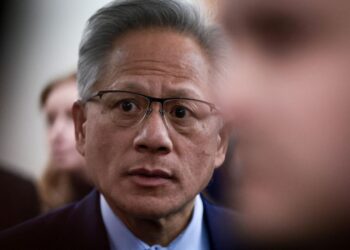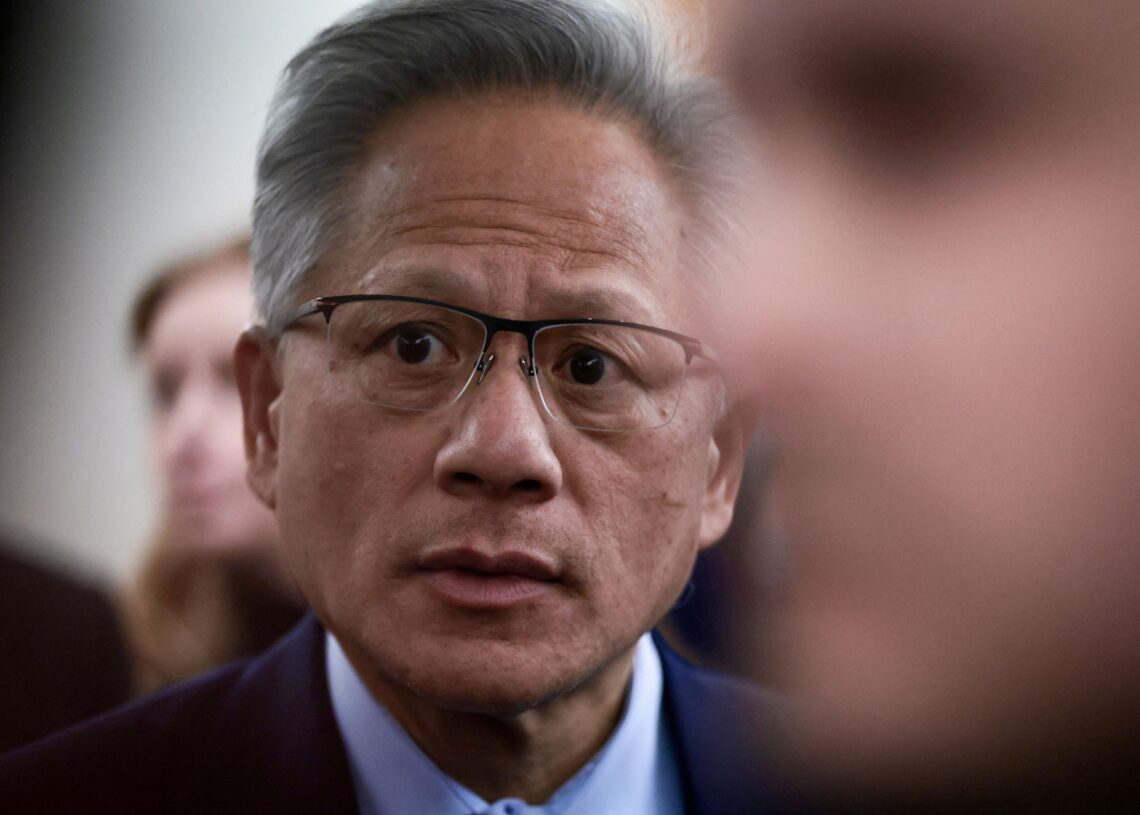
Jensen Huang’s name is plastered across headlines.
Huang, the Taiwanese-born former CEO of the chip giant Nvidia, recently acknowledged having an affair. He did not specify with whom, but it is widely reported to be a business associate named Alice Huang, a Chinese-born former executive at Singapore-based company Megaspeed who U.S. intelligence has speculated may be a spy in the Chinese government’s employ.
This tale of possible espionage is the stuff not only of cinema thrillers, but also daily tabloid fixation. Some news outlets have used headlines that Asian journalists and a group representing them have accused of employing racist tropes.
“Reporting on allegations of espionage is legitimate and important, but recent coverage involving Nvidia CEO Jensen Huang has raised concerns about the language and framing of some news outlets, including headlines that turn Asian surnames into punchlines,” the Asian American Journalists Association, a nonprofit group focused on advocating for Asian journalists, wrote Wednesday in a statement on its website. “A headline should not come at the expense of communities already facing harmful stereotypes.”
The statement added: “While wordplay may seem harmless, turning a common Asian surname into a punchline in a story about espionage and national security risks reinforcing harmful associations between identity and suspicion, wrongdoing or divided loyalties. The punchline reinforces stereotypes that real people have to live with.”
The New York Post has perhaps been the most prominent and repeated offender.
On Nov. 9, it ran a print headline, “HUANG HUANG BANG BANG,” a play on the names but also a prurient take on the affair. The New York Post’s Nov. 10 headline was similar: “HUANG FOR HER BUCK.”
It’s not just the headlines: On Nov. 8, a New York Post article used multiple puns within an article: “It’s not clear how long the Huang-Huang bang bang lasted,” it wrote. Then later, “However it stressed the CEO is not being Huang out to dry …”
Similarly, the Economist magazine used a tagline “Two Huangs don’t make a right” on a Nov. 9 article.
In the days since AAJA’s warning, the Nvidia story has not left the spotlight — and neither have the wordplay-based headlines.
“Huang out to dry” read a sub-headline in a Politico newsletter on Monday.
The Washington Sun had titled a newsletter “Out with a Huang” on Monday but later replaced that headline on a web version of the story.
Complaints about the headlines peppered social media. “This seems to be the preferred [form] of racism in media these days,” Reuters media editor Edmund Lee wrote on X about Politico’s sub-headline.
Freelance journalist Ellen Chang wrote on X that the Washington Sun’s original headline was “extremely racist and xenophobic.”
“Comments about Huang’s race are about his ethnicity and are not related to the story,” she wrote.
The Washington Sun reversed course and said it would learn from the mistake.
“It was not our intention to offend our readers,” a spokesperson for the news outlet wrote in an email Tuesday. “We’ve changed the headline on the online version and will be mindful of any unintended implications in the future.”
Spokespeople for Jensen Huang and Politico declined to comment. Representatives for the Economist and the New York Post did not immediately respond to requests for comment.
The post News outlets’ use of Jensen Huang’s name as a punch line prompts criticism appeared first on Washington Post.