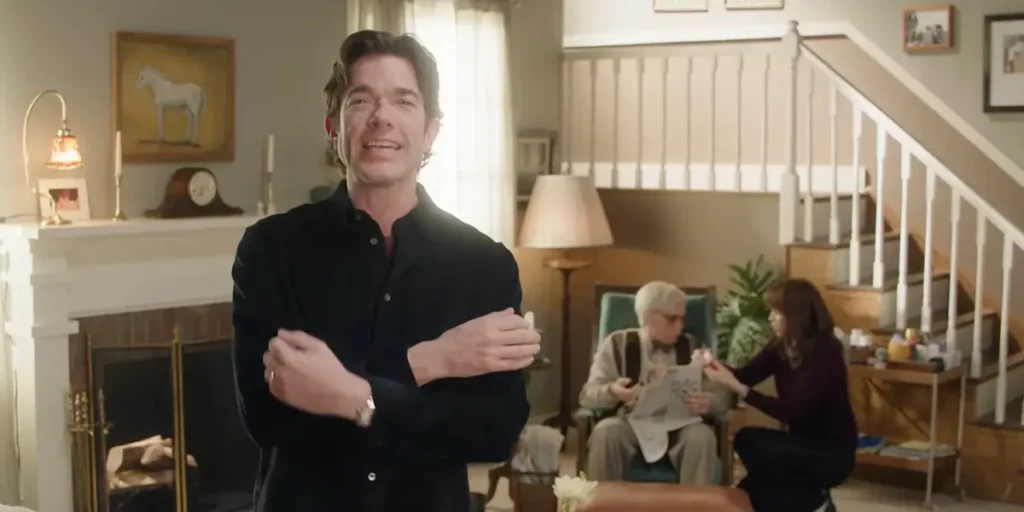
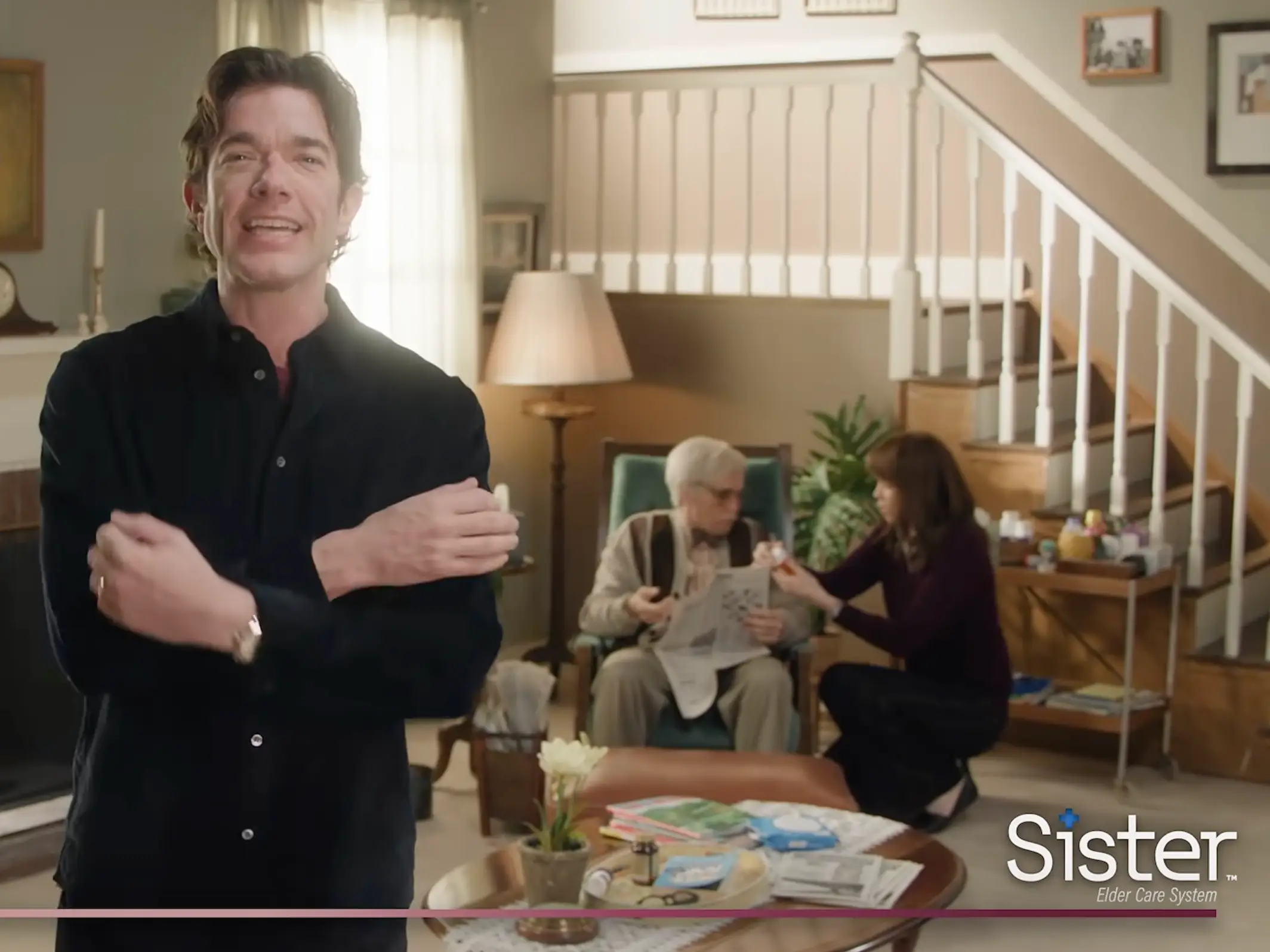
A dark SNL sketch from this weekend about the gender gap in elder care struck a nerve — and there’s a strong element of truth behind the joke.
Comedian and host John Mulaney featured in the “Sister” segment, intended as a parody ad. The ad positions actor Jane Wickline as a “24/7 elder care provider that is completely free, and also your sister.” Other men in the ad talk about the perks of having their sister take on caring for aging parents.
“My dad means the world to me. So when I noticed him start to slow down, I knew I needed to get him the best care possible,” Mulaney says in the ad. “I didn’t want to put him in a nursing home, but a private health aide could cost thousands a week. I didn’t know where to turn. That’s when I heard about Sister.”
The parody ad resonated sharply with viewers, garnering over 2 million views on YouTube since airing. Comments overwhelmingly agreed that this arrangement was “too real,” “so true,” and “triggering.”
Business Insider has been covering the challenges facing long-term caregivers over the past year and how the burden of care often falls on women.
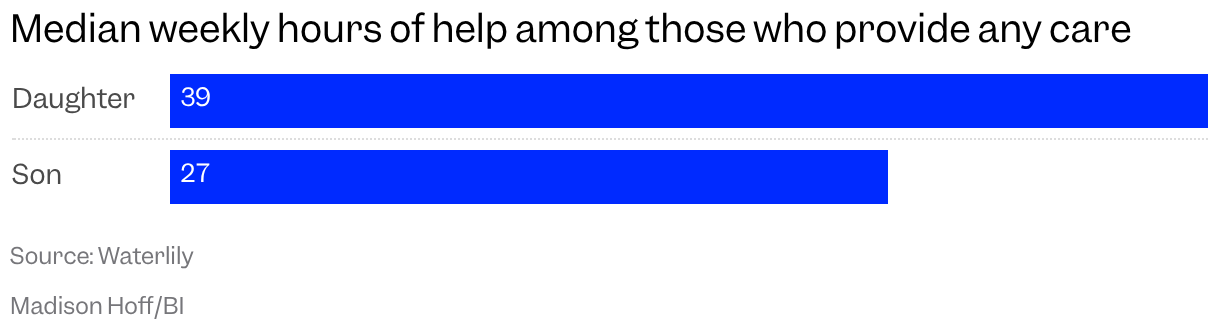
The SNL skit taps into that trend. Waterlily, an AI-powered financial planning platform, found that “America’s family care system runs on daughters,” based on its own data and Centers for Medicare & Medicaid Services data. They are about twice as likely to provide hands-on care, such as helping with dressing and bathing. Among those providing care, daughters typically spend more hours a week helping provide care than sons.
In interviews, well over a dozen women caregivers have told Business Insider that they wish their siblings, often male, did more for their loved one’s care. Many said that their parents had expected their daughters would care for them so their sons could focus more on their careers or families. It was on them to handle their loved ones’ finances, take them to appointments, and, in some cases, quit their jobs to be a live-in caregiver.
However, most refused to talk about their siblings on the record. They feared retaliation from their siblings and didn’t want to make it seem as though caring for their loved ones was a burden, though they said so in private.
The burden of elder care often falls on women
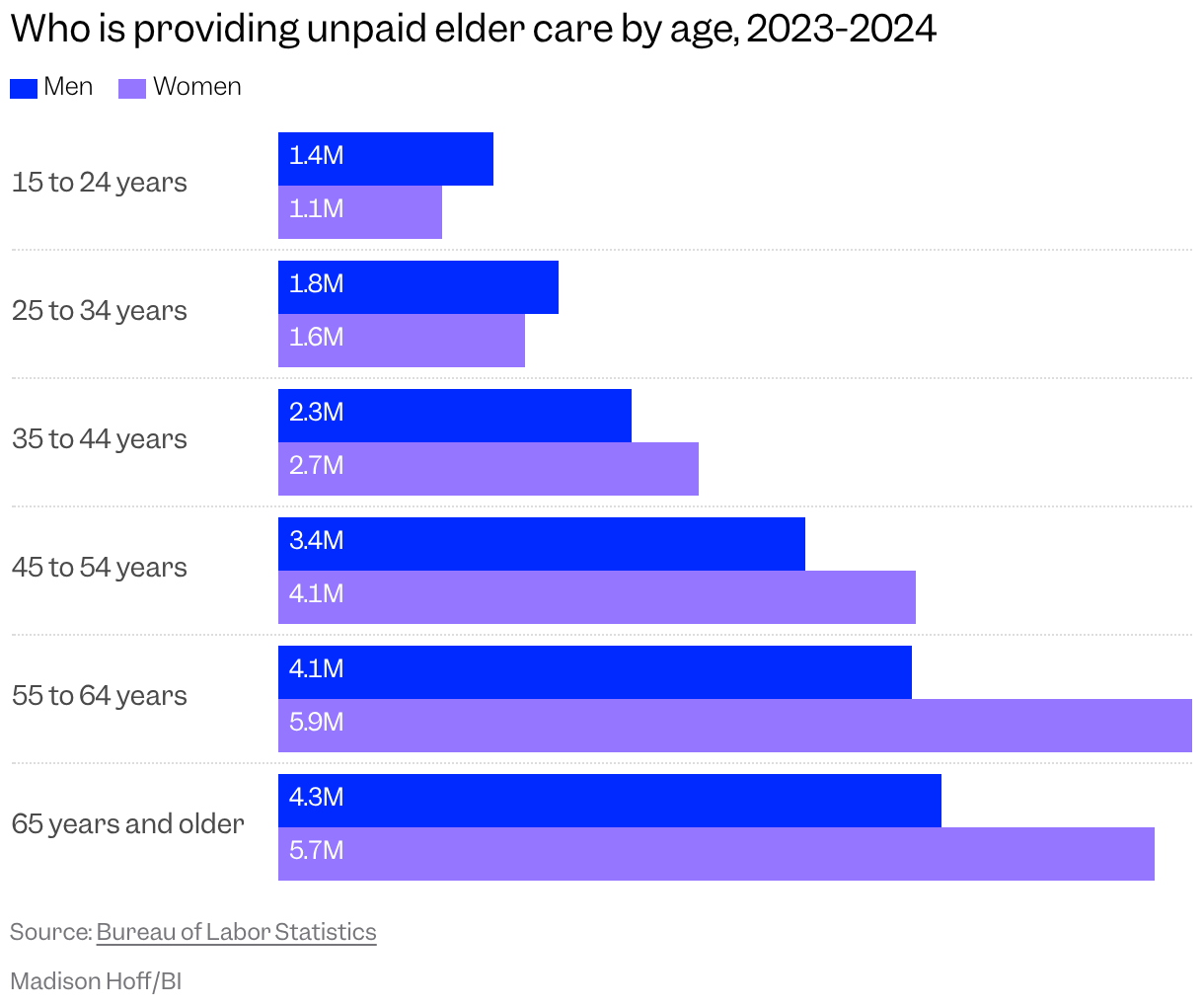
Women accounted for 55% of the 38 million unpaid elder care providers in the US, based on 2023 and 2024 Bureau of Labor Statistics data. Unpaid caregivers tend to be older, with over 11 million women elder care providers being 55 and older. While the majority of providers are women, many men are primary caregivers to their aging parents.
Dina Mabry’s grandmother lived alone in her mobile home until she poured boiling water on herself, after which she moved into a skilled nursing facility. Mabry’s mom became her primary caregiver, as her two brothers said they couldn’t take her in or help pay for her care. It caused a rift between the siblings, which took years to heal. Mabry’s parents had set aside thousands to retire and travel, but $6,000 to $8,000 each month of this went to her mom’s six years in care facilities. It pushed back their retirement by years.
Mabry, 58, works in long-term care and disability insurance and used this experience to inform her clients about the benefits of planning ahead. She advises her clients to discuss care preferences with loved ones years before a crisis, ensuring there is enough money to hire home care nurses or move into an assisted living facility. One of the worst-case scenarios, Mabry said, is a daughter suddenly being responsible for full-time care.
The prices of nursing homes and adult day services have risen faster than overall consumer prices since the ’90s and can end up costing families six figures. AARP found caregivers spend over $11,000 on average a year out of pocket. A large share of that is due to household expenses like food and housing.
Sana Sheraz is the youngest of five siblings, but caring for her aging parents mainly falls on her. She suspects it’s because of her earnings and financial stability rather than having the free time to balance caring for her parents and her children.
“When it comes to medical expenses or big decisions, the weight tends to shift toward me,” Sheraz said. “Sometimes it’s a direct request. Sometimes it’s simply the expectation in the air, the pause after a cost is mentioned, the assumption that I’ll handle it — because I can.”
Care can be like taking on a second job
Angelina Grigoryeva, associate professor of sociology at the University of Toronto, has researched the division of labor among siblings caring for elderly parents. She said it comes at a cost — financially and emotionally, with women often having to adjust their relationship to the workforce.
Grigoryeva said women provide more care and are also the ones receiving more care, likely because they might feel more comfortable getting dressed, bathing, or similar activities with the help of their daughter.
“When working caregivers reduce their hours or need to quit their job entirely, they lose not only their current salary and benefits but also opportunities to save for retirement and build future Social Security benefits,” Debra Whitman, executive vice president and chief public policy officer at AARP, said in a press release.
Carla Romagnano, who is in her 60s, had her mom, who is in her 80s and has dementia, move in with her. Romagnano said caregiving is the hardest job she’s ever had.
“When I come home from work, I sit in the driveway to decompress and go into the house because my second job starts,” Romagnano previously told Business Insider in an as-told-to essay. “I take care of the needs of my mom, whatever I need to do, take care of my two border collies, and then figure out what’s going to go on for the rest of the day. It’s two full-time jobs, and I would not wish this on anybody.”
Grigoryeva said that while caregiving duties can involve daily living activities, they can also involve organizing paid care, such as arranging for caregivers that their parents feel happy with and paying for it.
That paid care also often falls on the shoulders of women; 86% of home health aides and 87% of nursing assistants in 2025 were women. Careb Bien-Aime worked as a home health aide for a few years while in college because she wanted a flexible job. She said she would help with daily living needs, like walking clients or transferring them from their beds. She found the job both difficult and rewarding.
“My first client, with whom I assisted for about a year, died,” she said in an as-told-to essay for Business Insider. “When you have a permanent case, you start building a relationship with this person, and then one day they’re not there.”
Read the original article on Business Insider
The post SNL’s ‘Sister’ sketch captures the hidden burden of caring for aging parents appeared first on Business Insider.