Adam Michel is the director of tax policy studies at the Cato Institute and writes “Liberty Taxed” on Substack.
In the late 1690s, the English Parliament needed more revenue — a tale as old as time. Its solution was to impose a wealth tax based on the number of windows a house had. Rich men had homes with more windows, so, it was reasoned, the tax would be a good way to make the wealthy pay more.
The results were almost comical. A London carpenter told Parliament he had been hired to brick up windows in nearly every house on a single street. A tax on wealth became a tax on natural light and fresh air, leaving a lasting architectural testament to the lengths people will go to avoid levies.
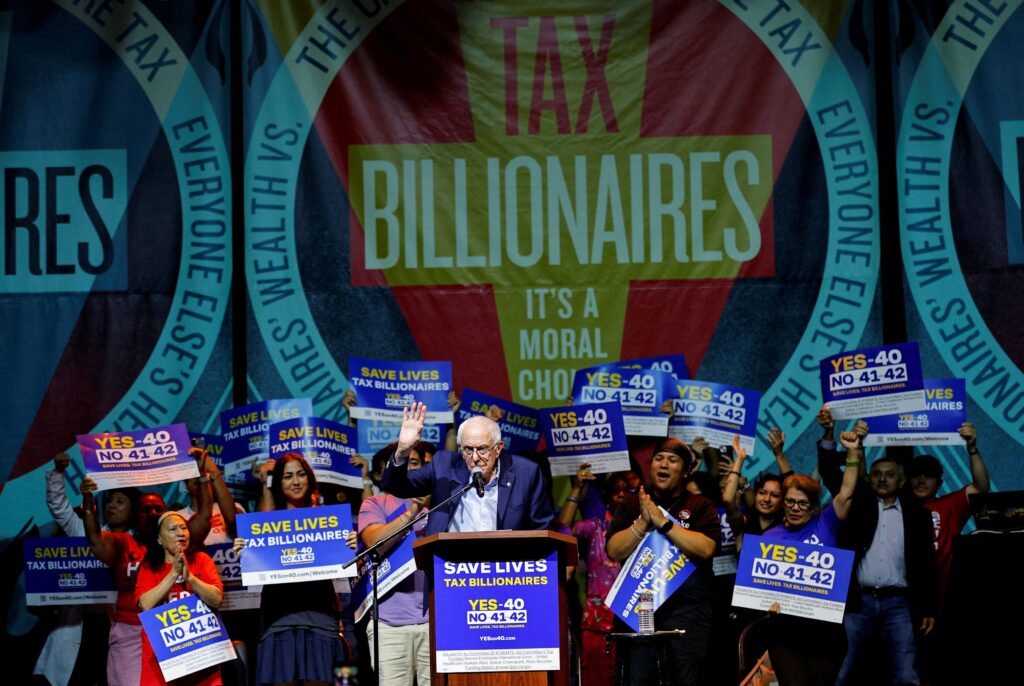
Californians escaped a similar fate after the November ballot measure proposing a 5 percent wealth tax on billionaires’ net worth failed.
Despite regular reminders that wealth taxes are generally unpopular, such measures always seem in vogue. California wealth-tax advocates are already plotting a 2028 do-over, and with large majorities in Congress after January, Democrats are likely to push for similar proposals federally. Economists like me spend much of our time explaining how wealth taxes hurt employers, drive out investment and raise little revenue. But the absurd things people do to avoid them can be even more revealing.
France repealed its annual net wealth tax in 2017 after the prime minister concluded that it had driven 10,000 people with 35 billion euros’ ($39.3 billion) worth of assets out of the country. The exodus shrank the overall tax base and caused the government to lose revenue, according to one analysis. California didn’t even need to pass its version to get the same result. Because the measure was based on where a billionaire lived on Jan. 1, nearly 30 percent of the projected wealth tax base left before the vote, and the income taxes those people would have paid left with them.
The wealthy leave countries and states to avoid wealth taxes, but they also exploit tax exemptions. The French discounted taxes on forestry and vineyards, so tax advisers marketed timber and vineyards as tax shelters. Lawmakers also carved out an exemption for art, which encouraged taxpayers to purchase expensive paintings to protect their assets from the levy.
In an attempt to tax the most extravagant forms of wealth, France levied a yacht tax in 2018, projecting it would raise 10 million euros ($11.8 million) per year. By 2025, only five large yachts remained eligible for the tax in France, and the tax collected just 60,000 euros in 2024 ($64,900) — less than 1 percent of the estimate. Tax yachts, and they will literally sail away.
Even harder to tax than a yacht is art. To avoid levies in their home countries, collectors turned to bonded warehouses in Switzerland, or “free ports,” to house valuable assets beyond the view of tax authorities. Meeting new demand, the Geneva free port added 10,000 square meters of storage space in 2014, allowing art and other assets to accumulate out of sight.
The Geneva warehouse alone is home to more than 1.2 million works of art worth an estimated $100 billion. Held in climate-controlled crates, protected by world-class security, are an estimated 1,000 Picassos and works by da Vinci, Renoir, Warhol and Van Gogh, as of 2016. It’s the “greatest art collection nobody gets to see,” according to a former director of the Louvre. Tax rules helped transform what are intended to be temporary waypoints for goods in transit into permanent tax-free vaults.
Other taxes on accumulated wealth also change behavior. British comedian Ricky Gervais has been with his partner, Jane Fallon, since 1982, but now intends to marry her to avoid the 40 percent British inheritance tax, which doesn’t apply to transfers between spouses.
California’s wealth tax could have created the opposite incentive. By treating married couples as a single taxpayer, couples just over the billion-dollar threshold could have divorced to divide their wealth and escape the tax.
The history of wealth taxation is a history of unintended consequences. Wealth — in whatever form it takes — can be revalued, reclassified, divided, moved and hidden. The window tax was abandoned long ago, but the temptation to repeat the same mistake lives on.
The post The rich have always found wealth-tax loopholes appeared first on Washington Post.