Regarding the Dec. 9 online news article “Miami will have its first Democratic mayor in nearly 30 years”:
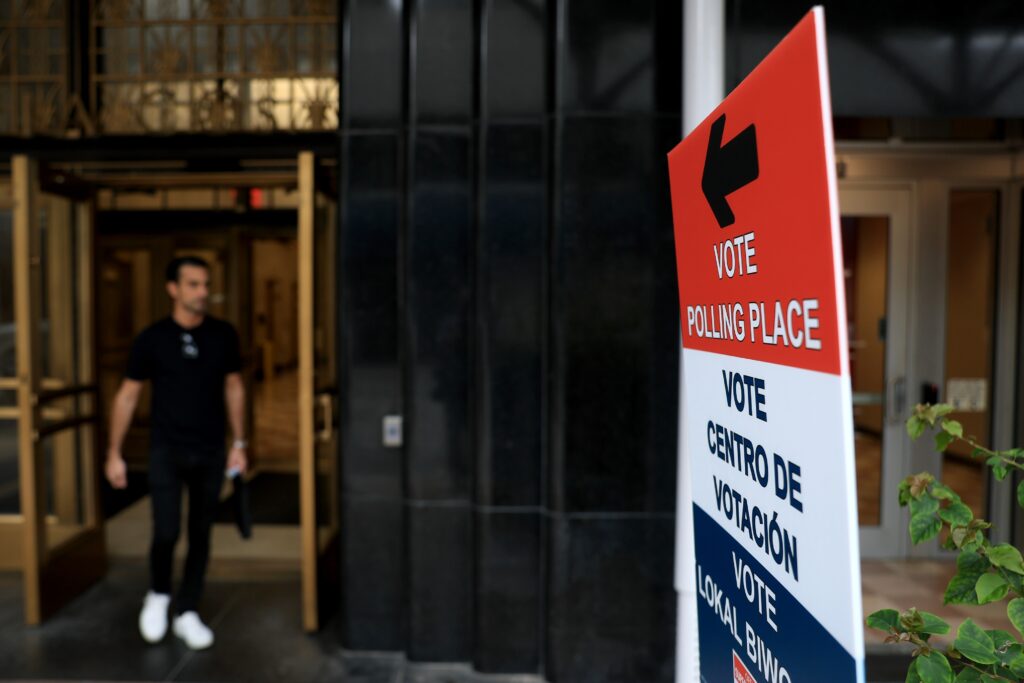
Eileen Higgins’s victory is special. Last year, Kamala Harris didn’t win an outright majority in Miami, coming up with 49.7 percent of the vote to Donald Trump’s 49 percent, and Trump won Miami-Dade County comfortably, with 56.1 percent of the vote. On Tuesday, Higgins garnered 59.46 percent of the vote, running in a heavily Hispanic city as a White woman against an experienced Cuban-born Republican.
But although this is great news for Democrats, we must not assume that they magically reclaimed the Hispanic vote they notably lost in 2024. Only 21.34 percent of eligible voters in the city turned out for Tuesday’s runoff, compared with the 72.41 percent who voted in Miami-Dade County last year.
Moreover, our statistical analysis of every precinct in the city showed a weak negative relationship between Democratic swing and Hispanic population, meaning precincts with more Hispanic residents tended to swing toward Democrats by slightly less than average. In contrast, Democratic swing was slightly higher in plurality White precincts, suggesting that it was White voters who moved more strongly toward the Democratic candidate. In total there was a 16.8 point swing toward Democrats in Hispanic-majority precincts, while non-Hispanic majority precincts saw a swing of 23.5 points.
Despite the overall trends, there were multiple Hispanic-majority precincts where voters swung toward the Democratic candidate.
It was great for the Democratic Party that Trump was unable to mobilize his previous voter base after an endorsement. But make no mistake: This election is not an indicator of Hispanic voters coming home to Democrats. It is a case of all types of voters swinging against the party in power. For Democrats in Florida, there is still plenty of work to be done.
Juan Wulff and Jordan Schwartz, Cambridge, Massachusetts
Juan Wulff is an undergraduate student at Harvard.
Jordan Schwartz is chair of the Harvard Public Opinion Project.
Fallout of the D.C. takeover
According to the Dec. 4 online news article “Most immigrants arrested in Trump’s D.C. crackdown had no criminal records,” 80 percent of the immigrants arrested by federal agents in D.C. during the surge in federal law enforcement this year had no criminal record. Yet Immigration and Customs Enforcement officers swept through neighborhoods with tactical gear, tackling people on sidewalks and pulling them from cars as they went about their daily lives.
During those weeks, people were afraid to go to work, take their children to school or even shop for groceries. That fear has not dissipated, nor do we yet know the full economic fallout of those broad sweeps. Restaurants, day cares and home improvement contractors all reported staffing shortages as workers declined jobs in the District. Families forfeited critical income, and the District lost needed tax revenue.
Though statistics reflect a drop in reported crimes, those numbers hide a more complex reality. Because the D.C. police publicly collaborated with federal agents, many immigrants now report a deep reluctance to call the police, even when they are victims or witnesses of crime. This outcome was predictable. Numerous police associations, including the Major Cities Chiefs Association, have acknowledged that entangling local police in immigration enforcement undermines the trust and cooperation essential to public safety.
D.C. police spent years building trust with immigrant communities. Those gains have been shattered in a matter of weeks by a president that District voters overwhelmingly opposed and a Congress in which they have no vote. Federal leaders justified the takeover by painting D.C. as out of control, but D.C. residents understand that the federal surge only amplified fear, loss and chaos in our neighborhoods.
Vanessa Batters-Thompson, Washington
The writer is executive director at DC Appleseed Center for Law and Justice.
Character matters
Regarding the Dec. 10 news article “Police investigation faults Nancy Mace in profanity-laced tirade at airport”:
The actions of Rep. Nancy Mace (R-South Carolina) were especially bad considering she should be setting an example. But after learning that members of the House and Senate are routinely escorted through airport security, my question is: Why do they get preferential treatment? If they don’t experience the same nightmare at airports that regular folks face, they will never fix the broken airport security system. People who never do grocery shopping don’t appreciate the impact of high food prices. Those who don’t live paycheck to paycheck can’t fully understand a government shutdown’s impact on federal workers. The sooner elected officials get treated like regular folks, the sooner everybody’s life will get better.
Steen I. Petersen, Nanaimo, British Columbia
Rep. Nancy Mace’s recent encounter at the Charleston International Airport illustrates why character must be a critical component in choosing our elected leaders. This might sound like a simplistic perspective, but common sense is most often simple.
Back in the day, a candidate’s character was considered a vital aspect of their fitness to serve. Today, it seems drama, social media, inflammatory behavior — and the resulting generous media coverage — are acceptable substitutes.
Mace showed us how she behaves when she doesn’t get what she wants; moreover, she showed us how she views and treats average folks just trying to do their job.
Kelly Grace Smith, Fayetteville, New York
Post Opinions wants to know: Have you ever gotten an opportunity to set the record straight? Tell us what happened, and your response might be published in the letters to the editor section. wapo.st/record
The post Don’t read too much into the Miami upset appeared first on Washington Post.