

The real estate market has felt anything but normal in 2026. High interest rates and home prices have turned off many would-be buyers, even in some of the country’s previously hottest markets.
New taxes affecting high-end properties, coupled with broader economic uncertainty, have also prompted wealthy buyers to question whether it still makes sense to buy or invest in real estate in their cities — or look elsewhere, even overseas.
These challenges are likely to carry into next year. But Business Insider’s 2026 Rising Stars of Real Estate say it’s not all doom and gloom.
Some rising stars see a bigger role for agents as buyers and sellers try to make sense of a complicated market. Others are experimenting with AI to manage and grow their businesses. And in some markets, like Miami and New York, they say demand is picking up again.
Here are what 10 of this year’s rising stars say are the biggest issues facing real estate and how they think the industry will adapt.
Agents can’t get by just knowing the basics.

Joey Ben-Zvi, founder of the real-estate firm Ben-Zvi Group, says technology has made data and information more accessible, leading some buyers and sellers to believe they can navigate a transaction on their own, without an agent.
“Consumers have more access to information than ever before, which is ultimately a good thing, but access to information isn’t the same as being in the trenches on a daily basis and staying deeply connected to the product and consumers, along with having the experience, judgment, and relationships necessary to navigate a complicated transaction,” Ben-Zvi told Business Insider.
While Ben-Zvi believes agents remain fundamental to the homebuying and selling experience, he says knowing the basics is no longer enough.
“I think the industry is going through a necessary evolution,” Ben-Zvi said. “Agents can no longer rely solely on access to listings or information. They have to demonstrate real value through their expertise, creativity, negotiation skills, and ability to solve problems.”
Data will become even more critical.

Saharsh Chordia, the 33-year-old vice president of strategy and analytics at Cortland, said that data will become much more important. The challenge, he said, is turning the vast amount of data generated by physical assets into actionable insight.
“Real estate is fundamentally a business built around physical assets, yet much of the industry’s data remains fragmented and underutilized,” Chordia said. “AI will play an important role, but the organizations that create a meaningful advantage will be the ones that can effectively collect, structure, and learn from information generated across their portfolios.”
Data centers could hurt some types of properties.

Michael Dillon, a 31-year-old vice president at Prime Finance, said data centers and power-adjacent properties could drive changes in what traditional property types benefit and suffer. He noted that it’s unclear how an AI-driven economy could position certain asset types over the long term.
“For a lender, that means underwriting not just the building today, but folding those questions into our view of durable demand for that specific property over a ten-year horizon,” Dillon said.
AI is “Our biggest challenge but also our newest advantage.”

Alex Dobosh, an associate director at HKS Real Estate Advisors, sees artificial intelligence as real estate’s biggest challenge, and potentially one of its greatest opportunities.
It’s not hard to see why. Americans are turning to platforms like ChatGPT for real-estate advice, home-construction guidance, and help with the buying and selling process.
Business Insider has even written about homebuyers who have successfully used AI as their real-estate agent.
Dobosh doesn’t see AI as a reason for agents to panic. He says it can be a powerful tool for professionals willing to embrace it. His firm is already doing so.
“Our biggest challenge is also our newest advantage, which is AI,” Dobosh said. “It can be overwhelming to see how it’s changing our world. We are leveraging it every single day to source business and help our clients, but also because we refuse to fall behind.”
The wealth gap will continue to grow.

Landy Liu, the 33-year-old founder of Foyer, a “401(k) for homeownership,” expects 2027 to be another year of affordability concerns.
“We are facing a structural squeeze on consumers that is leading to a dramatic evolution of the homebuying experience,” Liu said.
Liu, who founded Foyer to give first-time homebuyers more support throughout the process, said a lack of affordable homes has widened the wealth gap.
“The industry needs to fundamentally change to better support younger Americans and other consumers at a lower cost,” he said.
There’s a housing shortage and an affordability crisis.

Katherine McGrath, whose work at lobbying firm Kasirer deals with land use projects, believes the lack of affordable homes — and of homes in general — is a major challenge, especially in her city of New York.
“Demand continues to rise across all five boroughs, but land, construction, labor, and financing costs make it extremely difficult to build projects with a meaningful share of affordable units,” McGrath told Business Insider.
McGrath said that mixed-income development is one of the most effective ways to combat both supply and affordability in one blow. But developers need assistance from their local governments.
“Developers can’t close that gap alone,” she said. “They need incentive programs that reflect real-world costs, a faster approvals process, and continued zoning reform. If we want more affordable homes, we have to make it feasible to build them.”
The lack of quality buildings is slowing down transaction velocity.

Cordelia Meserow, a vice president of asset management at real estate investment and management firm Harbor Group International, said that while interest rate volatility has had an effect on pricing commercial buildings in Manhattan, the city’s leasing market has never been stronger. The problem is that there’s not enough good office space to go around.
“There seems to be no ceiling for what tenants will spend on desirable space,” Meserow told Business Insider. “The biggest challenge in New York is that the market is actually running out of Class A space.”
Because of the shortage of Class A buildings, transaction velocity will be constrained.
“Velocity will certainly slow down because of the lack of availability,” she said.
Real estate agents need to regain clients’ trust and show their worth.
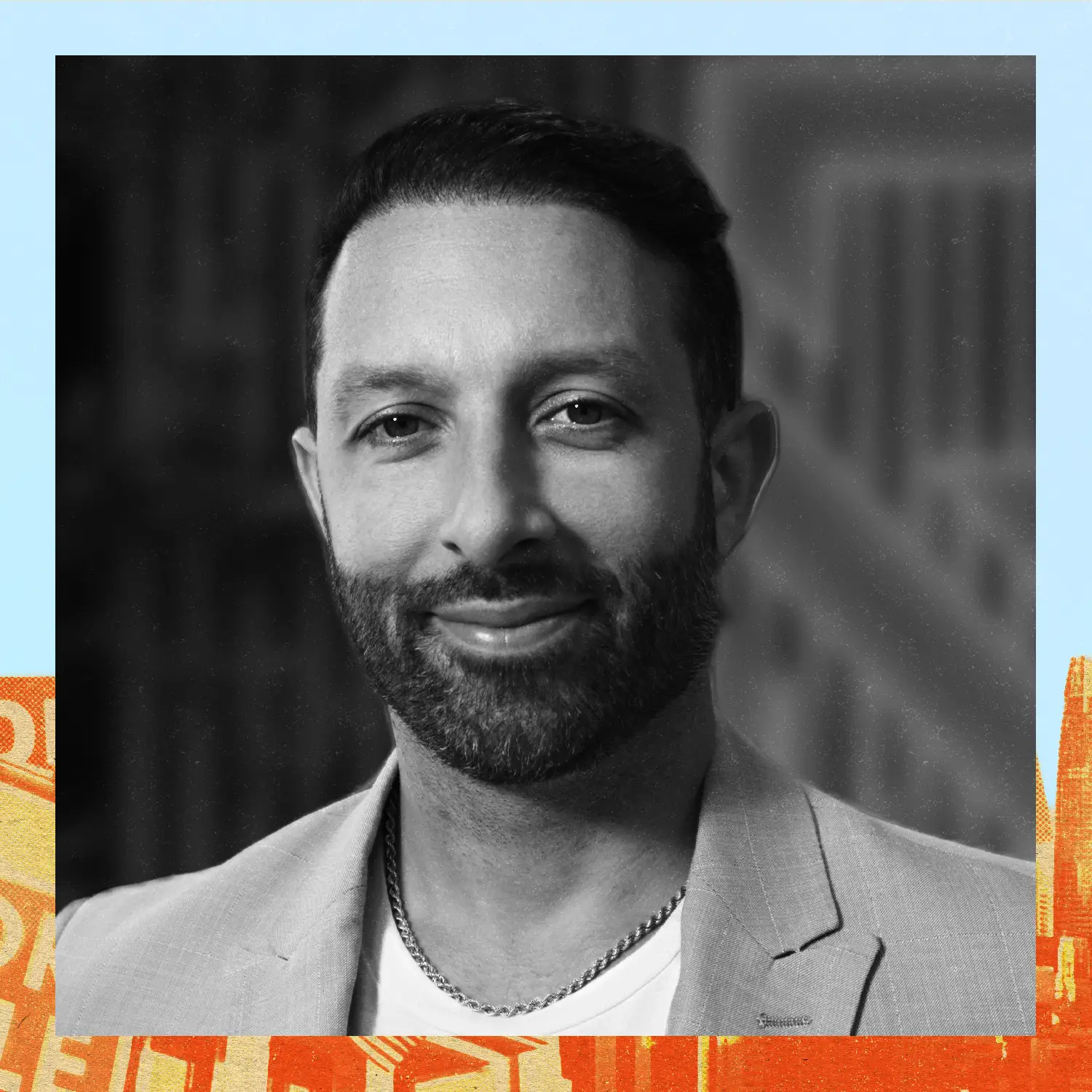
After the structural changes to commissions, real estate agent Steven Rivera thinks agents need to win back their clients’ trust to succeed.
“Since the commission settlement, buyers sign an agreement with their agent before touring a home and rightly ask what they are paying for,” Rivera told Business Insider. “That is healthy for the industry, but it raises the bar: agents now have to demonstrate their value, not simply claim it.”
Rivera said he gives his clients a high level of service to instill trust in the final result.
“If you cannot explain what you do for the fee, the market will ask,” he said.
The real estate industry needs to start catering to younger generation.

“Real Estate is built for a world that no longer exists,” cofounder of Snag, Selin Sonmez, told Business Insider. “Its biggest challenge is adapting to the new economic reality of the rising generation.”
Sonmez’s startup Snag is geared toward younger renters looking to sublet their spots using a social-media-like approach to listing. She’s recognized that consumers are getting younger, and thinks the rest of the industry should try to cater to the next generation.
“Young people are expected to rent for 20 years, have multiple jobs, and not be permanent,” she said. “How is real estate adapting to this new reality? Most industries shifted to bite-size, approachable, scalable units, from media to investments,” she said.
Real estate professionals need to adapt their use of land to meet people’s needs.

James Williams Jr., a shareholder in the real estate group at the law firm Gunster, believes real estate professionals need to adapt their plans to meet the changing needs for housing, employment, and services.
“That means looking at whether a property’s existing use still serves the community’s needs — and, if not, what it could become,” Williams Jr. told Business Insider.
But he said the work doesn’t stop once you identify a more optimal use for a building; there are a lot of hurdles — like zoning or funding — that need to be overcome to make it happen.
“Existing zoning may not permit the proposed development, infrastructure may need significant upgrades, and the cost of those improvements may make an otherwise promising project financially unworkable,” he said. “The challenge is addressing those obstacles while ensuring that the development fits its surroundings and delivers meaningful benefits to the community.”
Read the original article on Business Insider
The post 10 challenges facing the real estate industry in 2026, according to young leaders appeared first on Business Insider.