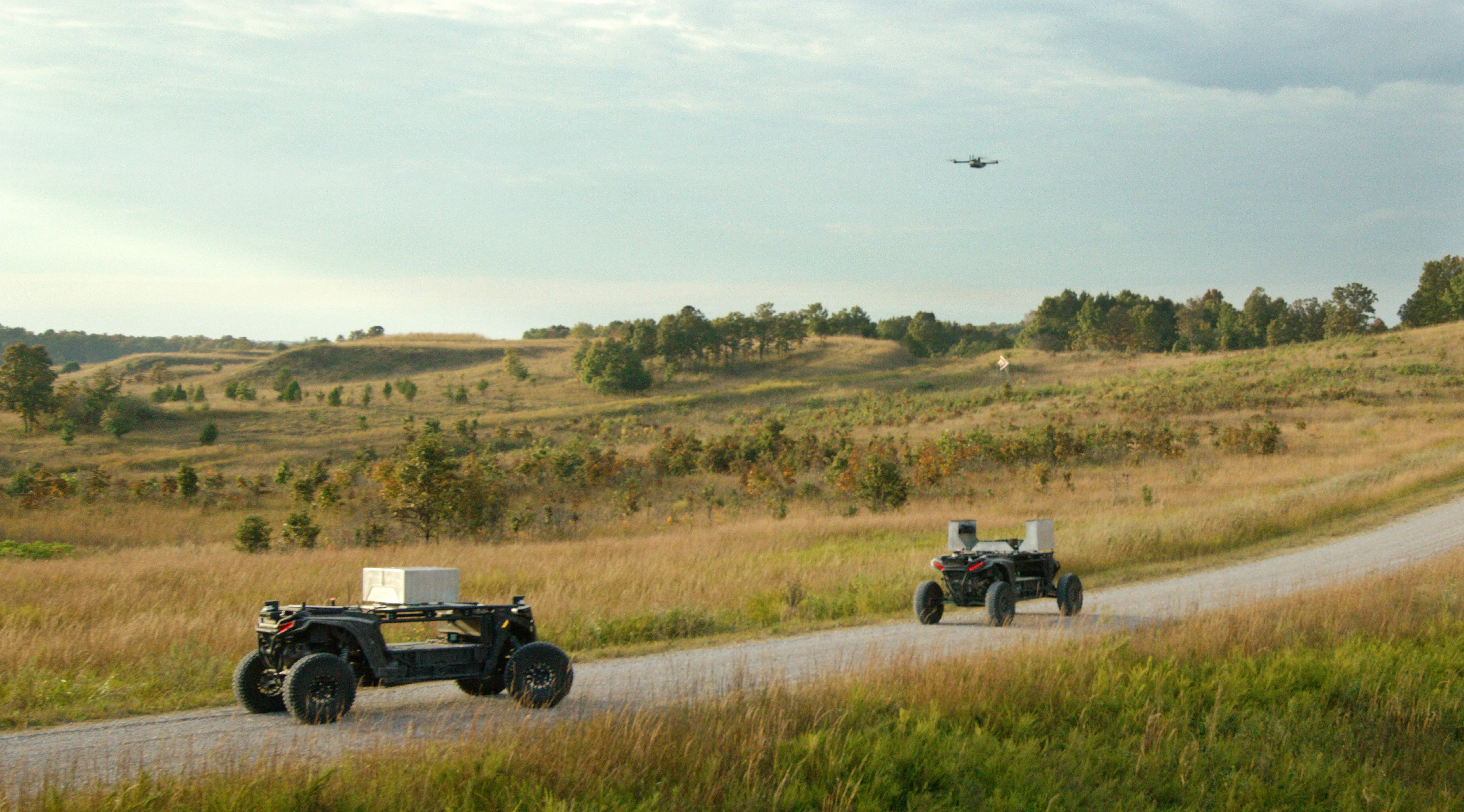
The Pentagon’s research arm tested how ground drones could be sent out in groups to look for and hunt down targets while keeping a human operator in the loop to make decisions.
The Defense Advanced Research Projects Agency, or DARPA, program examined how uncrewed ground vehicles, or UGVs, could quickly drive, map out terrain, and gather information on their own in contested environments. Lessons will inform ongoing developments in uncrewed technologies across the US military, officials said.
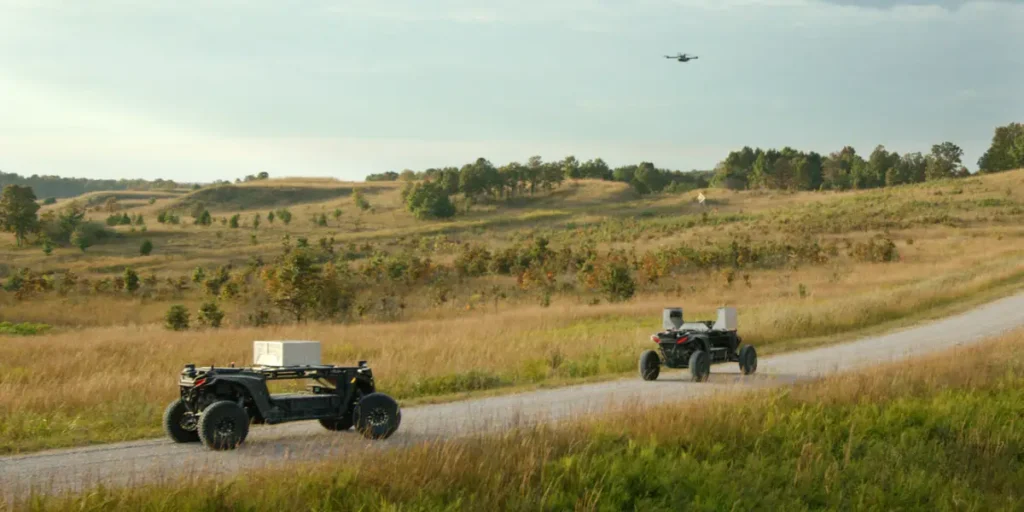
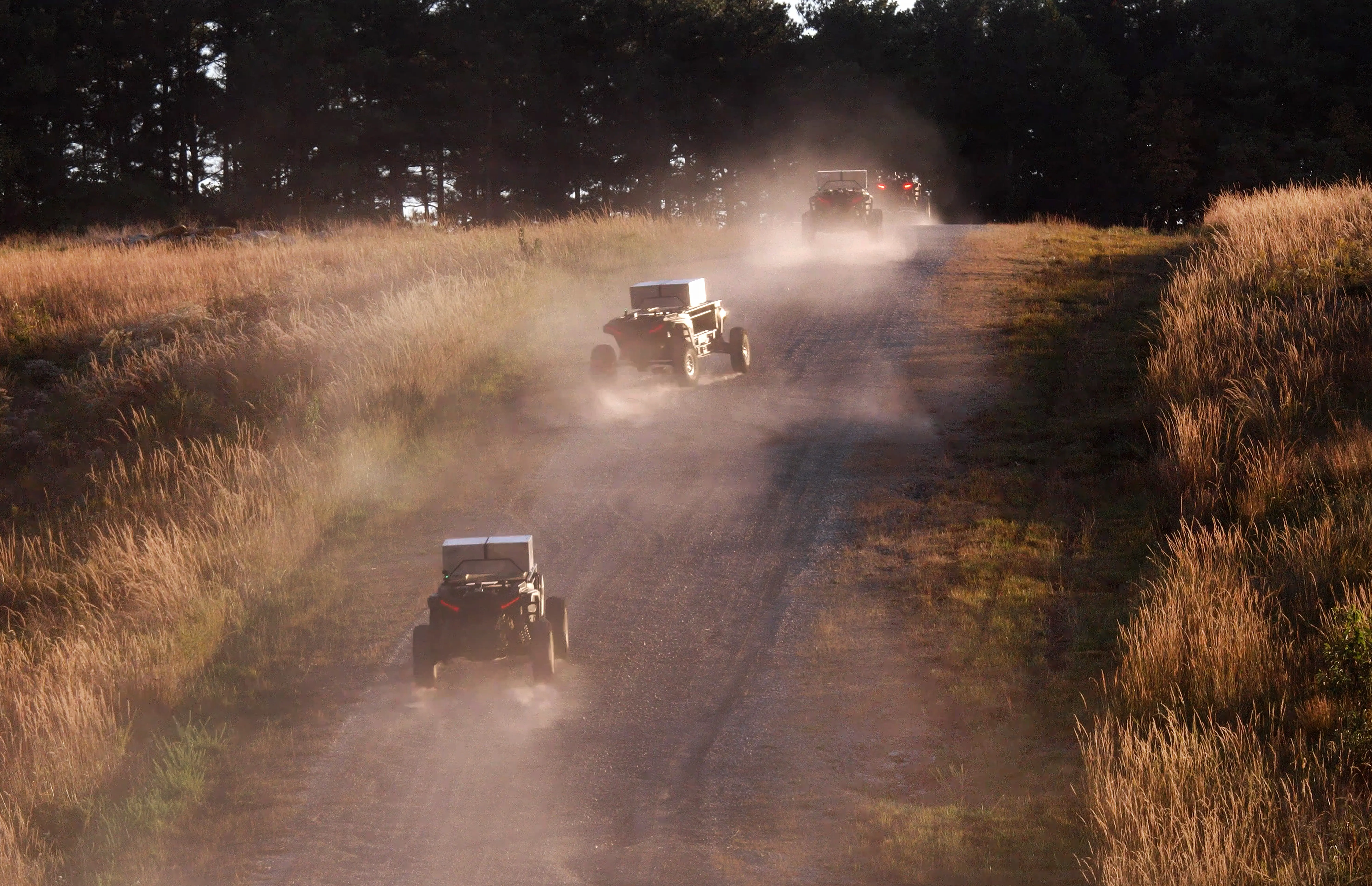
Last month, DARPA experimented with four autonomous UGVs at an exercise at Fort Knox, Kentucky, as part of its Robotic Autonomy in Complex Environments with Resiliency, or RACER, program. During the exercise, the ground robots conducted surveillance of the surrounding area, independently searching for enemy forces for an operator located away from the action.
Jason Gregory, technical advisor at DARPA, told Business Insider that “we’re moving sensors and effectors forward to the tactical edge while keeping the operator in safety out of harm’s way,” but humans still “maintained control and custody and situational awareness at all times.”
Once launched, the UGVs went off on their missions. Gregory said they could work together or independently depending on the scenario. Meanwhile, the human operator supervised the UGVs, assigned them tasks, checked their findings, and then decided how best to engage enemy targets.
At the Fort Knox demonstration, the operator used satellite imagery to task the robots. One UGV stopped in place once it spotted a potential target — a closed box holding a drone inside — and then the human operator decided to launch a simulated rocket at the target.
An important part of the recent RACER robotic testing program was ensuring that the UGVs could perform their tasks without GPS. Instead, the robots built the map as they moved. The US military has said it needs to be prepared to fight through contested or denied environments where GPS isn’t readily available, and is looking into alternative precision navigation and timing solutions, as well as more traditional tactics.
The military is also considering other possible disruptions, such as terrain interference or loss of signal.
“We developed this new software so that ground vehicles could use only their onboard sensors to make decisions to move as fast as possible,” Gregory said. The software was tested on four-wheel, all-terrain UGVs as well as tracked UGVs to ensure it could be deployed on different hardware.
While teams worked to build systems using commercial technologies, the RACER program also involved five years of research to better understand the scientific and technical challenges of autonomy, artificial intelligence algorithms, and ground mobility.
DARPA’s work also relied on observations from Russia’s war in Ukraine on the distinct role of ground robots and how operators employ them in different situations.
Autonomous UGVs face distinct challenges depending on the terrain, environment, and climate. In the desert, for example, robots might need to navigate sand, rocks, and other obstacles, while extreme heat might strain the batteries and communications systems. Swamplands, forests, muddy fields, and snow can also make operations more difficult, requiring robots to be able to adapt to very different conditions.
RACER’s demonstration offers lessons for the broader US military. While some are specific to autonomous ground robots, others — including operating without GPS, teaming humans with machines, and maintaining human oversight in robotic operations — could apply to uncrewed systems across the military. It’s also sharing the lessons with industry.
Read the original article on Business Insider
The post The Pentagon is testing war robots that can hunt in packs without GPS and find battlefield targets on their own. Humans still call the shots. appeared first on Business Insider.