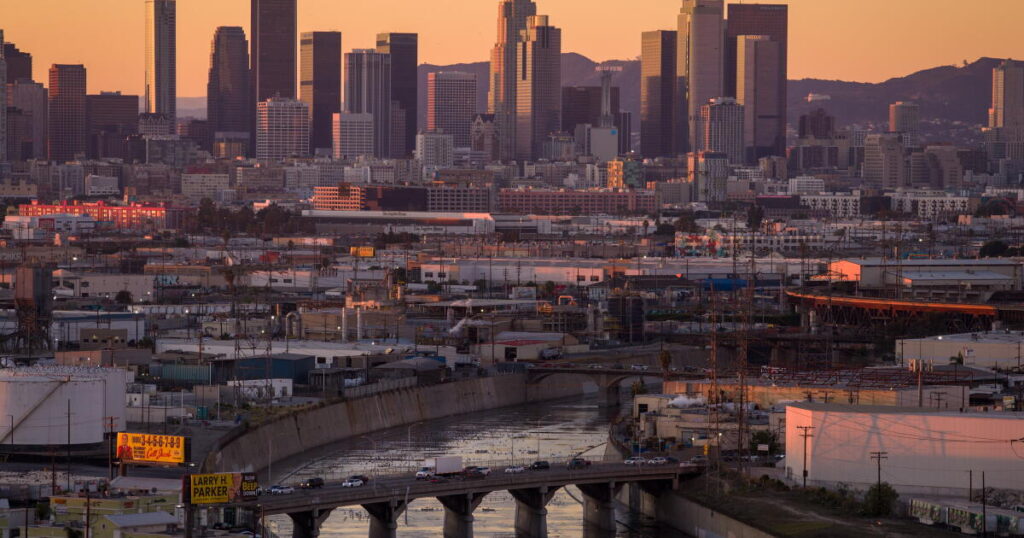
The mood in beleaguered downtown Los Angeles may — at last — be starting to shift.
Years of gloom, exacerbated by the COVID-19 pandemic, emptied office skyscrapers and sidewalks, but some data and deals suggest downtown could be staging a comeback.
Some signs are easy to spot, like construction on the $2.6-billion expansion of the Convention Center and the long-delayed cleaning of buildings dubbed Graffiti Towers, which had become an embarrassing symbol of neglect.
The exodus of office tenants has waned.
Vacant offices have been perhaps the biggest drag on downtown since its signature skyscrapers were temporarily closed by health decree during the pandemic. Many companies have returned on fewer days of the week than before and reduced the amount of space they occupy, as workers often do their jobs remotely. Other firms left downtown, in part because their employees no longer found the streets safe and appealing.
More than a third of office space has been vacant for the past few years, but the decline stopped in the third quarter, as slightly more space was rented than vacated, with the market seeing a net gain of 85,000 square feet, according to real estate brokerage CBRE.
“Finally we have hit the bottom and we’re on the upswing,” said CBRE office broker Chris Penrose. “We’re starting to see some positive momentum.”
“Solid” tenants with good credit are signing long-term leases, he said. “They wouldn’t be making those decisions if things were really as bad as a lot of people like to paint that picture of downtown.”
Beloved historic restaurants thought lost are reopening under new management. A new concert hall designed by legendary architect Frank Gehry will be completed next year at one of the country’s top classical music schools. Nearby, a $100-million expansion of the popular Broad Museum of contemporary art is also under construction.
This year, the University of Michigan and UCLA joined Arizona State University by opening downtown classrooms. Apartment occupancy surpassed pre-COVID levels at more than 90%.
Los Angeles Police Department foot patrols have been assigned to downtown and mental-health teams are being deployed in priority areas such as the Historic Core, alongside coordinated efforts focused on graffiti removal, trash and the cleanliness of major streets and public spaces.
Mayor-elect Nithya Raman said downtown health will be a priority.
“Everything about the future of Los Angeles is currently being bet on downtown L.A.,” she said at a preelection event.
One of downtown’s brightest spots has been apartment occupancy, as the neighborhood continues to attract residents. Multifamily occupancy reached 91% in early 2025, 6 percentage points above its pre-pandemic level in 2019, even as thousands of units were added over the intervening years,
“We’re starting to see positive movement,” said Cassy Horton, co-founder of the Downtown L.A. Residents Assn. “Hopefully we’re pulling the right levers to get things moving.”
The Convention Center expansion has already attracted 18 event contracts, and the city is negotiating more than 100 with large convention holders, said Doanne Liu, head of the city’s Tourism Department.
“We’re now available to the largest 20% of the conventions that could never consider L.A. because it was just too small,” he said.
The American Geophysical Union, for example, has agreed to bring about 25,000 of its scientist members downtown in 2032.
Safety has been an issue for downtown residents and workers in recent years, with several office tenants who moved out of downtown saying that they didn’t always feel safe outside.
The Police Department has cracked down in particular around 7th and Figueroa streets in the Financial District where the region’s busiest underground transit terminal lies, Capt. Kelly Muniz said, and robbery, aggravated assault and vehicle theft are all down more than 30% in the area.
A $3.5-million allocation of funds to pay overtime has also allowed the LAPD to expand its presence near the Convention Center, in the Jewelry District and more recently in the Historic Core and El Pueblo, Muniz said.
Office vacancy and spotty hotel occupancy since the pandemic have reduced foot traffic on many blocks, contributing to a sense of unease, she said. Planned events such as conventions, the FIFA World Cup and other celebrations such as Dia de los Muertos help bring positive activity.
Between April and mid-June, more than 22.7 million visitors came downtown, excluding workers, a 6% jump from the same period a year ago, according to data from the DTLA Alliance business support group.
City improvements in safety and cleanliness around L.A. Live have been “vastly” encouraging, said Todd Goldstein, chief revenue officer for AEG, the owner of the entertainment complex and Crypto.com Arena. AEG also manages the Convention Center for the city.
“I don’t think I’ve ever been as bullish as I have been with what’s happening in our neighborhood,” Goldstein said, as crowds continue to attend basketball and hockey games, concerts and other events. The annual Grammy Awards are held at L.A. Live, and the Academy Awards will move there in 2029.
“We are experiencing record revenues” this year and heading into 2027 in premium seat sales, advertising and sponsorship sales, Goldstein said.
Just north of L.A. Live, the landmark Original Pantry Cafe, dating to 1924, is set to reopen this monthunder new management after being closed for more than a year. Other beloved historic downtown restaurants making a comeback are Clifton’s, now operating as Sanctuary, and French dip sandwich icon Cole’s.
One of the big new tenants is Banc of California, which recently moved into 40,000 square feet in a Figueroa Street tower with its name on top as part of an expansion.
“We believe in downtown’s future, and we’re backing that belief with a long-term investment,” President Jared M. Wolff said.
Other firms, including fund manager Capital Group, have taken advantage of the depressed office market by buying buildings to lease to tenants. In June, Capital Group spent $210 million to buy its 55-story headquarters toweron Bunker Hill, the largest single downtown office sale so far in 2026.
The changes are adding up, said Nella McOsker, president of the Central City Assn. business advocacy group.
“We’re feeling the domino effect in the right direction,” she said. “We have the chance to double down on all the things that are working to speed up the recovery process, and that’s what is so exciting about this moment.”
The post Downtown L.A.’s long-awaited comeback may finally be taking shape appeared first on Los Angeles Times.