A rare nationwide ground stop that delayed and canceled thousands of flights Friday finally ended at about 8:15 p.m. Eastern after nearly 4½ hours following the resolution of problems the Federal Aviation Administration initially blamed on a “temporary telecommunications outage.”
Officials in President Donald Trump’s administration said the rare halt to U.S. air traffic was the result of an aging air control system that is patched together and in need of modernization.
“It’s an old system that went down. It went down everywhere,” Transportation Secretary Sean P. Duffy said at a news conference Friday night.
Duffy said the outage, which disrupted travel plans from coast to coast, was limited to legacy equipment and that the problem had been sparked in the process of upgrading the old, analog system, which caused it to be overloaded.
“All of the new equipment that has been deployed did not go down,” he said.
Homeland Security Secretary Markwayne Mullin said the outage “doesn’t appear” to be related to a cyberattack. He said national security agencies had seen no evidence that there was a cyberattack and that no one had claimed any responsibility for an attack.
“It appears that this was mechanically driven. However, we’re still looking, so we’re not going to rule that out,” he said.
Mullin also said the ground stop was not connected to the Microsoft outage that caused global disruptions Thursday into Friday.
Federal officials said earlier that there had been a communication issue affecting Air Route Traffic Control Centers around the country.
Administration officials warned that lifting the ground stop would not resume in normal flight operations.
Chaos at airports was expected to continue throughout at least the weekend.
Some airlines, such as JetBlue, said Friday they were ending domestic flights for the night and would resume on Saturday. Delta Air Lines said it was “safely resuming flights.” United, too, said it resumed some flights Friday night.
The number of flights canceled because of the outage was nearing 5,000 on Friday night, according to AirNav Radar. As the ground stop dragged on, the number of planes still in the sky dwindled, from 3,115 flights after one hour to just 1,150 after three hours. About 4,500 flights would normally be in the air during those times, the company said.
O’Hare International in Chicago was the airport facing the most cancellations due to the outage, with 722 flights, said AirNav Radar. That was followed by Atlanta’s Hartsfield-Jackson with 691 cancellations and Dallas/Fort Worth at 491. Further down the list was Washington Dulles with 240 cancellations.
“It’s going to be slow, right?” Duffy said about the resumption of flights, adding, “We’re going to try to move as many of those as we can tonight, if we have the capacity with crews to move those flights. If not, we’re going to start tomorrow morning with our airline partners moving those aircraft.”
Duffy said that college football teams traveling on chartered flights would be given a priority by the FAA to “make sure they can move to, make sure we have games going off tomorrow.”
Help The Washington Post report on the disruption
While domestic travel was widely affected, some flights out of Hawaii and Alaska were able to continue during the outage.
The FAA said technicians were investigating the outage, and international flights were being handled on a case-by-case basis.
The centerpieces of the problem were the Air Route Traffic Control Centers, which help manage planes traveling between airports, guiding them along their routes and ensuring they maintain enough distance between one another, according to Tom Lintner, a former safety official at the FAA.
If flights had continued despite the problem, Lintner said, there may not have been a way to ensure that aircraft stayed separated from each other.
“You would run the risk of, effectively, chaos in the sky. Which is not going to happen, because they were smart enough to stop the departures,” he said.
The timing system on the FAA’s internal telecommunications network was having problems, meaning messages might not reach their intended destination, according to a person briefed on the outage. It was not clear what the cause was, the person said, speaking on the condition of anonymity because they were not authorized to discuss the situation publicly. On a typical day, the system might see 8,000 alerts for problems. On Friday, there were 16,000, the person said.
The Pentagon and U.S. Northern Command, which oversees domestic military operations, did not immediately respond to questions Friday evening.
The ground stop caused confusion at airports and in the air.
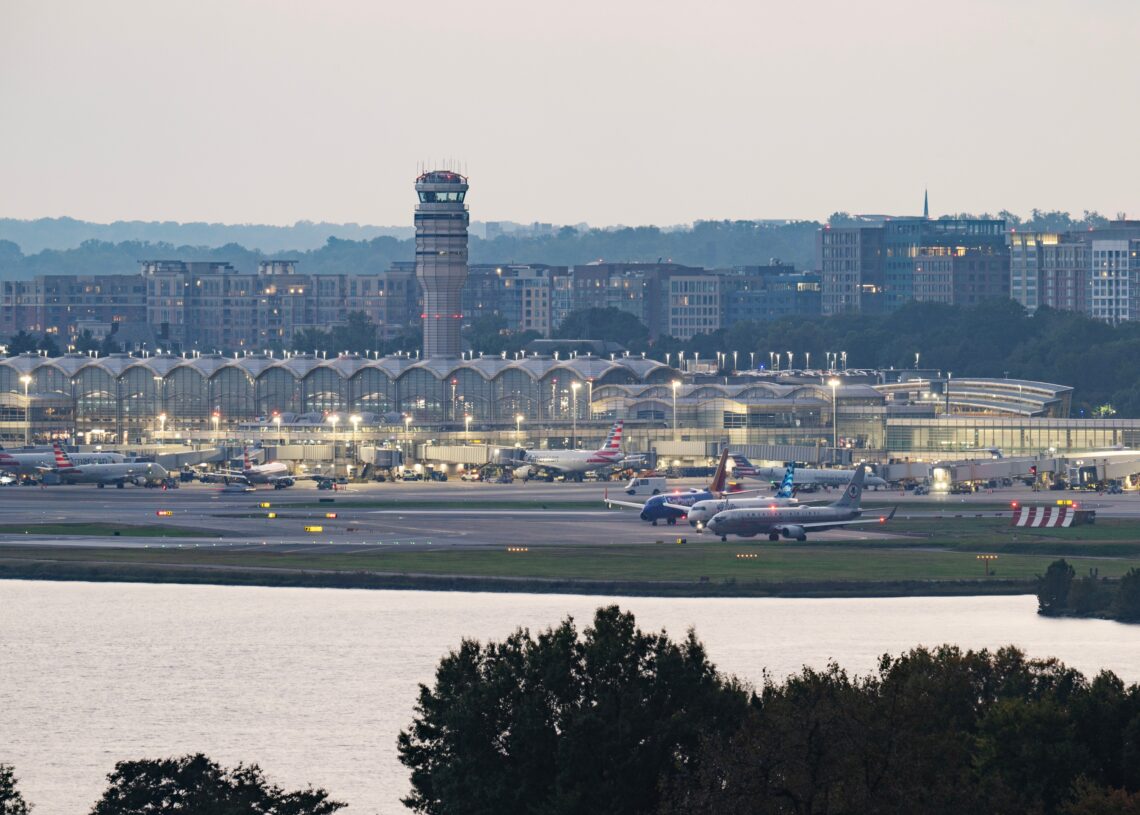
Shortly after 3:30 p.m. at Reagan National Airport, an air traffic controller told a pilot: “For now, just remain on this frequency. We just got stopped on all departures for a frequency issue.”
“Copy that,” the pilot replied.
In a statement, a spokesperson for the Metropolitan Washington Airports Authority said passengers should expect flight delays related to the ground stop, but Reagan National Airport and Washington Dulles International Airport remained open.
At Los Angeles International Airport, a United Airlines gate agent announced to passengers that there had been a nationwide ground stop but said she did not know why.
A pilot in the cockpit of a plane still on the ground when the stop was ordered received a message warning of the stoppage, according to an image shared with The Washington Post.
“NATIONWIDE GROUND STOP DUE TO FAA RADAR AND SYSTEM FAILURE,” it read. “PLEASE DO NOT PUSH OFF THE GATE.”
“Why is there a ground stop?” a pilot asked Friday afternoon at Dallas-Fort Worth International Airport, according to air traffic control recordings on ATC.com. “We are not aware of a reason. We just know it’s indefinite and U.S.-wide,” an air traffic controller replied.
At Seattle-Tacoma International Airport, an air traffic controller told a Southwest Airlines pilot, “Just a heads up, we went into a national ground stop, all aircraft, with update unknown.”
“Okay, thank you,” the pilot replied.
A United Airlines spokesperson said its flights already airborne would continue but that new domestic flights would not depart until the ground stop was lifted.
An American Airlines spokesperson said the airline expected disruptions to its schedule for the rest of the day.
On Tuesday, the FAA announced that a new AI tool for advising air traffic controllers was being rolled out nationwide.
The $875 million SMART system, launched in September, was going to be used at all 22 major air route control centers “to reduce delays, reduce fuel consumption and improve the travel experience for the flying public,” the agency said.
ASI, the company that makes the FAA’s newly deployed AI-powered air traffic control system, said in a post on X that it was not implicated in the ground stop.
The agency has called the system “a cutting-edge tool.” It was first implemented at D.C.-area airports.
In early October, a group of House and Senate Democrats sent a letter to the FAA asking the agency to pause the AI tool’s use “until the agency answers questions about safety testing, implementation, and oversight.”
The last time the nation’s airspace closed like this was on Jan. 11, 2023, when the FAA system for distributing urgent safety messages to pilots and dispatchers went down.
That order lasted for nearly two hours, and more than 1,300 flights were canceled. At least 10,000 were delayed.
The Notice to Air Missions system, or NOTAMs, began having trouble the night before that ground stop. FAA technicians tried backup systems, but officials decided to stop flights until it was resolved.
The FAA later blamed the issue on contract workers who mistakenly deleted files while working on the primary and backup databases.
Gerrit De Vynck, Ian Duncan and Dan Lamothe contributed to this report.
The post FAA lifts ground stop at U.S. airports, leaving travel chaos appeared first on Washington Post.