In 1895, sociologist Émile Durkheim startled progressives by saying: “Crime is normal.” Any society must have standards, some of which are so foundational they must be buttressed by punishing violations. Which, given human proclivities, are inevitable.
Crime and punishment — the causes of the former, the purposes of the latter — are subjects that demarcate progressive and conservative mentalities. This is why the muddled four-part “Crime and Punishment in America,” beginning Monday on public television, disappoints.
It begins well, with Americans’ earnestly striving for humaneness. A historian estimates that during the Colonial Era, probably “most people witnessed a public execution.” Americans pioneered prisons in order to make punishment private, thereby protecting the dignity of the punished, and the public’s sensibilities, and rehabilitation. The noun “penitentiary” conveyed the hope that isolation would make secluded persons penitent.
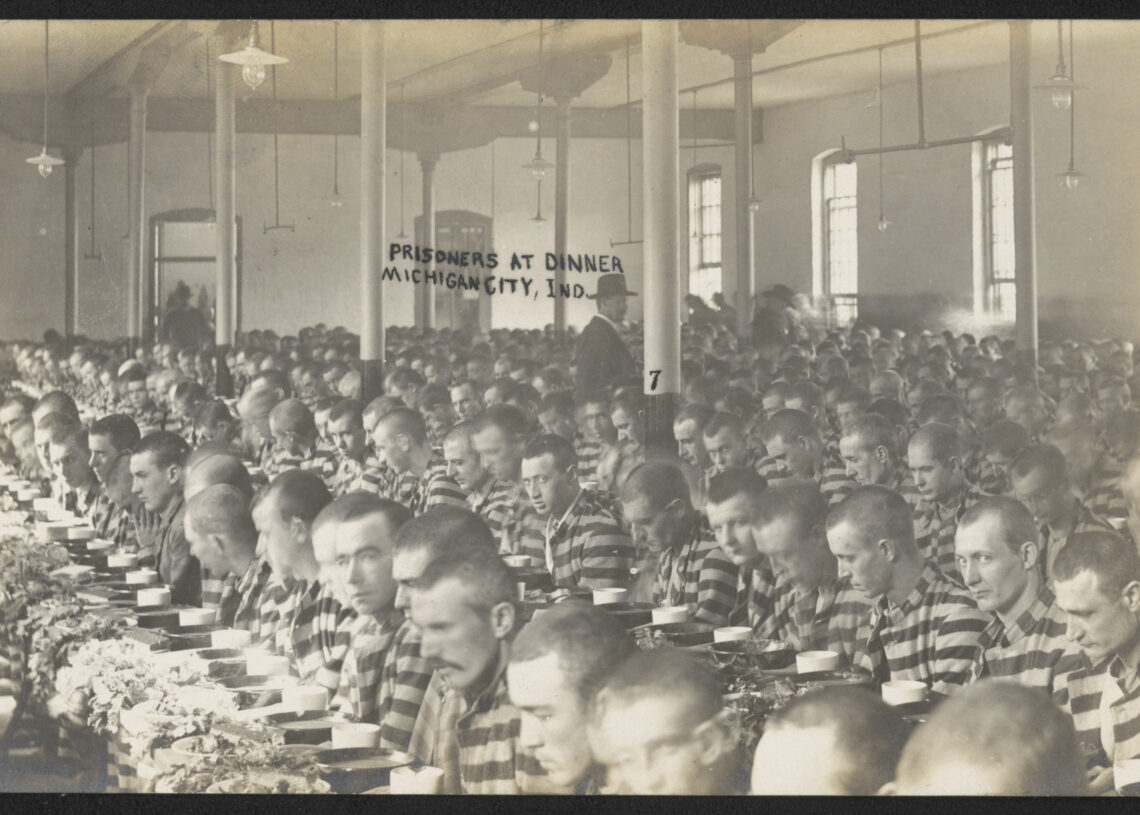
The PBS series notes that captivity, as an alternative to public punishment, soon became a business model, monetizing forced labor. In the unreconstructed post-1865 South, something like slavery reemerged in “the convict release system,” via the 13th Amendment’s abolition of involuntary servitude “except as a punishment for crime.”
In the early 20th century, America’s most famous trial lawyer, Clarence Darrow, said “there should be no jails.” This was because the only “cure” (note the medicalization) for crime is “equality.”
Progressivism’s defining faith in “science” expressed itself in eugenics, which focused the new field of “criminology” on the “criminal type” supposedly possessing “inherited traits.” This began the progressive undermining of the idea of individual accountability, the proper premise of criminal law.
Without examining how society’s response to crime implicates philosophic fundamentals such as free will, the PBS series meanders to tangential topics (e.g., lynchings, the maltreatment of jailed suffragettes during World War I, Japanese internments during World War II). Then Episode 3 introduces, as a disinterested expert, Larry Krasner, Philadelphia’s impeccably progressive district attorney. He has been rebuked by Pennsylvania’s Supreme Court for offenses against candor and proper procedures in pursuit of prosecutorial leniency.
Krasner’s contributions to “Crime and Punishment in America” include calling executives of pharmaceutical companies the “world’s biggest drug dealers.” In his enthusiasm for what progressive-speak calls “decarcerating,” he says “there are deep evils to having excessive supervision” of imprisoned felons. His corrective? He envisions them driving home to “have dinner with their families,” after which they “drive back and sleep in the prison.”
Enough. Crime is “normal,” as Durkheim meant this. Thinking about punishment should involve thinking about moral and political philosophy. Instead, “Crime and Punishment in America” includes too much ideological ax-grinding, and too few contributions from people who have thought deeply about these subjects.
The series exemplifies progressives’ fondness for understanding crime in a way that augments their self-approval, and makes crime seem amenable to solutions their ideology endorses. Structural explanations of crime — locating its causes in social arrangements — licenses social engineering by government to perfect social structures.
By a cascade of non sequiturs, progressives reason: All behavior is socially caused. Causation attenuates (often to disappearance) responsibility. So, only punishment that is therapeutic is justified.
Locating antisocial behaviors in social causation dilutes the individual’s agency, and moral dignity. Remember this: Beware what you think we are — without responsibility — lest we become that. And this: Ascribing crime to social conditions makes progressivism uneasy with policing and incarceration.
No government service has recently improved as much, with more measurable social benefits, than has policing. This has disproportionately benefited communities with below-national averages in income, intact families, employment and years of schooling. In such communities, people’s demand about policing is for more of it.
Regarding incarceration, the New York Times has often, if unwittingly, headlined its progressivism: “Punitive Damages; Crime Keeps On Falling, but Prisons Keep On Filling” (1997); “Prison Population Growing Although Crime Rate Drops” (1998); “Number in Prison Grows Despite Crime Reduction” (2000); “Despite Drop in Crime, an Increase in Inmates” (2004).
The PBS series is silent about something known. Daniel Patrick Moynihan, the New York senator, on the post-1960s epidemic of births to unmarried women:
“There is one unmistakable lesson in American history: a community that allows a large number of young men to grow up in broken families, dominated by women, never acquiring any stable relationship to male authority, never acquiring any set of rational expectations about the future — that community asks for and gets chaos. Crime, violence, unrest, disorder — most particularly the furious, unrestrained lashing out at the whole social structure — that is not only to be expected; it is very near to inevitable.”
This might make a riveting PBS series. But do not expect one.
The post Crime and punishment through a muddled PBS progressive filter appeared first on Washington Post.