Documentaries about certain sorts of visual artists — painters, photographers and the like — all face a challenge. How do you make an interesting movie when most of your raw material is still images? You can’t simply stick to archival video and interviews, since the audience wants to see the artist’s work. But too many static images, and they might start to feel like they’re watching a slide show.
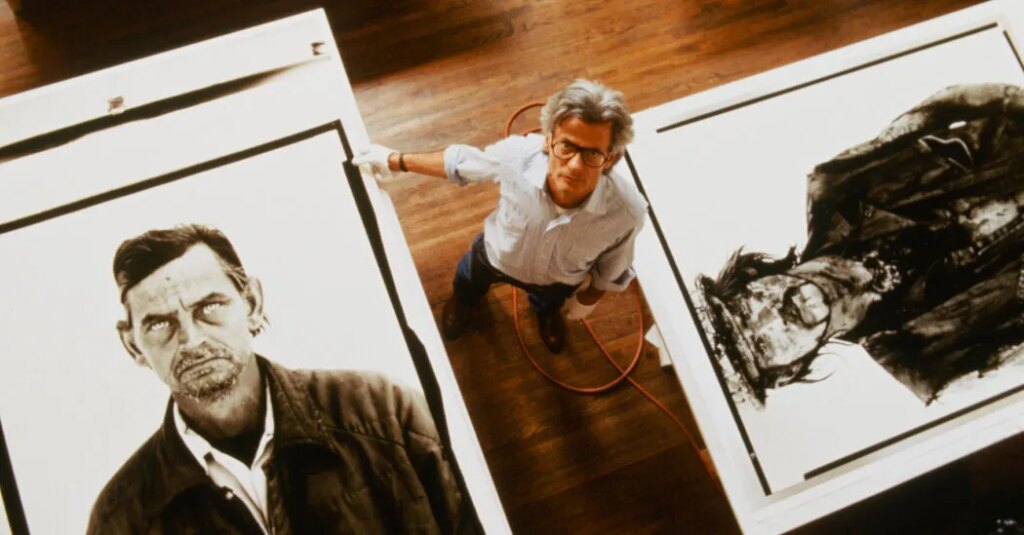
“Avedon” (on Netflix), the new documentary directed by Ron Howard, threads this needle with appealing aplomb. It’s about the photographer Richard Avedon, whose instantly recognizable photos, especially his black-and-white portraits of celebrities like Marilyn Monroe, Andy Warhol and Samuel Beckett, revolutionized 20th-century photography. The film mostly relies on interviews with Avedon’s contemporaries and hundreds of Avedon’s photos to tell the story of his life and his changing artistic interests. But those images are so compelling that you just want to keep looking.
The film also explores what made Avedon so important to the development of portraiture and fashion photography, paying close attention to his process and the ways he used his strengths to overcome his weaknesses. It’s a record of artistic practice as much as of history or biography.
There’s a bigger arc to the movie, too: Over decades, Avedon created a body of work that captured the fabric of America. For publications like Harper’s Bazaar, Elle and especially Vogue, he took fashion photos that vibrated with life. In his portraits, he somehow captured the inner life of his famous subjects. But he also worked as a photojournalist, documenting the civil rights movement, the Vietnam War and Berlin shortly after the wall came down. And between 1979 and 1984, he struck out across the United States to photograph ordinary people: drifters, coal miners and meatpackers.
“Avedon” explores all of this work and the man behind it, showing how much of his personality was infused into his art. It’s also just a beautiful film to watch, because you’re mostly looking at his often stunning images. As an introduction to the artist, it’s illuminating. As a celebration of an aesthetic sensibility that changed a whole medium, it’s exuberant.
The post In ‘Avedon,’ a Portraitist’s Work Speaks for Itself appeared first on New York Times.