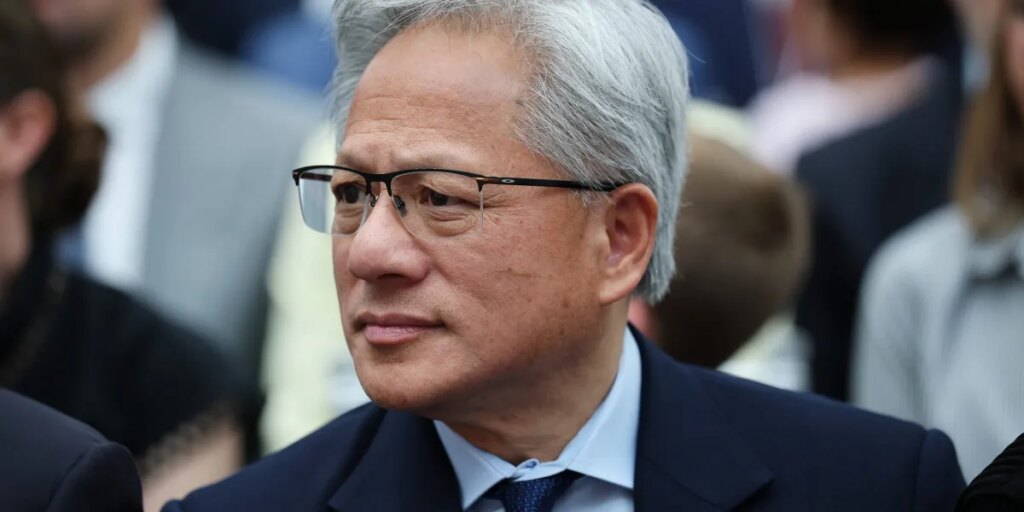
This time last week, AI without Jensen Huang seemed impossible. Today, that’s the world we live in.
Granted, it’ll have been less than (or about) 24 hours into that new world by the time you’re reading this, and there’s so much we don’t know about what a Jensen-less AI landscape looks like. One thing we do know: It will affect the private markets.
“Nvidia matters more to private AI markets than any single investor because it has three roles,” said Harrison Rolfes, PitchBook senior research analyst, who was among many who answered my feverish reporting calls yesterday. “It’s the largest corporate investor in U.S. AI. It’s the main supplier for AI startups, and it’s the main [benchmark] public stock investors use to judge the AI market.”
Now, in the near term at least, how Nvidia and new interim CEO Colette Kress will handle dealmaking is in question. Rolfes pointed out to me that Nvidia invested $189 billion in 2026, making it AI’s top U.S. corporate backer. This broke down somewhat expectedly: OpenAI, Anthropic, and xAI account for $172 billion, and 27 other deals make up the remaining $17 billion. Kress, and any Huang successor, could be more circumspect moving forward. (Indeed, worth noting: Nvidia’s blockbuster $12.93 billion buyout of open-source startup Hugging Face hasn’t yet closed.) And some companies will struggle more than others, especially neoclouds, for which Huang was dealmaker and guarantor.
“If they’re dependent on Nvidia to bankroll them, like [CoreWeave] or Lambda Labs or some of these neoclouds, then I think you could be really screwed,” one early-stage VC told me.
Much will move forward, nevertheless: My colleague Beatrice Nolan and I reported that Anthropic’s IPO is high-stakes but (for now) very much on, and some VCs told me that, yes, this could pressure AI valuations—and so what.
“I think the valuations were ridiculous anyway,” said Rob Biederman, managing partner at Asymmetric. “I don’t think it would be the worst thing for the tech world if there was a little bit of a reset shakeout because a lot of things are getting funded right now that aren’t especially good ideas.”
For startups wondering what’s next, Rolfes had some advice: Nvidia will invest less for now, but (on the bright side) it’s possible GPU prices will also drop.
“If you’re a startup, maybe don’t reach out to Nvidia in the short term to get investment cash,” he said. “What they should do is reach out to go get compute, go buy the chips…If some of these startups can get a hold of cheaper chips, then they can build out their product, which means we’ll probably start to see an influx of seed-stage [and] Series A-stage startups moving up.”
Here’s our larger feature contemplating life in AI after Jensen.
See you Monday,
Allie Garfinkle X: @agarfinks Email: [email protected]
Submit a deal for the Term Sheet newsletter here.
Joey Abrams curated the deals section of today’s newsletter.
The post Life after Jensen: What Nvidia’s shakeup means for private AI appeared first on Fortune.