Ignat Solzhenitsyn is a conductor, pianist and translator.
These days, with many affluent youths in Western democracies freshly captivated by Marxism and revolutionary ideology, it is worth reflecting on how Marxism continues to beguile and on the false promises baked into its core.
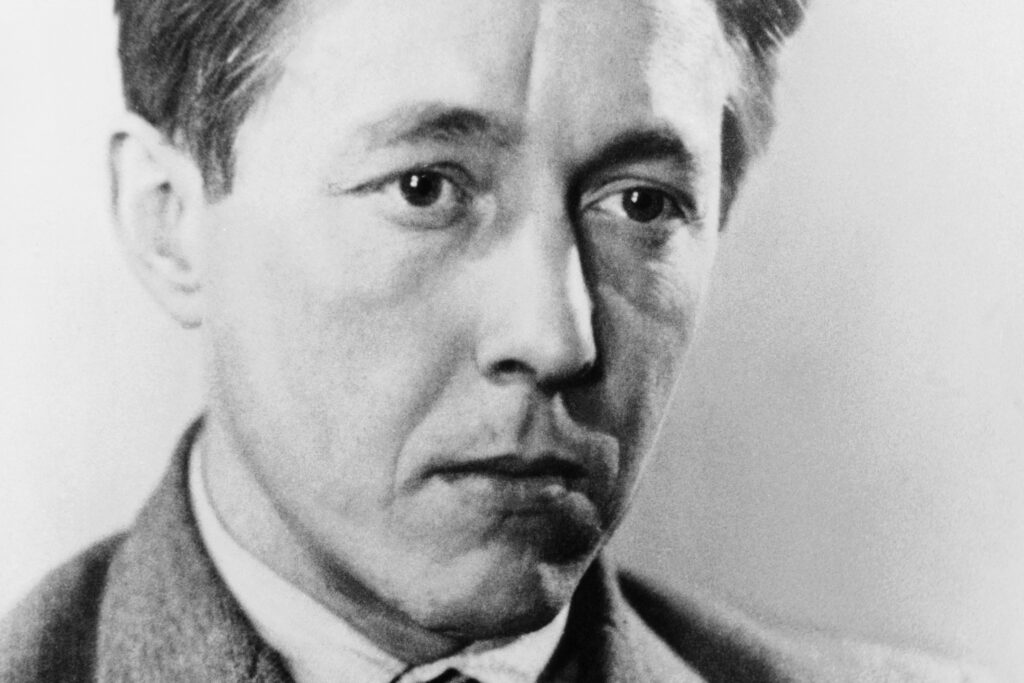
To understand the shiny appeal of Marxism to young minds, it is instructive to consider the example of my father, Aleksandr Solzhenitsyn. He was born in 1918 in Russia, amid the civil war that led to the Soviet Union’s founding in 1922. During World War II, he wrote a letter to a fellow officer criticizing Joseph Stalin. For that, he received an eight-year sentence in the Gulag — an experience he recorded in “The Gulag Archipelago,” a three-volume nonfiction account of the Soviet system of forced labor and what it did to the human soul.
My father was not only a writer — he won the 1970 Nobel Prize in literature for the “ethical force” of his work — but also an implacable foe of socialism and communism. Many might therefore be startled to discover that Aleksandr Solzhenitsyn was enveloped, during his teens and 20s, in what he later called a “Marxist mist.” He was a true believer in Vladimir Lenin and the doctrine of dialectical materialism. Raised as an Orthodox Christian, Solzhenitsyn’s belief was progressively supplanted by Marxism because of its promise of justice. How those scales gradually fell from his eyes is powerfully represented by Gleb Nerzhin, the autobiographical protagonist from his unfinished early novel, “Love the Revolution,” out for the first time in English next week.
Nerzhin is a brilliant, freshly minted university graduate, a “greenhorn philosopher” well-versed in classical antiquity and differential equations but ignorant of the ways of the world. He has been brainwashed to believe that the U.S.S.R. is “the best of all lands, one whose historical crises all lay behind it, a land already organized on the scientific principles of reason and social justice.” This frees Nerzhin from worrying about defending the oppressed — “for there were none to defend.” Even as his world is turned upside down by Hitler’s full-scale invasion of the Soviet Union on June 22, 1941, he clings to the utopian social order that exists only in the relentless state propaganda and inside his own head, rather than believing the evidence of economic and social dysfunction in front of him.
When Nerzhin hears of the woefully unprepared state of the air force, he tries not to listen. He narrowly escapes a 10-year labor camp sentence for “panic-mongering” and “rumor-spreading” — behavior that he had himself earlier condemned. An acquaintance tells him of the beastly conditions in a copper-mining labor camp. All of this amounts to a world impossible to comprehend, let alone accept — but its existence is “out of the question” for Nerzhin.
It is only after receiving his long-sought call-up notice and being assigned to a horse-drawn convoy on a harsh winter’s journey to nowhere that Nerzhin’s education in life can at last begin. He observes with surprise that his platoon-mates behave not according to ideological constructs but as humans always have — driven by survival instinct, love of family and a desire for peace. Over the course of the novel, Nerzhin comes to see that a social order achieved by suppressing individual dignity and freedom is not only bankrupt politically but repugnant morally.
My father always said that he began to understand life only after being unjustly arrested and seeing the world from the bottom up. As he toiled under starvation rations in labor camps and debated fellow prisoners who had seen the West or remembered Russian life before the Revolution, he gradually discovered that the central promises of Marxism were a grand delusion — if not an outright lie. The abolition of religion led only to secular idolatry, that of family to the coercive teat of the state, of age-old human economic incentives to involuntary collectivism, and of observed reality to a fever dream of ideological dogma. In an absurdist inversion of that most cherished of all Marxist shibboleths — being (material and social circumstances) determines consciousness — it turned out that in the Soviet Union, a make-believe consciousness was lorded over the “being” of real life.
Solzhenitsyn would certainly be saddened, but hardly surprised, that Marxism carries currency in some quarters even today. In a 1993 address to the International Academy of Philosophy, he warned that “if the global lesson of the 20th century fails to serve as a healing inoculation, then the sweeping red whirlwind may reprise itself anew.”
That a new generation is again falling prey to this delusion is testament less to the preposterous premises upon which Marxism’s sandcastle is built than to the twin deceptions that lie at its heart: that most ordinary men and women are prepared to trample on intrinsic human values and that human nature can be forcibly transformed at the behest of a fanatical idea.
The post My father, Aleksandr Solzhenitsyn, understood Marxism’s dangerous appeal appeared first on Washington Post.