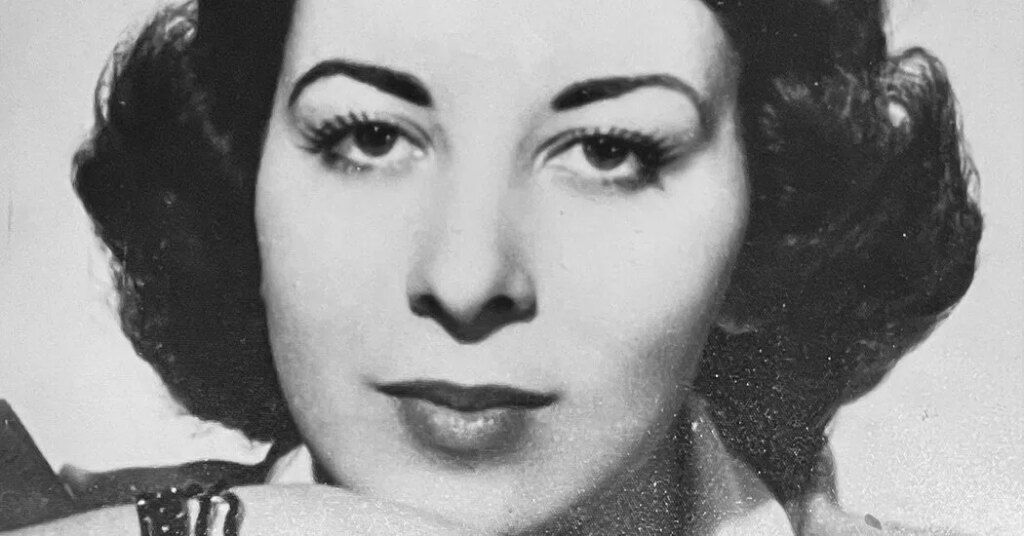
When Bernice Gottlieb arrived at a village in South Korea, Mi Yun Lee, who was 9 years old, had never seen anyone like her. Gottlieb was tall and exuded an Audrey Hepburn glamour — a scarf carefully tied around her glossy black hair, high cheekbones, large, welcoming eyes. To Mi Yun, she was an angel who had descended from the sky, holding promises of a new future.
It was March 1974, and Gottlieb had flown from the United States with her husband to visit St. Lazarus, a community for people with leprosy, as Hansen’s disease was known then. About 400 people lived in the village’s dormitories and one-room homes. There was a medical clinic (a doctor only came once a month), a church, a school.
Though it was about 15 miles from Seoul, St. Lazarus was sequestered from mainstream Korean life, its residents shunned by families and society. By the 1970s, doctors knew that the disease was not highly contagious and was treatable, especially if caught early. Still, the stigma persisted. Outside small-scale farming, jobs were limited for people in the village. Poverty was the norm. So was community, family, love.
Gottlieb learned about St. Lazarus a few years earlier at a friend’s house in Westchester County, N.Y., when the Rev. Lee Kyong-Jai, the head of the Catholic village, came to raise money and awareness for his community. He told Gottlieb he needed families in the United States to adopt children, none of whom had the disease, but who faced stigma, nonetheless. They were known in South Korea as Migam-a, children of the infected. Most were unable to attend public schools (those who did hid the fact of their parents’ disease and couldn’t invite friends to their homes).
By the time Gottlieb met Father Lee, she knew plenty about international adoption and was a leader in the burgeoning movement. She and her husband, the architect Ferdinand Gottlieb, adopted their daughter, Susannah, from South Korea in 1969. They were the first Americans that the orphanage director had allowed to adopt.
After Gottlieb brought Susannah back to the United States, where the couple already had two sons, she was inundated with questions from hopeful adoptive parents, many of whom gathered at her house in Dobbs Ferry, N.Y., on Friday nights. With few agencies working in international adoption at the time, Gottlieb became a key resource. She both helped parents navigate the adoption process and provided organizations with lists of potential parents, including those open to adopting children with disabilities.
Initially, she hesitated about St. Lazarus. The children weren’t orphans or children of single mothers, who were ostracized in South Korea. They had two known, living parents. Parts of the children’s story, though, reminded Gottlieb of her own childhood.
In 1930, just before Gottlieb was born, two of her older siblings died from polio. Her father’s business soon collapsed, and her mother sank into depression. A friend agreed to temporarily raise Gottlieb and her older brother, with the caveat that she wanted to adopt the children if Gottlieb’s mother didn’t recover. For the next three years, Gottlieb lived with the woman she called Mama Thompson, who took her for regular visits to their parents. When Gottlieb’s mother improved and brought her children home, Gottlieb cried for months, she later wrote in a memoir. Her mother never talked about Mama Thompson. And Gottlieb never saw her again.
If she was going to help the St. Lazarus children, Gottlieb insisted that they remain in contact with their Korean parents. It was a highly unusual idea in the early 1970s in both U.S. and international adoptions. Secrecy and sealed adoption records were typical. Even if they searched, biological parents and adopted children often never saw each other again.
Once Gottlieb agreed to the St. Lazarus plan, she dived in, as was her style, with optimism, determination — and a heap of naïveté. Among other things, she hoped the adoptions would be the first step toward South Korea eradicating prejudice against leprosy, which is caused by bacteria called Mycobacterium leprae that can damage skin, peripheral nerves, the upper respiratory tract and the eyes.
She enrolled in a leprosy medical training course at U.S. Public Health Service Hospital in Carville, La. — the sole leprosarium in the continental United States. While some doctors supported her plan, others warned that the children could still be at risk for the disease, given the long incubation period. And in a harbinger of future criticisms of international adoption, one doctor said regardless of poverty and stigma, the children should not be taken from their family, their language, their culture.
Gottlieb pressed on, creating a nonprofit for the St. Lazarus program called Operation Outreach. From 100 applicants, she chose four families — three couples in New York State and a single mother in Washington, D.C. — all of whom promised to keep ties between the children and their parents. She assigned two children — most of them siblings — to each family.
The biggest hurdle was the U.S. government. Legally, people could not adopt children from other countries with two living parents. And bringing the children in through the immigration system would take too much time: The quota for Asian immigrants had a yearslong backlog. Gottlieb lobbied, cajoled, argued, networked, begged. At one point, frustrated by the lack of progress, she planned to send the children illegally through Canada, until her husband — who was both her sounding board and the more sober and analytical one in the couple — told her it would undermine her mission. Eventually her congressman, Hamilton Fish, Jr., agreed to propose special legislation for the eight children. In 1976, Congress passed four separate bills, one for each pairing of children, creating an exemption for them to be adopted by U.S. families.
Meanwhile, in South Korea, the families had been living with their excruciating decision for more than three years. “One more kind of pain that comes with leprosy,” Cho Te Chung told a New York Times reporter just before the legislation was signed into law. “I wish they could go soon,” a mother said of her two daughters. “Every day hurts a little more.”
The parents told their children they were heading off to a beautiful future. “Everything will be happiness,” Cho said. Though Mi Yun sensed her father was hesitant about the decision, her parents promised that she’d never be hungry, have plenty of new toys, beautiful clothing, a better education. She was, they said, lucky.
Finally, in October 1976, Gottlieb flew to South Korea to get the children. By then, they ranged in age from 3 to 15. As they said goodbye to their parents, Mi Yun’s father, not normally affectionate, hugged her so hard she didn’t know how to respond. Dressed in hanboks, a traditional Korean outfit, they boarded the plane with Father Lee, Gottlieb and another escort. Gottlieb held the two youngest children, one of whom wept. Across the aisle, Mi Yun looked at a prayer book from her first communion in which she’d written her parents’ names, their birth dates, her home address. “Please, God, don’t let me forget them,” she thought as she memorized the words.
Once they landed at John F. Kennedy International Airport, it was hard for some children to say goodbye to Gottlieb. One clung to her until her new mother pulled her away. Mi Yun, now 12 and renamed Jennifer, drove with her new parents to her new home on Long Island. As she looked out the window of their Oldsmobile, she saw graffiti spilled across buildings, garbage piled high. Where is the wealth? The fancy buildings? The glamorous people wearing beautiful clothes? All the promises?
In the coming years, she and the other St. Lazarus children would make friends, learn English, bond and not bond with their new families, face prejudice in largely white schools, struggle with their identity. Jennifer loved her new parents, who wanted the best for her. But they had five adopted children in total, along with two older biological children. There was jealousy among siblings and abuse. Money was tight.
Back in South Korea, parents mourned. Whenever the mother of the two youngest girls heard a crying baby or a child say “umma,” Korean for “mom,” she turned around thinking it was one of her daughters.
True to Gottlieb’s promise, the Korean parents and children did stay connected. The children sent report cards, photos, news from their lives. In return, their parents sent letters, religious gifts, Korean trinkets.
After just two years in the United States, Jennifer’s adoptive parents brought her to St. Lazarus to visit. She struggled to find the Korean words to speak to her mother and was angry about the promises her parents made about the United States. But, like many of the adoptees, she kept returning (one adoptee moved to South Korea permanently) and softened as she understood her parents’ difficult lives and painful choices. (Her parents did eventually climb out of poverty.) She was in South Korea for her father’s burial and to nurse her mother as she died.
For another adoptee, her trips to South Korea convinced her of two things: Her biological parents loved her, and adoption had been the best choice. But to Jessica (she asked that only her first name be used to protect her privacy), the youngest of the group, it is more complicated. She wonders what life would have been like if she hadn’t been adopted. How does losing a lifetime with her mother, her first language and her culture compare with living in the United States without the poverty and the stigma that would have marked her Korean life? “We were at the bottom of society,” she said. “But we would have that parent-child bond. I wonder if I would have felt more loved.”
Gottlieb was, for many years, on the periphery of Jessica and the adoptees’ lives. By the 1980s, after working on anti-leprosy campaigns, including for the United Nations, she left the adoption world. Later, she was horrified by reports of adoption corruption, her daughter said. South Korea, as it became clear, has used adoption to lower the country’s social welfare costs. Some adoption agencies, eager to meet American and European parents’ demand for adoptable children, trafficked in stolen babies, taking them from hospitals and off the streets. At times, they coerced mothers and made false promises. They lied to adoptees about their origins. In total, South Korea sent about 200,000 children abroad, more than any other country. The government is now phasing out international adoption.
Gottlieb, who died on Aug. 25 in Santa Monica, Calif., at 95, never believed adoption should be a moneymaking business or that it was the only way to help children in need. After two organizations invited her to India in the late 1970s to consider starting a program there, she decided against it. Gottlieb saw that the stigma against leprosy was less pronounced than in Korea. Children were welcome at schools, but many families couldn’t afford the supplies they needed to attend. So, rather than an adoption program, Gottlieb established a fund to support children’s education, providing school uniforms and books.
By the 1990s she had moved in a very different direction, becoming a Realtor in Westchester County and writing two novels about a crime-busting real-estate agent. In addition to her daughter, Susannah, her two sons, Peter and Richard, survive her.
She is survived, too, by a group of adoptees, now in their 50s and 60s, who thought of Gottlieb as a surrogate mother, a godmother, a fairy godmother. She was a magnet that held them together. As they got older and reconnected with her, she organized reunions, invited them to her home, told stories of their childhood. She attended the wedding of and hosted a baby shower for the youngest of the group. She reminded them that their parents didn’t send them away for lack of devotion, but out of desperation. Perhaps most important, she was the person who created a pathway — one that few international adoptees would ever receive — to keep the children of St. Lazarus connected to their past, to the Korean parents who had always loved them.
Lee Jiyoun contributed reporting from Seoul.
The post When Bernice Gottlieb Visited a Community of People With Leprosy appeared first on New York Times.