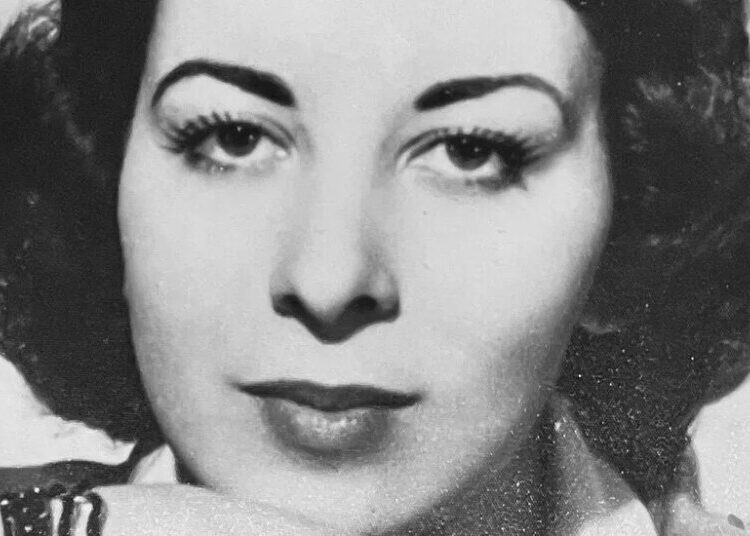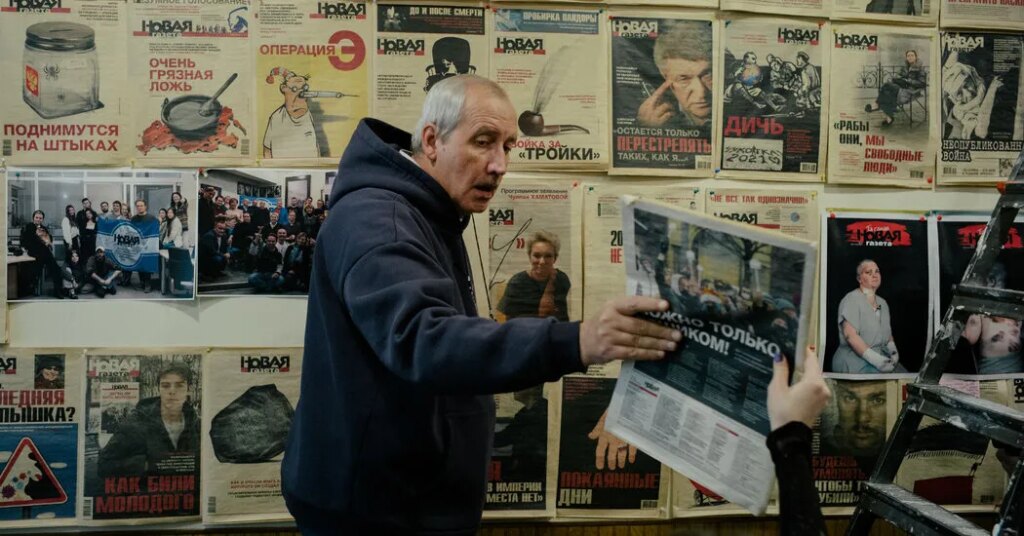
Novaya Gazeta was a newspaper of near-legendary status in Russia. It was the home of the investigative journalist Anna Politkovskaya, whose books in the early 2000s offered a searing account of human rights abuses, wartime propaganda and corruption in Vladimir Putin’s Russia. In 2006, on Putin’s birthday, Politkovskaya was shot and killed in the elevator of her apartment building. Twenty years later, Russia is back at war and Novaya Gazeta has shut down.
On Monday, the paper held its last editorial meeting. One final issue will come out in the next few weeks. I spoke to my colleague Valerie Hopkins, who was there to witness the journalists packing up their offices.
But first, the latest twist in the Nvidia scandal: Jensen Huang has resigned.
Nvidia’s chief resigns after affairs
Jensen Huang, the co-founder and chief executive of Nvidia, resigned on Thursday, capping the swift, stunning fall of one of the most powerful figures in the A.I. boom. He had extramarital affairs with a woman who U.S. intelligence agencies concluded was spying for China, and with an executive who reported to him.
Colette Kress, Nvidia’s chief financial officer, will serve as interim chief executive while the search for a permanent chief executive is carried out. Nvidia shares dropped as much as 14 percent, extending a decline that has wiped out more than $1 trillion from its market capitalization in the last month. Follow our live coverage here.
Here’s a visual guide to understanding the scandal:
Sadness, defiance and pride
Valerie, Novaya Gazeta, the last big independent Russian media organization, closed its newsroom this week. The paper and its journalists have been under intense pressure from President Vladimir Putin for decades. Why now?
The real miracle is that they lasted this long. We’ve watched the Russian government systematically dismantle any media organization that is critical of the Kremlin and critical of the war in Ukraine. This didn’t happen overnight.
First their website was blocked, so you needed a VPN to read them. Then they lost their media license. Then Putin signed a decree nationalizing their printing presses. Then this spring, authorities raided the newsroom and one of their journalists was detained and put on trial. The paper was added to the list of so-called foreign agents — this kind of Stalin-era term that comes with many limitations on what you’re allowed to do.
There was this idea that eventually they would give up, but they didn’t. What ultimately forced them to close was when their landlord refused to renew their lease after 20 years and their bank stopped processing the reader donations that were their only remaining source of revenue. They went to other banks saying, Will you help us? But everyone said no. And that’s a function of either direct pressure from the authorities, or the understanding that you’re going to have a problem if you keep working with the paper.
And so they made the decision that they couldn’t go on any longer.
Explain why this paper was so important in Russia.
It was known, above all, for the bravery of its journalists. They were never silenced, despite years of intimidation, attacks, pressure, assassinations.
Six of its journalists have been killed. Shortly after the full-scale invasion of Ukraine, the paper’s editor, Dmitri Muratov, was attacked on a train. The attack was so bad that he needed four operations to use his eyes again.
The other reason Novaya Gazeta was so important was that at a time when many antiwar Russians and antiwar journalists left Russia, they stayed. They remained on the ground, living in their readers’ reality. That meant a great deal.
You were in that newsroom during its last day on Monday. What was it like?
It certainly felt like the end of an era. You know, these are people who are full of tremendous love and respect for the craft of journalism. But during that final editorial meeting on Monday, there was also this discussion about the fact that despondency is a sin, as one of the paper’s columnists wrote. He’s an Orthodox priest who was stripped of his congregation for his antiwar stance. So the sadness of the moment was mixed with defiance and pride in having lasted this long.
One of the things I found very moving was the description in your article of Anna Politkovskaya’s office, which had become a kind of museum and is now gone.
Yes, it’s heartbreaking. They saved her office almost as it was when she was killed. They kept her tape recorder, some of her letters, her really old-school computer. Her reading glasses were still on her desk. And then on the wall they had some of her best stories and also an investigation that her colleagues did into her assassination. It was a place where young journalists would come to be inspired. But all of that is going in storage.
I want to come back to the fact that they lasted this long. How did they manage to do it?
They were strategic. They decided, OK, we’re here, we need to follow Russian law. That meant they didn’t write about anything happening on the front line in Ukraine because there are laws in place that make it illegal to cite any sources besides the Ministry of Defense. But they also made it very clear that they weren’t writing about the front lines because of censorship. For instance, they would use the word “war” on their front pages, instead of the state-approved “special military operation,” but deliberately blur it out.
Another thing that might have helped protect them somewhat was the moral weight of their co-founder sharing the Nobel Peace Prize in 2021. And the moral authority of their history: The paper was founded with money from the Nobel Peace Prize Mikhail Gorbachev won. Muratov was close to Gorbachev, and he also knows a lot of prominent decision makers, including in Putin’s government. But as this war goes on, as the screws are being tightened, that will only get you so far.
Is there any other independent news outlet left in Russia now?
There are some, mostly on Telegram, but none of them with this kind of authority and weight. You know, as recently as a few months ago, Novaya Gazeta’s journalists were going to occupied territory in Ukraine. They went to Oleshky, the Russian-controlled city where people were starving, and wrote about it. The type of stuff that Novaya Gazeta was doing, nobody else is doing.
And what will their journalists do now?
I don’t think they plan to emigrate. Maybe they will eventually try to start something new. I think they’re all still trying to figure it out.
MORE TOP NEWS
-
The Israeli military struck a hospital in southern Gaza, killing at least six people and injuring 28 more, according to local health officials. Israel said it was targeting a Hamas commander.
-
President Trump said that he had pulled Vice President JD Vanceback from peace talks with Iran, saying, “We don’t need a deal with Iran.”
-
Iran is seizing assets from some citizens because they have family members living abroad who have criticized the government.
-
Trump’s envoys went to Moscow to seek agreement from Putin to bring Europe into talks on the war in Ukraine.
-
A court in the U.K. decriminalized homosexuality in Trinidad and Tobago, where the legal system is intertwined with the former colonial power.
-
In Peru, where Pope Leo lived for two decades, he’s meeting ghosts from his past.
-
In Malawi, El Niño is expected to bring extreme weather and a possible famine. Our global climate correspondent Chico Harlan visited a remote village to see how farmers are preparing for an imminent drought.
TOP OF THE WORLD
The most clicked link in your newsletter yesterday was about the death of Russia’s ambassador to the U.S.
ESCAPE OF THE DAY
Animal cams
The world is full of wild creatures doing secret things. For nearly all of history, those lives stayed hidden. Now, hundreds of thousands of viewers can watch two bald eagles fight to raise a family. Climb inside their nest.
MORNING READ
Ukrainians have learned to distrust their GPS: It keeps telling them they’re in Peru.
The cause is a Ukrainian system that blasts out electromagnetic interference meant to confuse Russian missiles and drones, making them think they are somewhere else. Sometimes, the weapons are so confused that they make severe turns and break apart midair.
But the system is also disrupting civilians’ everyday lives. One person using a ride-hailing app was told that she’d be home in 12,276 minutes. Read more.
WHAT IN THE WORLD?!
Advent mania: The holiday calendars are now a billion-dollar industry, hiding everything from pickles to protein powder behind their doors.
Lost invention: Greek fire was an incendiary weapon developed in the seventh century and used for more than 500 years before the recipe was lost.
Accidentally viral: The song “Talafreako,” by a little-known Texas rapper, became an unlikely anthem for Senator-elect James Talarico.
RECIPE
This fluffy, custardy banana pudding scented with cardamom is light enough to linger over after a big feast. Be sure to make it the day before serving so that the vanilla wafers can fully hydrate.
WHERE IS THIS?
Where is this mountain village?
BEFORE YOU GO …
This week I went to the opening night of “Owain & Henry,” an epic historical drama about a medieval Welsh prince leading a rebellion against English rule in the 15th century. Stay with me.
The production was unlike any other celebration of a national story I’ve seen before.
It wasn’t “Braveheart,” where the 14th-century Scottish war hero William Wallace famously cried “Freedom!” just before being executed — but ultimately inspired his countrymen to win their independence from England.
And it wasn’t “Hamilton,” where America’s founding fathers won their independence from England and wrote the most ambitious constitution in history (while rapping about it).
The Welsh never did regain their independence from England. But any nation-building exercise worth its salt needs to land on a note of triumph somehow. And so “Owain & Henry” instead chose to celebrate values like roots, community, mercy — and holding on to a strong national identity. As Prince Owain Glyndwr, played by the great Michael Sheen, puts it: “We are still here.” It was a reminder that nation-building, and the human instinct to find meaning and comfort in our national identities, can take many forms.
(I will say it was long. Over three hours. It could have done with a trim. The journalist in me was thinking: Get an editor.)
Speaking of “We are still here” (or “Yma o hyd” in Welsh) — I’ve always loved “O Hyd” by the Welsh rapper Sage Todz. I’ve recommended it before, and I’m recommending it again.
Have a great weekend! — Katrin
TIME TO PLAY
Here are today’s Spelling Bee, Mini Crossword, Wordle and Sudoku. Find all our games here.
We welcome your feedback. Send us your suggestions at [email protected].
The post The End of Russia’s Bravest Newspaper appeared first on New York Times.