
This month, the deal that will define this era of Hollywood finally closed. Paramount and Warner Bros. are now one company under Skydance, and two of the most storied studios in the business are being folded into a single operation.
Almost everything in this industry is being restructured right now: org charts, libraries, release slates, whole companies. And the pressure isn’t going away. Last November, the forecasting platform my company runs projected about $9.7 billion for the North American box office for 2026. With a quarter to go, the year is tracking toward $10.1 billion. That would likely be the best year since the pandemic, yet still more than $1 billion short of 2019. Much of that growth has come from higher ticket prices rather than more people in seats.
Yet, the one thing that has barely changed is how the industry makes decisions.
Not long ago, I asked a senior executive at a major studio how new tools get adopted inside her company. She is smart and curious, exactly the kind of person you would want leading change. Her answer was candid: “Nobody mandates anything from the top. It’s down to the individual user.”
I should be up front about where I sit. My company builds forecasting and analytics tools for studios, distributors and agencies, so weigh my view accordingly. I’ve spent a decade bridging Silicon Valley and Hollywood, two worlds that speak very different languages, and it has taught me something: the data and the tools now exist. What’s missing is the habit of using them, and someone at the top whose job is to build that habit.
***
Hollywood has reinvented how films are made again and again: sound, color, digital cameras and visual effects that would have been unimaginable a generation ago. On set, this industry has never been afraid of the new.
The business side is a different story. The way most decisions get made — how a slate is planned, how a campaign is judged, how a script finds its way to a “yes” — would be recognizable to someone from 20 years ago. More often than not, the forecast behind a greenlight still lives in a spreadsheet maintained by one talented analyst, and it walks out the door when they do.
Meanwhile, the businesses competing for the same audience — games, social platforms, the creator economy — reinvent themselves every year. That gap, more than any single bad bet, is how traditional film and television lost ground.
In 2018, a studio CTO told me nobody wanted more transparency, because transparency meant accountability. That fear has mostly faded. What remains is inertia, and in a crisis, inertia is how good ideas disappear. A few people try a new tool, their colleagues like it, and it goes nowhere because nobody with authority has decided this is how the company will work.
A marketing executive at another major studio described the cost of that precisely. When a trailer goes live, the team already tracks audience reaction internally, and does it well. Pulling and reporting the data takes about a day. Digesting it and turning it into a recommendation takes a few more. By the time a decision actually forms, a week has often passed. In a world where the conversation around a trailer takes shape within hours, a week is what a month used to be.
***
The most common response I hear is, “We can build that ourselves.” Sometimes that’s true. But building usually means a year or two of work, while the market moves every week. The rest of the business world settled this long ago. There are tools for everything, and companies license and subscribe to them because it gives them speed. You can be using something on Monday instead of waiting until 2028.
Even the industry’s most technology-driven company made that call. Netflix once ran its own data centers. After a major database failure in 2008, it moved that work to Amazon’s cloud while continuing to build the things that truly set it apart. The lesson isn’t “never build.” It is “build what differentiates you, and partner for the rest.”
There is also something more human at work. This is a relationship business, and that is one of its great strengths. Taste, instinct and trust built Hollywood, and they will always matter most. But better information does level the playing field a little. It helps studios find new voices beyond the same tired channels and lets good ideas compete on their merits. Not everyone welcomes that, but in the end, it benefits everyone, including the people who already win.
Part of the hesitation is fear of AI, and much of it is misplaced. When a director says “AI sucks,” they usually mean generative AI, the tools that produce images, scripts or performances, and those raise serious questions about craft and livelihoods. But there is another kind of AI that doesn’t make anything. It helps people decide. One kind raises the question of replacing human judgment. The other exists to sharpen it.
After all, the goal was never data for its own sake. It’s insight: seeing the bigger picture sooner, hearing from more voices and bringing more perspectives into the room, so the people making the call can make it with more confidence and more speed.
***
Some studios have started. Lionsgate named it’s first chief AI officer earlier this year, and others have added senior AI roles for production, postproduction and visual effects.
These are smart moves. But most of the industry’s AI energy is still focused on how films are made. Far less goes into how a company decides what to make, what to pay, when to release and how to sell it. That’s a different job.
So here is a simple proposal: Every studio should have one senior executive who owns how decisions get made. Not the CTO, whose job is the technology. Not the chief AI officer, whose focus is often the production pipeline. And not a committee, but a business leader with a mandate to decide which questions the company most needs better answers to, choose the tools and partners to answer them – and make sure the organization actually uses them.
It sounds modest. It isn’t. In most studios today, that job belongs to everyone, which means it belongs to no one.
Hollywood has made this kind of call before. In 1926, Warner Bros. was a second-tier studio that bet on synchronized sound while much of the industry dismissed it as a gimmick. “The Jazz Singer” followed a year later, and within a few years the whole business had changed. That didn’t happen because individual employees experimented. It happened because leadership decided.
The talent in this industry has never been stronger, and the world’s appetite for great stories has never been bigger. The business side is ready for the same kind of decision. Someone just has to make it.
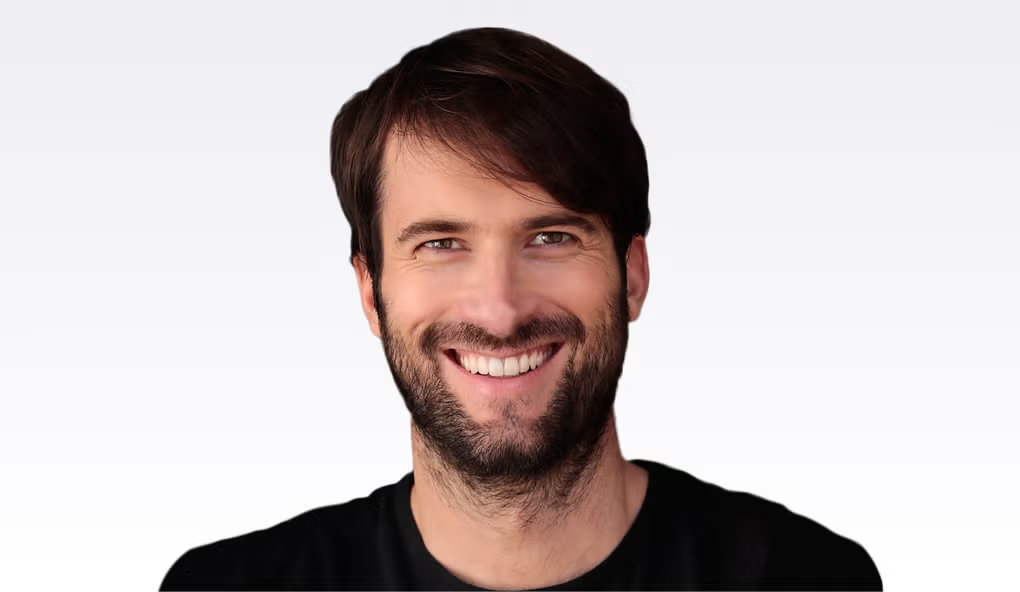
Tobias Queisser is co-founder and CEO of The Cinelytic Group, which builds decision intelligence tools for film and television.
The post Hollywood Is Restructuring Everything Except How It Decides | Guest Column appeared first on TheWrap.