To revive his country’s struggling economy, Kenya’s president, William Ruto, wants to send one million workers abroad each year. He portrays this labor migration as a national service.
We spent a year investigating the abuse that these women face. We found that the exploitation began before they ever left home. Some of the most powerful figures in Kenyan politics, our investigation found, profit by sending these women abroad — and keeping their wages and protections as low as possible.
Everywhere we looked, people who were supposed to protect workers were instead profiting off them: A top lawmaker on Kenya’s parliamentary labor committee. Members of Mr. Ruto’s government. His political allies. Even his wife and his daughter, who records show are the largest shareholders in the staffing industry’s dominant insurance company.
Mr. Ruto’s government has made it faster, cheaper and easier to send women abroad. Kenya has a labor deal with Saudi Arabia that keeps wages low and worker protections at a minimum. All of this makes the business more profitable for the staffing companies and the politicians who own them.
Kenya’s labor secretary, Alfred N. Mutua, said that if his government demanded higher wages, Saudi employers would simply hire workers from elsewhere. He said his ministry had stationed additional staff in Saudi Arabia’s capital, Riyadh, to respond to complaints.
But when we asked about specific cases of abuse, industry leaders and even members of Mr. Ruto’s government blamed the women. Kenya’s most prominent staffing-industry lobbyist compared women to dogs. Mr. Mutua told us that Kenyan women had been beaten because they had bad attitudes.
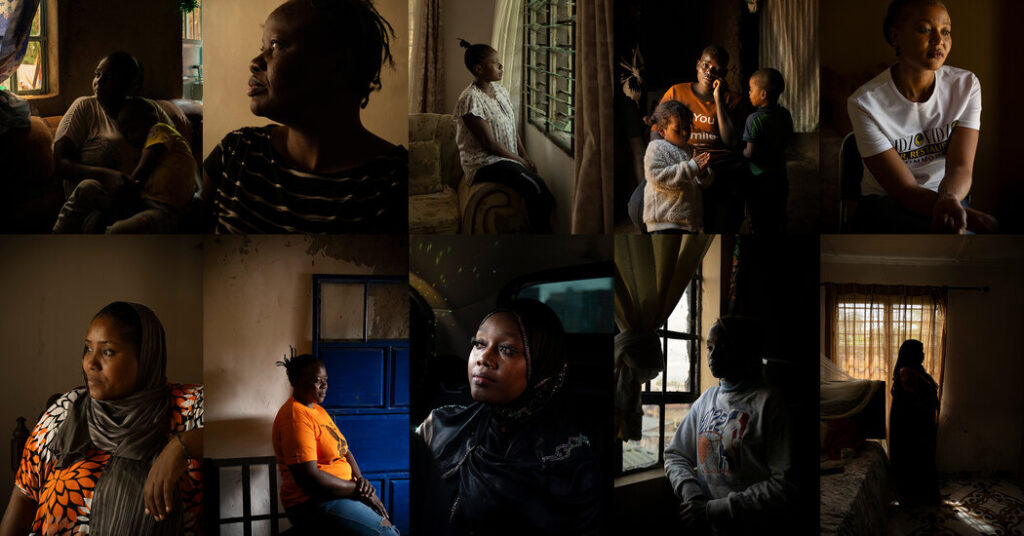
Over the past year, we’ve interviewed around 200 workers across Kenya. We’ve been to 40 of the country’s 47 counties, meeting women who survived abuse and the families of those who did not.
The workers we met were often the most enterprising and ambitious in their communities. Many had finished high school. Some had been trained as teachers or chefs.
But no job they could find in Kenya could provide the income, about $250 a month, that they could make as a maid for a Saudi family.
Most knew there were dangers in Saudi Arabia. But they were the kind of people willing to take a big risk to pull their family out of poverty.
Kenya promotes employment opportunities for women in Saudi Arabia, yet when these workers face difficulties, our reporting found, government officials often abandon, ignore or even berate them.
Hundreds of Kenyan single mothers are stranded in Saudi Arabia, unable to return home because their children cannot obtain birth certificates. Giving birth outside marriage is effectively illegal, and the Saudi authorities offer no public path for single mothers to get birth certificates for their children. Saudi officials say the Kenyan Embassy is responsible.
Despite the Kenyan government’s assurance of a straightforward solution, our investigation revealed a process that is anything but straightforward.
Many mothers told us that Kenyan diplomats had insulted them or turned them away. Women told us that one embassy official had demanded money and sex. We found out that, despite years of complaints, the government kept him in a job working with migrant women in distress.
Unlike the Philippines, which has secured better protections for its workers abroad, Kenya has made little progress. Government officials and recruitment agencies argue that if they demanded higher wages for their workers, employers would simply shift to other countries.
Abdi Latif Dahir is the East Africa correspondent for The Times, based in Nairobi, Kenya. He covers a broad range of issues including geopolitics, business, society and arts.
The post Kenya Is Betting Its Economy on Women Willing to Risk It All appeared first on New York Times.