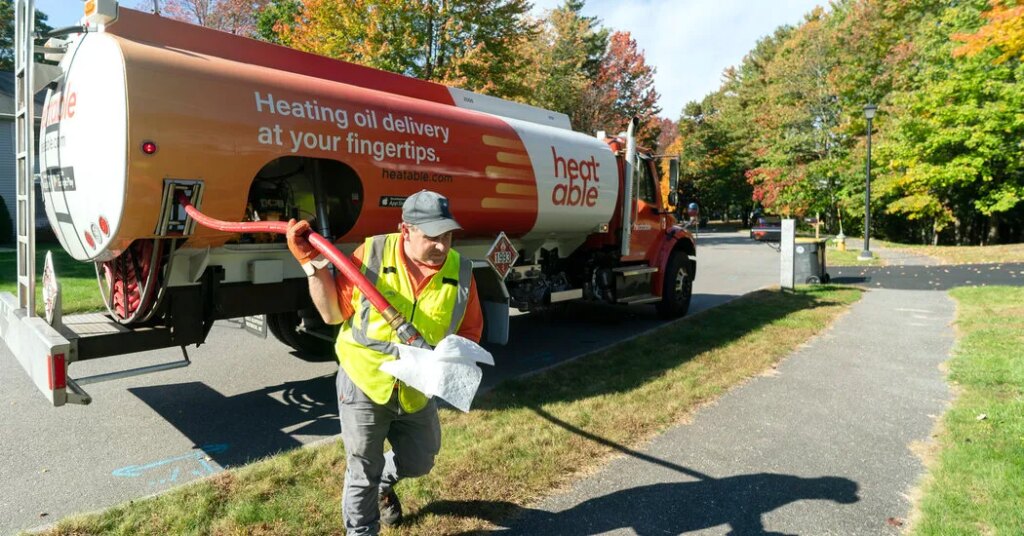
Home heating costs are expected to rise more than 7 percent on average across the country this winter, putting further strain on households that have been struggling with rising energy costs for many months.
A new report by the National Energy Assistance Directors Association, an organization that represents state officials in seeking federal funding, warned that the disruptions caused by the war with Iran has contributed to high heating costs.
The organization said households that rely on heating oil, most of which are in the Northeast and Alaska, face some of the biggest increases. The typical household that uses oil — almost five million nationwide — could pay as much as 70 percent more than last winter or about $2,977 for the season.
“Continued uncertainty about global oil supplies makes it difficult to predict where prices will go,” said Mark Wolfe, executive director of the association. “We hope we’re wrong, but states need to prepare for the possibility that prices will stay high.”
Heating oil is very similar to diesel, which is used in trucks and other heavy equipment. Supplies of diesel and related fuels have become strained because many refineries in the Middle East and Russia have shut down or reduced production as a result of the U.S.-Israeli war with Iran and Russia’s long-running war with Ukraine.
Rising energy costs have led to as many as one in six households falling behind on natural gas and electricity bills, according to data the U.S. Energy Information Administration released in April.
The agency’s report found that utilities disconnected more than 15 million customers in 2024 for not paying their bills.
While people using heating oil have been hit the hardest, others will also pay more. Households that use electricity to heat their homes could see an increase of about 6 percent, to $1,215. And those that use propane will pay $1,350 on average, or about 5 percent more than last year.
The post Average U.S. Heating Costs Will Rise 7% This Winter appeared first on New York Times.