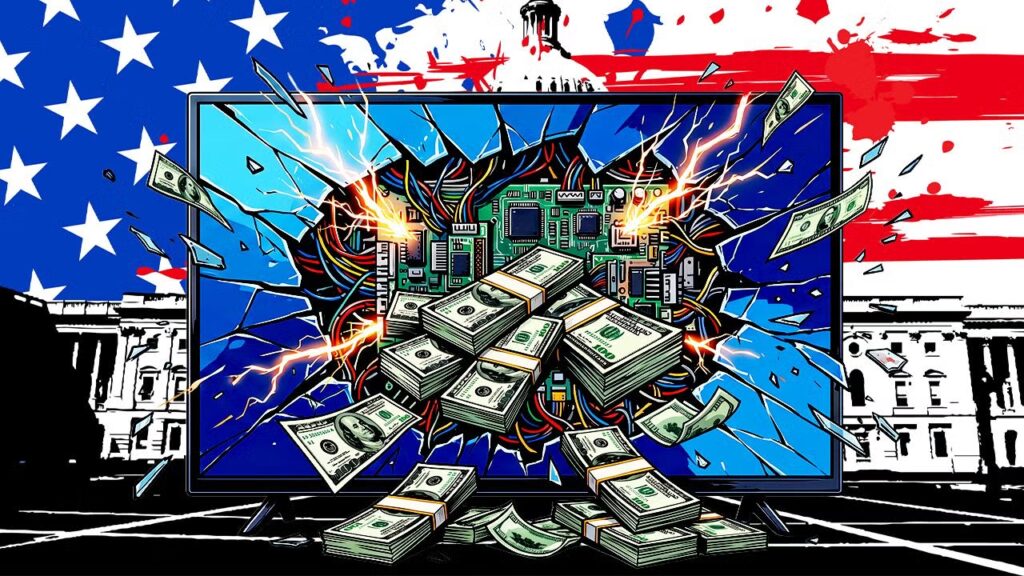
More than $11 billion in political advertising spending recorded ahead of the 2026 midterms revealed a widening divide within traditional television. It is surprising enough that broadcast advertising continued to grow, but it’s even more unusual that streaming more than doubled its take to overtake cable as the second-largest destination for campaign dollars.
The shift offers a clearer picture of how political advertising is evolving heading into 2028.
Broadcast and cable television accounted for approximately 61% of political advertising spending through Oct. 28, down from nearly 72% during the full 2022 election cycle, according to AdImpact data provided to TheWrap.
Television remains difficult for political advertisers to replace. Its ability to reach large audiences quickly continues to attract billions of dollars, even as streaming and social platforms offer more targeted alternatives. But the election results raise another question: Are campaigns getting enough value from their advertising investments to justify spending so heavily on traditional TV?
Jaime Vasil, group vice president of client development at advertising technology firm Basis, said she was surprised by how much money continued flowing to traditional television.
“What stands out is how much money is being spent and how resilient traditional television continues to be,” she said.
(function(){function e(){window.addEventListener(`message`,function(e){if(e.data[`datawrapper-height`]!==void 0){var t=document.querySelectorAll(`iframe`);for(var n in e.data[`datawrapper-height`])for(var r=0,i;i=t[r];r++)if(i.contentWindow===e.source){var a=e.data[`datawrapper-height`][n]+`px`;i.style.height=a}}})}e()})();
Political advertising spending reached $11.4 billion through Oct. 28, approximately 28% above the $8.9 billion recorded during the full 2022 election cycle, according to AdImpact.
Broadcast accounted for $5.7 billion, or 50% of spending, while cable attracted $1.25 billion, or 11%. Connected TV generated $2.4 billion, representing 21% of the market.
Other digital advertising — including on platforms like Facebook, Google, Snapchat and X — increased 63% to $1.7 billion through Oct. 28, up from $1 billion during the 2022 midterms, while its share of political advertising spending climbed from 11.4% to 14.6%. Available data from AdImpact don’t break out spending on individual platforms.
A comparison with the previous midterms shows how differently the individual television businesses are performing.
Connected TV advertising jumped 122% to $2.42 billion, up from $1.09 billion in 2022. Cable spending, meanwhile, fell 26% to $1.25 billion, as streaming overtook cable as the second-largest category of political advertising.
Broadcast spending increased 21% to $5.73 billion, even as its share of overall advertising slipped from nearly 53% to about 50%.
Why money is still spent on traditional TV
Traditional television retains significant advantages for political buyers, particularly during live sports and news.
In October, sports accounted for 71% of national political advertising spending on traditional television, according to iSpot data reported by Bloomberg, compared with 56% during the 2024 election cycle and 30% in 2022. The figures cover national political TV advertising, not all political spending.
Jeff Cosgrove, chief of digital media at political data firm TargetSmart, said television’s predictability helps explain why campaigns keep coming back. Buyers generally know when and where their commercials will appear, and the approach is familiar to political organizations accustomed to spending heavily on traditional media.
Cosgrove recalled joking with another advertising technology executive that “nobody gets fired for buying more TV for a political campaign.”
He said smaller campaigns are moving toward digital partly because tighter budgets require them to reach voters more selectively.
But Vasil said streaming and digital advertising have largely expanded campaigns’ options rather than replaced traditional TV spending. Much of the additional investment, she explained, appears to be supplementing existing television buys instead of taking money away from them.
“CTV and digital are absolutely growing, but the change in where campaigns are spending hasn’t moved as quickly as the change in how audiences consume media,” she said.
Whether campaigns are getting the best return on those investments is another question. Advertisers can measure how many people see a commercial and how frequently it airs, but determining whether that message actually persuaded someone to change their vote is far more difficult.
Vasil said advertisers need a clearer picture of how many voters they’re reaching across broadcast, streaming and digital — and whether they’re reaching new audiences or repeatedly targeting the same people.
Does money buy wins?
The midterm results offered little clarity. In Texas, Republican Ken Paxton and his allies spent more than $160 million on broadcast advertising, roughly three times what Democrat James Talarico and his supporters invested in the medium, according to Campaigns & Elections. Paxton lost.
In Ohio, Republican Jon Husted also lost despite his side accounting for 61% of the $292 million spent on broadcast advertising in that state’s Senate race.
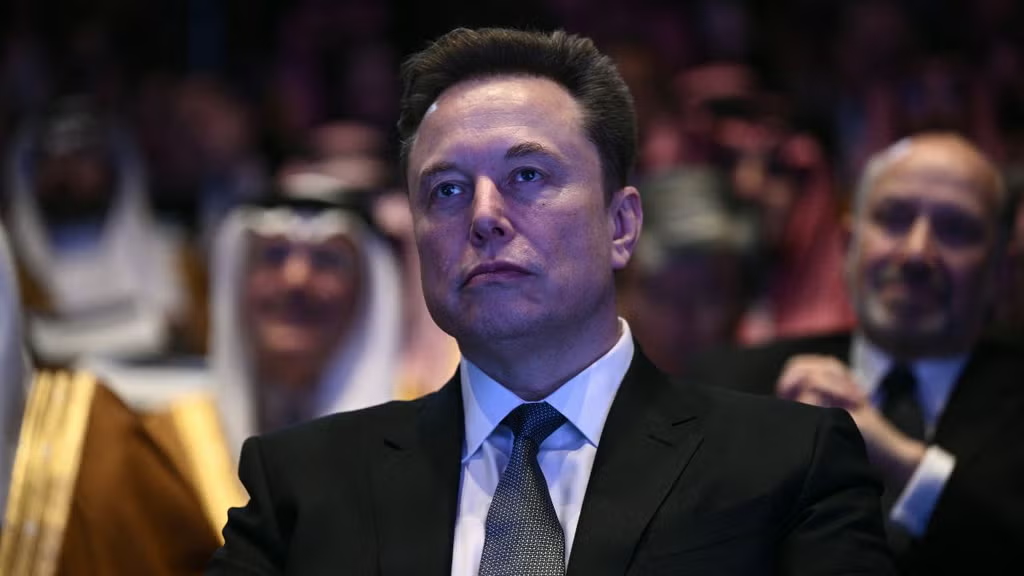
Elon Musk’s political spending offered another example of the limits of financial firepower. The billionaire spent approximately $445 million supporting candidates in federal races, according to OpenSecrets figures reported by Reuters, including backing $153.5 million in attack advertising against Talarico. Musk-supported candidates suffered widespread defeats, although his spending extended beyond television advertising.
Heavy broadcast spending didn’t always end in defeat, either.
In Georgia, Democratic Sen. Jon Ossoff and his allies spent nearly twice as much on broadcast advertising as Republican Mike Collins and his supporters, according to Campaigns & Elections, and Ossoff won reelection.
Taken together, the contrasting outcomes suggest that spending more doesn’t guarantee victory, but losing doesn’t necessarily mean the money was wasted. Candidate quality, turnout and the broader political environment make it difficult to isolate advertising’s impact.
Talarico’s campaign manager Seth Krasne explained to C-SPAN in an interview after the election that a combination of earned and paid media was crucial to winning the public’s trust in the age of social media.
“We did a really aggressive earned media strategy through social, but also through the press and simply showing up in peoples’ communities. We actually saw, in our internal polling, before we started paid media, that the earned media we did in the first two or three months in the campaign moved the race by double digits,” he explained, adding that it allowed Talarico, who at that point was largely unknown, to break through in a way that was more personal for potential voters. Krasne pointed to Talarico’s viral appearance on Joe Rogan’s podcast as one example.
“People are on social media all the time, they know things about celebrities and they want to know their elected officials,” he continued. “So we probably spent $100 million on paid media in this election, but if we didn’t have that base of earned media support where people knew James’ real values and felt like they knew him as a person and could discredit the lies about him on TV and in texts and mailers that were being sent around the state by the richest man in the world, we would have never been able to make it through that.”
The timing of digital spending may also influence how campaigns approach 2028, Cosgrove said.
“The biggest surprise for me this cycle was how late spending accelerated in digital media,” he said.
He noted that much of the spending arrived during the final two weeks before Election Day, raising questions about whether campaigns were giving themselves enough time to build relationships with voters rather than simply inundating them with advertisements at the last minute.
Cosgrove expects the shift away from traditional television to take another cycle or two, particularly among larger campaigns and established political organizations. Vasil anticipates more spending on YouTube, social media, short-form video, digital audio and partnerships with influencers and podcasters.
“I expect 2028 to look different,” she said.
Heading into the next election, television’s political advertising business faces two very different challenges. Broadcast remains the dominant destination for campaign dollars, but must demonstrate that its reach justifies the investment as streaming and digital alternatives expand.
Cable, meanwhile, faces a more immediate threat as campaigns increasingly direct their spending elsewhere. For political buyers, the question is whether those shifting budgets will deliver better results — or simply more ways to reach the same voters.
The post Political Ad Spending Nears $12 Billion as Streaming Chips Away at TV’s Dominance appeared first on TheWrap.