After Barack Obama’s barrier-shattering victory in 2008, a lot of prognosticators — including me — thought maybe, just maybe, we were entering a new post-racial era of American politics.
Those rosy predictions were quickly proved wrong. But after last week’s midterm elections, I’m thinking we were perhaps just premature. The results may not herald the start of that elusive post-racial political era. But Black candidates demonstrated they can win almost anywhere — including in areas without large Black populations.
I say that after looking at the remarkable victories of five Black candidates for governor. Wes Moore was reelected in Maryland, along with newcomers David Crowley in Wisconsin, Aaron Ford in Nevada, Byron Donalds in Florida and Keisha Lance Bottoms in Georgia. Four are Democrats, Donalds is Republican. And Bottoms will be the country’s first Black female governor.
These candidates didn’t get elected on the strength of Black votes alone. African Americans represent around a third of the populations of Maryland and Georgia, but only 16 percent in Florida. Crowley and Ford were elected in states with Black populations of just 7 percent and 11 percent, respectively.
The new Senate will have six Black senators, and perhaps seven if Democrat Scott Colom prevails in Mississippi. The newest addition to the Senate’s Black Caucus will be Democrat Juliana Stratton of Illinois, a state that’s about 14 percent Black. As with the governors, one Black senator — Tim Scott of South Carolina — is a Republican.
Less talked about, but still historic, is that Hakeem Jeffries (D-New York) is set to become the first Black speaker of the House of Representatives. That position places him second in the line of succession to the presidency.
The new Congress will have around 58 Black members, with a few races still being counted. That will be a slight decrease from the current total, because four Black Republicans are leaving. But only around eight of the Black representatives in the new Congress will come from districts with Black majorities. That’s a sea change from the 1970s and ’80s, when the majority of Black members of Congress hailed from majority-Black districts, many of them inner-city areas and often gerrymandered to concentrate the Black vote.
The 1965 Voting Rights Act led to the creation of majority-Black congressional districts, and dramatically helped build Black representation. But the landscape has changed profoundly over the decades. Black candidates can win without Black majorities.
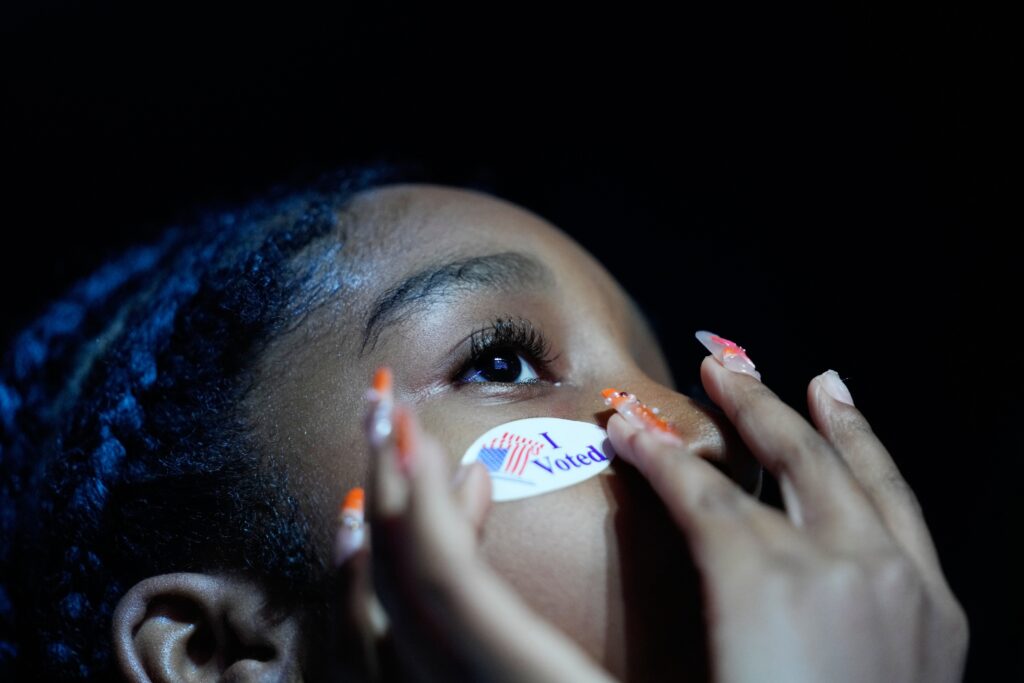
This year’s midterm results — and that includes the local and state elections, up and down the ballots — tell me that candidates of color don’t need gerrymandered districts or majority-minority constituents. Despite what Rep. Ro Khanna (D-California) boasted, candidates today don’t need affirmative action or diversity, equity and inclusion recruiting initiatives to win. We now live in a country where the mayors of Boston and Wichita are of Asian descent. The three most populous U.S. states, California, Texas and Florida, will be led by two Latinos and an African American. It may be too soon to proclaim that voters are entirely color-blind. But we sure seem to be getting there fast.
In most cases, and especially this year, party affiliation has largely trumped race. In Florida, Donalds defied the nationwide blue wave and won a narrow victory with 50.2 percent of the vote by maintaining support in traditional Republican strongholds. He won only around 13 percent of the Black vote. His Democratic opponent, David Jolly, who is White, won 86 percent of the Black vote. Donalds, in his primary, failed to win in some of Florida’s White rural counties, raising questions as to whether White Republicans would resist supporting a Black nominee and switch to Jolly. It turns out the defections didn’t happen.
I’m also looking at results trickling in agonizingly slowly from this week’s municipal elections in South Africa, where one journalist friend texted me to say: “You had a blue tsunami. We had a blue wave.” In South Africa, blue is the color of the Democratic Alliance (DA), the center-right, free-market party known as the party of the country’s White minority. The local elections centered on high costs, crime, corruption and a breakdown of public services after three decades of rule by the African National Congress.
The early count shows the DA scoring big gains on local councils, most importantly in the largest city, Johannesburg. There, a well-known anti-apartheid campaigner, Helen Zille, is hoping to become the city’s first White mayor since the end of White minority rule. Voters in Joburg, as it is known, and across the country appear fed up and willing to look past race. The DA appears to have increased its share of the Black vote.
South Africa’s racial politics are even more fraught than America’s. The pain of the horrific apartheid era, which ended in 1994, is still raw for many. But in the voting booth, citizens this year seem to be more willing than before to look past a candidate’s race.
We may not yet have reached that post-racial society many of us dreamed about in 2008. But this year it seems competence mattered more than color — in South Africa as well as the United States.
That, to me, is progress.
The post Black candidates’ victories in the midterms signal a new era appeared first on Washington Post.