Congress has a caucus for every cause — bicycles, snowboarding, baking, composting, aquaculture, soccer, rock-and-roll, and on and on. There are more caucuses, formal and informal, than members of Congress. Come January, many Democrats will compose what should be called the Cognitive Dissonance Caucus.
In November, Democrats did well with voters, but beginning on Jan. 3, reality gets a vote. Consider four subjects: climate change, campaign finance, Medicare-for-all and racial gerrymandering.
Democrats’ autumn campaigning featured scant talk about what many of them have called the “existential” crisis of climate change. Fear of the extinction-level threat of global warming was displaced by indignation about … the high prices of fossil fuels (oil, gasoline, diesel).
Lower prices would increase consumption. But a hypothetical climate apocalypse is less disagreeable than a here-and-now $100 fill-up.
Even before this year’s traumas at gas pumps, environmental hysteria was rife, but it never budged climate change from near the bottom on the list of voters’ concerns. Climate worriers have made attention-grabbing predictions (about rising temperatures and sea levels, severe weather events, etc.) that facts have refuted. These climate forecasters now resemble the Leon Trotsky biographer who said, “Proof of Trotsky’s farsightedness is that none of his predictions have come true yet.”
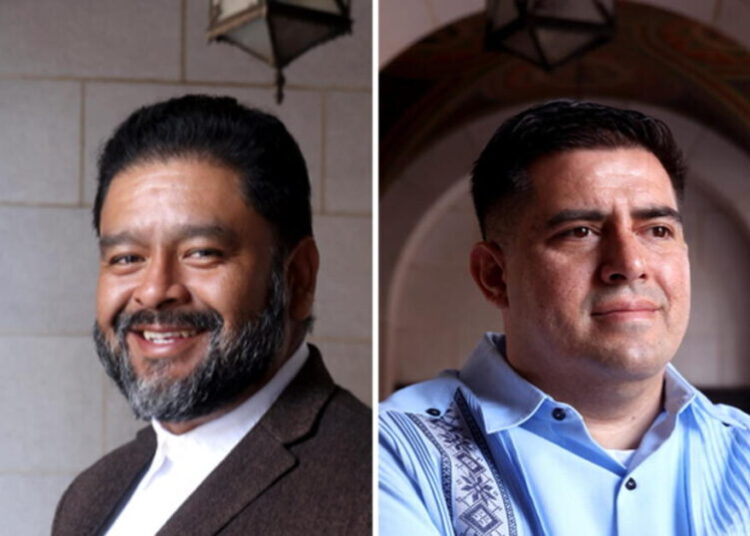
Michigan’s Democratic Sen.-elect Abdul El-Sayed is another progressive vowing to get “money out of politics.” As the late senator Daniel Patrick Moynihan, a New York Democrat, was given to saying about progressive promises of government-driven wonders: “That will not happen.”
Regarding their promised government limits on political contributing and spending, progressives exemplify what Moynihan called “the leakage of reality from American life.” Progressives are not going to overturn or evade repeated Supreme Court affirmations of the obvious:
All political spending is for the dissemination of political speech. In a continent-spanning nation, this requires money. When government limits political spending, government enforces its belief about the proper amount of speech, which is incompatible with the First Amendment: “Congress shall make no law … abridging the freedom of speech.”
Progressives are obsessing about campaign spending after accumulating astounding victories while being substantially outspent on advertising. They insist there is “too much money” in politics, meaning too much political speech. Even though spending by candidates for both parties, in all House and Senate elections this year, totaled just $3.2 billion, less than the $9.2 billion spent in 2025 on advertising by one consumer products company (Procter & Gamble).
When El-Sayed becomes a senator, he is certain to even more intensely favor government-imposed limits on campaign spending. Because these increase the importance of the many nonmonetary advantages of incumbency, thereby disadvantaging challengers. But these limits will not happen.
Progressives’ promises of “Medicare-for-all” elicit rapturous approval from progressive audiences. There is, however, this intractable reality: A large majority of Americans have private health insurance, and a large majority of this majority like their plans. Medicare-for-all must supplant these, which often are untaxed compensation provided by employers.
During World War II, companies competing for scarce labor evaded congressional limits on wages by offering health insurance as untaxed (the IRS agreed to this in 1943) compensation. Medicare-for-all would vitiate many of organized labor’s subsequent achievements. That will not happen.
In April, the Supreme Court, in a case from Louisiana, limited racial gerrymandering — the drawing of legislative districts’ lines to produce a high probability of wins by Black candidates. Progressives were indignant. Progressive critics had two underlying assumptions: Black voters necessarily (properly?) prefer to choose Black candidates. And White — especially Southern White — voters are so retrograde that Black candidates cannot be expected to win in White-majority jurisdictions.
Well. Columnist Quin Hillyer, a Louisiana native and resident, notes the following:
Georgia (Black population, 32 percent) now has a Black governor-elect (Democrat Keisha Lance Bottoms) as well as a twice-elected Black senator (Democrat Raphael Warnock). Mississippi (Black population, 36.8 percent) probably has a Black senator-elect, Democrat Scott Colom. Florida (Black population, just 16.3 percent) has Black Gov.-elect Byron Donalds, a Republican. And a Black Democrat, who calls herself a democratic socialist, came close (48 percent) to winning a U.S. Senate seat. In Louisiana (Black population, 32 percent), a Black Democratic Senate candidate came even closer (49 percent).
Climate change as a menace has been exaggerated, and as a political issue has never been salient. Fifty years of Supreme Court rulings have insulated political campaigns from speech-restricting regulations. The popularity of Medicare-for-all varies inversely with the understanding of it. Racial considerations in voting are rapidly receding.
Progressives should acknowledge all this. That will not happen.
The post On Jan. 3, Democrats run into reality appeared first on Washington Post.