Wildlife crossings being built across California to help reduce collisions between animals and vehicles are not enough to protect the state’s at-risk wildlife and should be enhanced with extensive fencing, according to a new UC study.
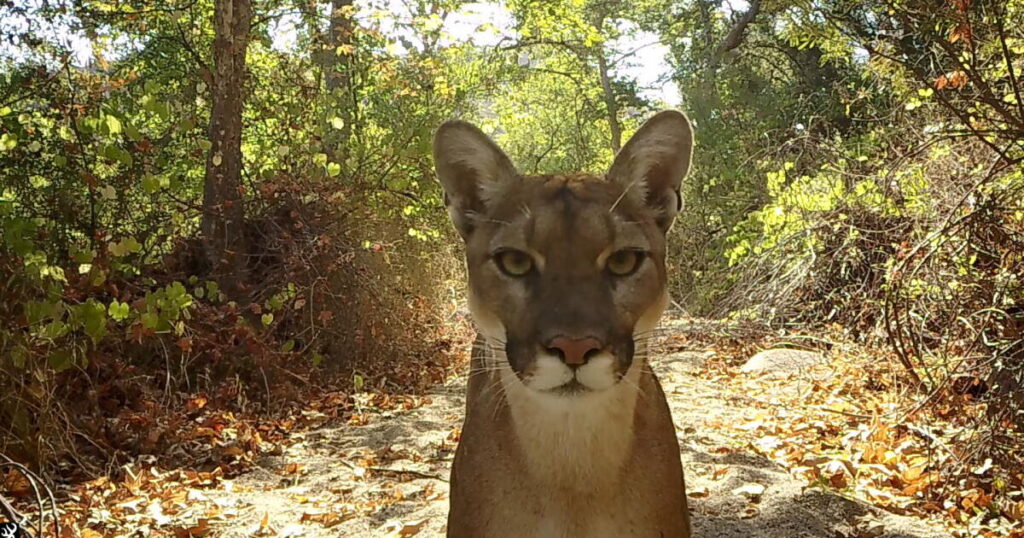
The annual California Roadkill Hotspots Report, published by the UC Davis’ Road Ecology Center, found that wildlife-vehicle collisions each year are killing about 780 mountain lions, or 18% of the state’s mountain lion population, and about 44,000 mule deer, roughly 9.5% of the state’s population. The report analyzes data from the California Roadkill Observation System, the largest database of agency and volunteer-collected carcass data.
Fraser Shilling, director of the Road Ecology Center, and his team determined that extensive fencing on highways is the solution to reducing roadkill, not just wildlife crossings.
Shilling and his team’s report was published nearly a week after two coyotes were recorded trying to ascend the uncompleted Wallis Annenberg Wildlife Crossing, which covers 10 lanes of traffic over the 101 Freeway. The intent behind this wildlife crossing was to provide safe passage across the busy freeway for wildlife and aid mountain lions suffering from the effects of inbreeding caused by limited roaming range.
Several more wildlife crossing projects are in the pipeline, including two planned near the Morongo and Yucca grades on State Route 62. Caltrans is working with the state Department and Fish and Wildlife and other partners to build three more crossings on Interstate 15 between Los Angeles and Nevada.
Research suggests that wildlife crossings with fencing can cut large-animal collisions by more than 80%, making it among the most effective ways to improve driver safety and wildlife connectivity, according to the Pew Research Center.
“It makes sense to plan and build new wildlife crossings where wildlife are still migrating, such as Interstate 8 near the border with Mexico and across the several highways blocking elk and deer migration in northeastern California,” Shilling said in a statement. “But just building a crossing doesn’t mean wildlife will use it — they’ll try to cross wherever they are.”
He argues that fencing is important in sections of the highway that are considered roadkill hot spots and in areas next to creeks and minor road undercrossings where animals are already passing through.
The first wildlife overcrossing that included effective fencing was recently completed over State Highway 97 in Siskiyou County near Grass Lake, according to the report. The project area had the highest recorded wildlife-vehicle conflict rate in Caltrans’ 2nd District in the northeast corner of the state, with more than 50 deer and 16 elk fatalities recorded between 2015 and 2020.
The crossing included two miles of 8-foot-high wildlife exclusion fencing on both sides of the highway, jump-outs every half-mile to allow wildlife to escape the roadway corridor, cattle guards for private road access points and a reinforced concrete box culvert to improve wildlife undercrossings, according to California Department of Transportation.
US Davis researchers say an ideal wildlife fence would be fine-meshed at the base, at least 8 feet tall and with outriggers, or fence overhangs, on top of the multistranded wire to discourage climbing animals and mountain lions from jumping over.
Here’s what the report says about the wildlife at risk and where the roadkill hot spots are.
What animals are being killed on highways and why?
Cars are colliding with larger animals at higher rates, including mountain lions and mule deer.
Researchers say mountain lions are especially vulnerable to wildlife-vehicle collisions because they have large home ranges and can move several miles per day, thus increasing the possibility of encountering highways and other roadways cutting across their paths.
Many mountain lions are being killed in the northern part of California; however, the population impact is greater for lions in southern and the central coast of the state because the populations are smaller there.
California recently listed mountain lion populations in those areas as threatened under the California Endangered Species Act.
The highest rate of wildlife-vehicle collisions involving deer is on Highway 50 in western El Dorado County.
There are several hot spot areas of wildlife-vehicle collisions involving mountain lions along Interstates 280 and 15, State Routes 62 and 118, and Highway 101. The report did not identify specifically where collisions occurred on these highways.
The post Wildlife crossings aren’t enough to curb roadkill hot spots, researchers say appeared first on Los Angeles Times.