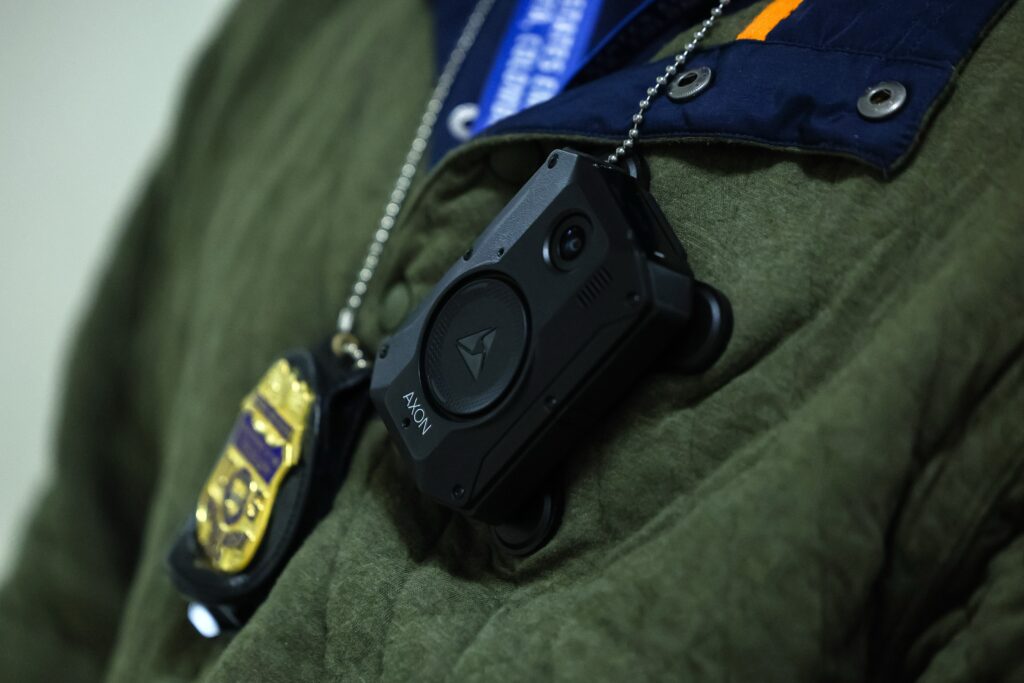
The chief watchdog for the Department of Homeland Security is auditing Immigration and Customs Enforcement’s body-camera program to determine whether officers are complying with mandates to activate the devices and store the footage properly.
DHS’s Office of Inspector General notified acting ICE Director David Venturella Tuesday that, starting this month, investigators will examine the agency’s Enforcement and Removal Operations unit, which hastily hired thousands of new officers last year and has engaged in multiple shootings, car chases and sometimes violent clashes with protesters.
In several of the incidents, officers were not equipped with body cameras or did not have them on.
Venturella and DHS did not respond to requests for comment.
The audit comes a month after DHS rejected a recommendation by the Government Accountability Office, another independent watchdog, to require officers to wear body cameras that automatically activate during a public encounter. A Homeland Security official worried that officers would inadvertently record “sensitive interactions” with informants, victims or protesters, though Customs and Border Protection already uses that technology.
The GAO insisted on the additional controls, however, saying it “would provide greater assurance that body-worn cameras meet ICE’s desired results for transparency, accountability, and public trust.”
DHS’s inspector general said investigators plan to meet with agency officials this month, request data on the program, and conduct fieldwork in the District of Columbia and other locations “as necessary.”
DHS said ICE would expand body cameras after the fatal shootings in January of two U.S. citizens in Minnesota and other incidents. But problems have persisted. An ICE officer who in September shot and wounded a Venezuelan man in Austin had reportedly failed to activate his camera.
Officers involved in the July shooting deaths of Lorenzo Salgado Araujo in Houston and Johan Sebastián Durán Guerrero in Maine also did not appear to be wearing cameras, including one who had a volatile history, according to relatives and court records.
Homeland Security Secretary Markwayne Mullin and other officials have supported the camera program, calling it a safety measure for the public and officers alike. Experts say the footage often exonerates officers when there are wildly conflicting accounts of an incident, and their popularity has grown nationwide.
An ICE spokesman said in August that all officers and agents had been given cameras and training was ongoing, though Mullin said in September that the distribution would be limited to officers in the field.
ICE has faced criticism for failing to quickly expand the program even as it dramatically increased field operations under the Trump administration. The White House’s mass-deportation push has catapulted officers and agents into tense situations nationwide, often leading to contradictory accounts of the confrontations.
Camera footage has raised questions about some of Homeland Security’s official accounts. An ICE officer who allegedly shot a Venezuelan man in the leg in January during Trump’s Operation Metro Surge in Minnesota was indicted for allegedly lying to federal investigators in September after video footage allegedly contradicted his account.
The White House proposed gutting ICE’s body-camera program last fiscal year and refused to make cameras mandatory. A DHS report showed that ICE had planned to deploy cameras agencywide by September 2025 after years of testing.
Funding for the camera program became a major sticking point during last fiscal year’s budget negotiations in Congress. Democrats tried to mandate camera use, but the White House rejected that plan.
A Trump administration official emailed The Washington Post in January that the White House opposed mandating body cameras as one of “many unserious poison pill demands” from Democrats in the budget bill.
The post DHS watchdog will probe ICE’s compliance with wearing body cams appeared first on Washington Post.