Russia has begun fielding a new variant of its most dangerous attack drone, which more closely resembles a missile and can fly faster and higher than its predecessors, Ukraine said Monday, a development that could further challenge its air defense operations.
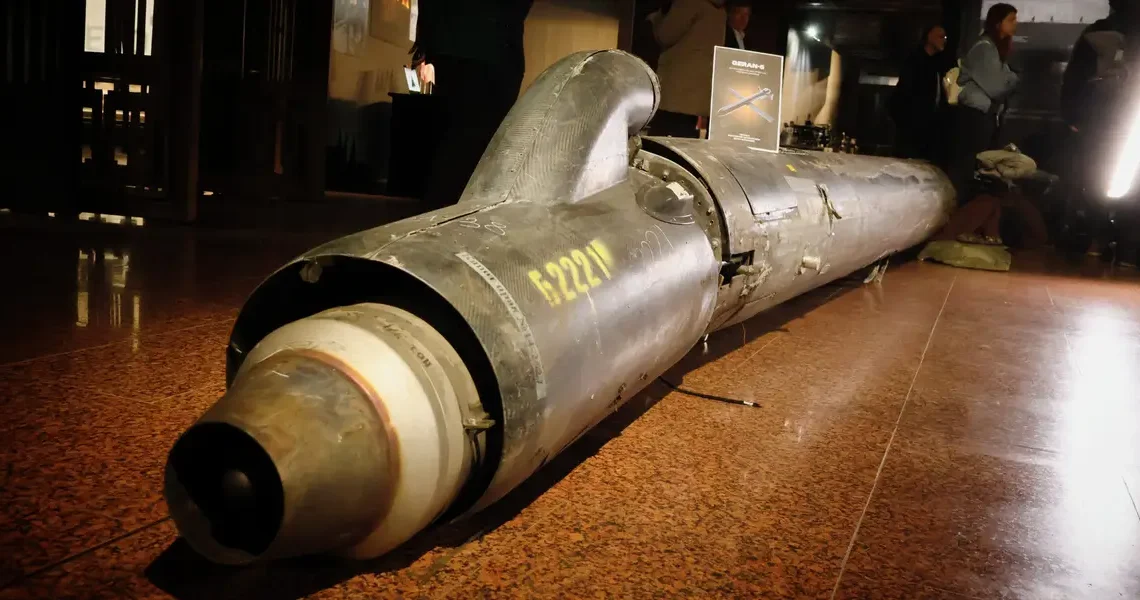
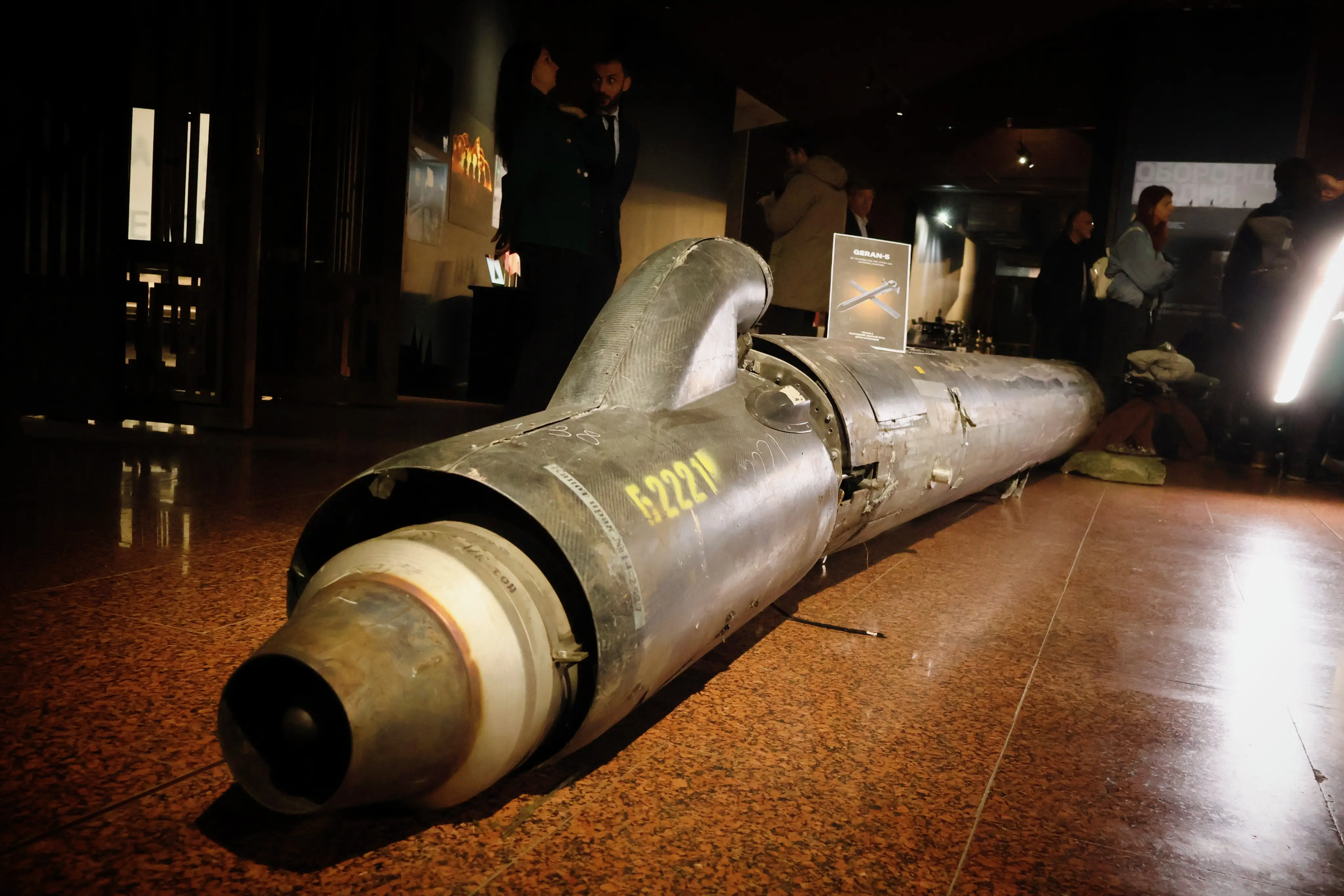
Several weeks ago, Russia began using a variant of its Geran-5 drone known as the K5-K to attack Ukrainian cities, the GUR, Kyiv’s military intelligence agency, said, adding that its experts recently found a nearly intact munition in the middle of a field.
Considering the K5-K’s aerodynamic and technical characteristics, it “can already be classified as a small-sized cruise missile,” the agency said. The GUR noted that Ukraine discovered hundreds of foreign-made electronic components inside the munition, as has been the case with other Russian weaponry, highlighting the ongoing challenge of restricting access to foreign components.
Like the Geran-4 and Geran-5 attack drones, the new K5-K is powered by a mini turbojet engine. The missile’s airframe is slightly smaller than the Geran-5; however, its fuselage has been improved for greater speed and altitude.
The K5-K can reach an altitude of nearly 20,000 feet, up from 16,000 feet, and cruise at speeds over 280 mph, though it can fly faster than 600 mph during certain maneuvers, the GUR said. The missile has the same range and warhead size — 620 miles and 200 pounds, respectively — as its predecessor.
However, the GUR said that the K5-K found by its experts was armed with a TBCH-90 thermobaric warhead. These munitions are also known as vacuum bombs and disperse an aerosol cloud of explosive material, then ignite it, causing a large fireball and high-temperature blast wave while drawing out the surrounding oxygen.
Their blasts, which can be hotter than 4,000 degrees Fahrenheit, last longer than typical warhead explosions and are highly destructive and deadly, especially in enclosed spaces. Russia has armed some of its older drones with thermobaric warheads, and Ukrainian first responders and air defenders have previously characterized them as a serious issue.
Neither Russia’s defense ministry nor its US embassy responded to a request for comment on the GUR’s findings.
It’s unclear how often Russia has launched the K5-K cruise missile since the first attack earlier this fall. But its development comes amid broader efforts to field weapons that blur the line between drone and missile.
Russia has invested heavily in jet-powered drones in recent months, building out air bases to support their launch and attacking Ukraine with thousands of them since June. As defenders struggle to counter these weapons, Kyiv’s defense industry is racing to develop faster interceptors.
At the same time, Russia is increasingly using “quasi-cruise missiles,” weapons that are somewhere in between cheap attack drones and expensive cruise missiles, according to conflict analysts at the Institute for the Study of War, a US think tank.
“Russian forces began integrating inexpensive, highly maneuverable quasi-cruise missiles into their missile strike packages in mid-2026 — marking a concerning shift toward low-cost, cruise-missile-like weapons that can strain Ukraine’s scarce air defense stocks,” analysts wrote in an October battlefield assessment.
ISW’s analysts said that quasi-cruise missiles like the Banderol S8000 have larger warheads and fly at greater speeds than even the fastest jet-powered drone, the Geran-5. Both of these weapons are estimated to cost up to $100,000 — much cheaper than a $2 million Kh-101 cruise missile.
“Russian forces likely aim to use quasi-cruise missiles to augment the devastating effects of the ballistic missile and jet-powered drone combined strikes, which have been exploiting and exacerbating Ukrainian interceptor missile shortages,” ISW’s analysts said.
Read the original article on Business Insider
The post Russia’s attack drones are evolving into cruise missiles. Ukraine got a close look at the latest one. appeared first on Business Insider.