A few days before Henry Worsley died, he called his son, Max.
Max was 21 and asleep at home in France, where it was the middle of the night. He hadn’t seen his father in two months. Henry, 55, was 9,000 miles away, in the brutal icy wilderness of Antarctica. Henry was on his third South Pole expedition, his longest and most grueling one yet: He wanted to become the first person to cross the entire continent on his own. But after nearly 70 days of skiing through blinding snowstorms while pulling a sled loaded with all his food and fuel, he was worn out and in pain.
“I just wanted to hear your voice,” Henry said to Max by satellite phone. He repeated it again and again. “I just wanted to hear your voice.”
“Dad, you’ve done enough,” Max told him. “You’ve made everyone so proud. You need to call it in.”
Max’s father acknowledged his words but didn’t say what he would do next. Max’s mind was racing as he fell back asleep. Soon after, Henry called for a rescue and was flown to Chile, where doctors discovered an infection in his abdomen. He died of organ failure two days later, on Jan. 24, 2016.
Max had just been starting to get to know his father better. He spent most of his childhood at boarding schools, and Henry, an officer in the British Army, had often been posted overseas. Henry could be lively and sociable in the right settings, but he struggled at times to connect with Max on an emotional level. This, Max knew, was just his upbringing: When Henry interacted with his own father, a decorated general, there were no hugs, no I love yous. Just handshakes.
Henry’s death left unfulfilled a promise he had made: that he and Max would someday trek through Antarctica together. It would have been Henry’s next expedition, the trip that would solidify his bond with his son.
Max knew that if he ever wanted to feel closer to his father, he would have to venture into the bleak, beautiful, lonely land that had been his all-consuming passion. He would have to attempt a South Pole journey of his own.
Henry Worsley was a figure from another age: a soldier, writer and artist who loved Rudyard Kipling’s poetry and idolized Ernest Shackleton, the 20th-century polar explorer famed for his grit.
Henry’s first South Pole expedition retraced a journey that Shackleton had failed to complete exactly a century earlier. For his third trip, he wanted to follow in his hero’s tracks by pursuing a trans-Antarctic crossing, which Shackleton had called “the last great polar journey that can be made.” Shackleton set off with a team in 1914 when their ship, the Endurance, was crushed by sea ice, kicking off one of the greatest survival stories in the history of exploration.
Henry, though, was making his journey alone — an ultimate test of his mettle and wits. After he died, the journalist David Grann wrote a book about his fateful final quest. Prince William declared that he would “remain a source of inspiration to us all.”
Max and his younger sister, Alicia, had grown up steeped in their father’s love for Antarctica. Their home was filled with Henry’s collection of polar memorabilia: autographed books and diaries, black-and-white photos and faded maps, commemorative comic books and jigsaw puzzles. They absorbed so much of their father’s passion for the frozen continent that even his death didn’t taint their enchantment. “Because I know how much he loved it,” Alicia said. “And I loved him.”
Max yearned to experience the adventures his father had conjured for him in his youth. He longed to feel the blissful solitude Henry felt — the feeling, as Henry once described it, of being “this atom on an ice cube in the middle of nowhere.”
Around three years ago, Max finally felt ready to make it happen.
He would ski the same route his father had skied to the pole. And he would do it alone, to feel a deeper communion with his father. He knew, though, that if he wanted even a chance of pulling it off, he needed to prepare.
Before trying his solo crossing, Henry had undergone military training and completed two polar expeditions. Max had barely done any cross-country skiing and had never pulled a sled. He had started mountaineering and climbing in his teens and made several dayslong treks through the Alps, but never in Antarctica.
He decided to consult one source that might contain some practical wisdom for his journey: his father’s leather-bound diary from his final expedition. His mother, Joanna, kept it in a safe in her London apartment. She and Alicia had refused to read it, fearing it would upset them too much. Max had flipped through it before, but he was also apprehensive about delving into his father’s state of mind during his final weeks.
In just the first few pages, he saw how anxious his father had been about one key aspect of his trip: his sled. At roughly 325 pounds, it was heavier than the ones he had hauled during his first two expeditions, which were only to the pole, not all the way across the continent.
“General anxiety over weight and wait,” Henry wrote on Nov. 11, 2015, a day after he had arrived at the Antarctic logistics hub from which, weather permitting, he would be flown to the starting point for his journey.
When he set off two days later, his spirits were high. But as Max kept reading, he noticed something else he hadn’t known: His father first felt pains in his midsection weeks before calling for help.
Day 35: “Woke this morning to a very severe stomachache. I set off in trepidation and after 10 mins could go no further.”
Day 56: “Woke feeling really terrible. Something I ate didn’t agree.”
Henry’s jottings grew spare, haunted. Max found them hard to read, both for their ragged handwriting and for the misery they described.
Day 63: “Fingers still a worry. A number on the verge and I wonder how long they will last.”
Day 68: “Very low.” “Took painkillers.”
Day 69: “Just want it all to end.”
After Henry’s death, his family and friends wondered why he hadn’t called for a rescue sooner. Now, reading the diary confirmed for Max something he had long believed: His father was so fixated on reaching his goal that he waved away warning signs about his condition.
His judgment was further clouded, Max believed, by his deep experience in uncomfortable situations. Henry was so used to physical and mental strain that it hindered “his ability to know when something was too much,” Max said.
Max didn’t have that issue. He wouldn’t make the same mistakes.
His training began in Singapore, where he was living at the time. He was working for an ocean robotics company and preparing for Antarctica became a second job: intense lower body workouts in the gym, runs through a humid city park, many painful sessions on an Assault Bike. He laid out a fitness plan on spreadsheets. He flew to Norway to learn cross-country skiing and visit a sports lab, where the trainers filmed him roller-skiing on an enormous treadmill to analyze his technique.
He set his sights on starting his journey around November 2026, during the Antarctic summer.
For the Norwegians, expeditions were all about technique, Max said. His father was the opposite. He thought that the real test was mental, that Antarctica was traversed by putting one ski in front of the other, hour after backbreaking hour, day after punishing day.
Max understood that, over hundreds of miles, shaving even a tiny amount off his stride could cut down his journey time significantly. But he also thought that technique would count for little if, feeling battered and forlorn on the ice, he couldn’t silence the doubts that might be rattling around his head: What am I doing here? Why am I subjecting myself to this?
Max began discussing his plans with close friends. When he told his sister, she said she trusted and supported him, but added, “Gosh, good luck telling Mum.” About a year into his training, he had told his mother he was planning an expedition. He just didn’t mention it would be a solo one.
For Joanna, Antarctica had been Henry’s “mistress,” one that had taken him away from her again and again. Even when he wasn’t on the ice, his thoughts were consumed by it. He would return from an Army posting in Afghanistan, she said, only to tell her, “Oh darling, I’m really, really sorry, but I really need to go to Norway and train.” After his first expedition, he hid himself away to write a book about it, titled “In Shackleton’s Footsteps.”
“I didn’t mind,” Joanna remembered. “I loved his passion for it. But when he died, I did mind.”
Max felt guilty about putting his mother through so much pain again. Still, he couldn’t hide his plans forever.
One day early last year, he and his mother were discussing his trip on the phone when she asked the question he had been trying to dance around.
“Who are you planning on doing it with?” she asked.
The words came tumbling out.
“Oh,” Max said. “Actually, I really want to do it solo.”
She went quiet, very quiet.
Their call ended quickly after that. Max agreed to give his mother some time to think. Really, though, her silence had told him everything he needed to know.
He realized that, since Henry’s death, the thought of a loved one alone at the end of the Earth, with no one to help for hundreds of miles, had not left his mother’s mind. He could see that making this trip solo would be agony for her.
And so, not long after their call, Max told his mother he wouldn’t retrace his father’s last expedition alone.
As it happened, he had recently been introduced to a potential partner at a pub in Oslo. Martin Nesse, a 35-year-old software developer, had skied across Greenland but was struggling to find the money for a South Pole expedition. He had considered doing what many Norwegian adventurers do to finance their Antarctic exploits: sell his apartment.
At the pub, Nesse was impressed by Max’s detailed plan for raising funds, including from a few sponsors that had also supported Henry. He was glad to find someone who was as serious about reaching the pole as he was.
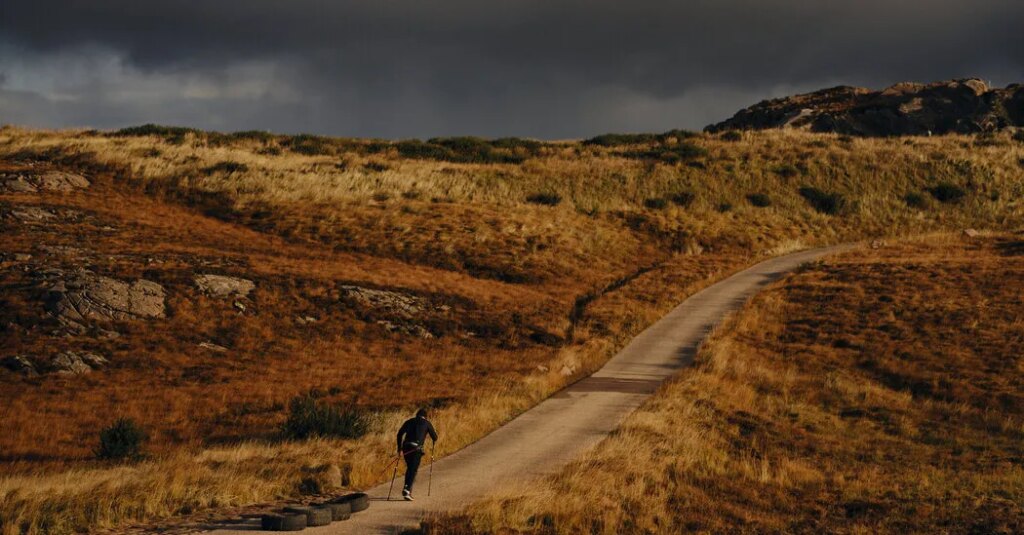
They kicked their preparations into high gear. Max took a job that allowed him to live on an island in Scotland, where he trained by pulling tires across gravel or grass for one to two hours, sometimes longer, three times a week. He worked with a nutritionist to optimize his diet. He and Nesse practiced hauling sleds across Norway’s mountain plateaus. They took a crevasse rescue training course in the Alps and a wilderness medicine course in England.
“I have definitely felt like I needed to not just tick every box, but tick it twice,” Max said. “And tick double the amount of boxes than I needed to. For Mum, really. And for me.”
Max kept his mother informed of his preparations, but delicately. “He will tell me anything if I ask him, but I don’t really want to know much,” Joanna said. The mere thought of Max going to Antarctica still stirred within her a dark cauldron of emotions. “I feel like I’m just holding it together,” she said.
Still, she would never have dreamed of stopping her son from going, she said. Even if he had insisted on going solo.
“I really do have this belief that your children either do crazy things with your love and support, or without your love and support,” Joanna said. And “with,” she added, is better for parent and child alike.
On a sunny September morning, Joanna sat in her London apartment with Alicia. Henry’s skis from Antarctica were mounted on the kitchen walls.
Max would be arriving soon, but for now, mother and daughter took stock of his journey, two months before he was set to depart.
Alicia was 19 when her father set off for the last time, too young to understand the risks he was taking. Even though she felt mostly at ease about her brother’s expedition, “I don’t want to think it’s a given that Max is coming back,” she said. “So that worry exists. That didn’t with Dad.”
Joanna liked Max’s dedication to honoring her husband’s legacy, though it did make it somewhat harder for her to push past the pain of his death. “In my heart, I still miss Henry, and I still am very sad,” she said.
She looked out the window. Max was here. “He won’t want me to cry,” she said. “So I have to pull myself together.”
Max plopped down on the pink herringbone sofa next to his sister. The mood was light at first. He began talking about how “desperately hard” he had been working to put on weight. He was six feet tall and 170 pounds before he started training. His target was around 195 pounds, every ounce of which he would need once he was on the ice and burning thousands of calories a day skiing.
“It’s exhausting, eating 4,500 calories a day,” Max said.
Joanna gasped. “Do you really?” She was relieved to see Max’s commitment to bulking up. She had long thought Henry hadn’t gained enough weight before his last expedition.
Nesse’s weight gain strategy was simple: He chugged a cup of cream every morning. Max’s involved round-the-clock work, he explained. Three big meals, plus salami, nuts and other snacks, plus two bagels midmorning.
“Two bagels, or one halved?” Alicia asked.
“No, two bagels,” Max said. “And then a protein shake.” Everyone laughed.
“I like you being adventurous,” Joanna said. “I’m just not relishing when you’re going to be down there.” She would probably wake up at night thinking about crevasses, she said.
That sent the conversation down a darker path. Toward Henry.
“That last expedition I was always nervous of,” Joanna said. “There was something different about it.”
Max mentioned learning that his father’s sled had been much heavier on his last trip.
“I’ve never thought about that,” Joanna said.
“Because he was there alone, and he was doing a much longer expedition,” Max said.
“Oh dear, you know that makes me so depressed,” she said. “You see, he should have been doubly trained, and he wasn’t.”
She couldn’t hold it together any longer. She began to weep. Alicia got up and put her arms around her mother’s shoulders.
Henry would have been 66 this year. Max was still filled with sadness not knowing how his relationship with his father might have blossomed if he had only come home. He would be living in the countryside today, Max said. Keeping bees, growing vegetables. “He’d have a little artist’s studio, doing his painting,” Max said. “Maybe he’d write another book about his life.”
When Max thought about his own trip, he knew coming home to his mother and Alicia had to be the priority. If it were just him, “maybe I’d push myself slightly further,” he said. With them in the picture, though, nothing else he might gain or learn by taking additional risks seemed worth it.
On Nov. 2, two days before Max would leave to start his journey in Punta Arenas, near the southern tip of Chile, he sat down with Alicia and his mother for the Christmas dinner he would miss while he was in Antarctica.
In previous years, the family sometimes celebrated Christmas even earlier, before Henry left on long Army tours. He felt it was wrong for officers to take their leave from Afghanistan over Christmas, Joanna said, “so he always stayed.”
The anniversary of Henry’s death had long made the end of the year an emotional time for her. Max’s trip was making this one exceptionally tough. As he talked through his gear and his plans, she tried to keep bad thoughts at bay.
“Trauma, however much you try to shove it into a river and drown it, it just comes to the surface,” she said.
In Punta Arenas, Max explained, he and Nesse will spend days weighing and prepping every morsel of food they will eat during their two months on the ice, down to the sugar and dates they will sprinkle on their oatmeal. On Nov. 12, they will fly to an Antarctic logistics hub. Then, after a day or two, if weather allows, they will be dropped off by plane at the Antarctic coast and begin skiing south. At the start, their sleds, loaded with all their food, fuel and gear, will weigh around 265 pounds each. Eight hundred miles of icy nothingness will separate them and the pole.
Max will be carrying some of his father’s things — his diary, his hat, his goggles. Every evening in their tent, Max and Nesse will take turns sending voice updates that will be transmitted by satellite and posted online. Max will read out snippets from his father’s diary.
The family hadn’t discussed how often Max would call home. “I was thinking like once a week or something,” he said. “Could be more. Could be less.”
“No, I think more,” Joanna said, gently.
“More,” Max said. “OK.” He gave her a reassuring look.
On the ice, he will feel … what, exactly? He wasn’t quite sure. He was ready for the exquisite silence. What his father’s spirit might say to him in those quiet moments remained to be seen.
The post A Father’s Dream of Antarctica and a Son’s Unfinished Quest appeared first on New York Times.