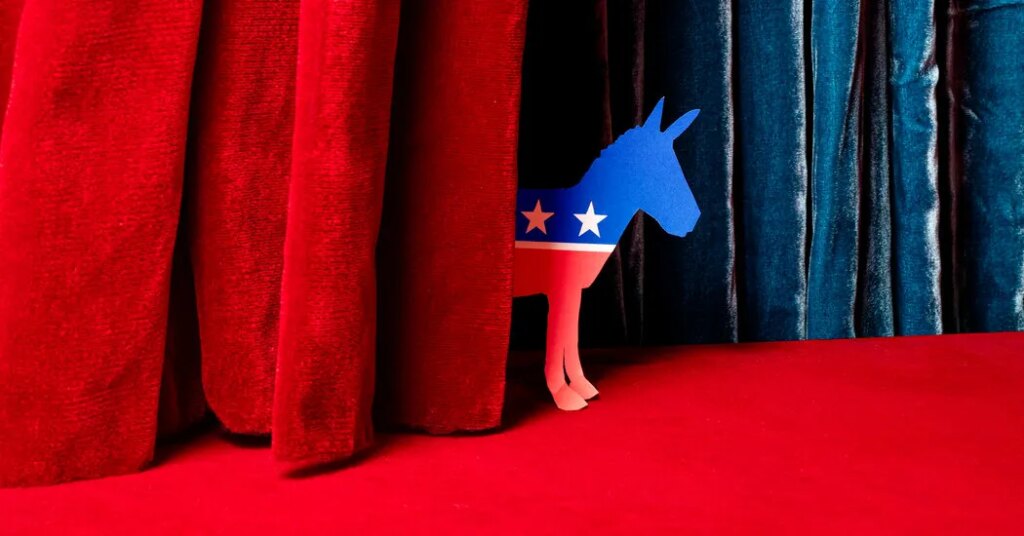
The voters have spoken, and they have handed the Democratic Party something rarer than a victory: They have offered the party a chance to prove government’s worth again. The questions now are whether Democrats will seize it and whether they can show a doubting nation that its lawmakers can still lift burdens, open doors and make lives better.
The task ahead won’t be easy. Americans have watched institutions falter and promises fade, and many have stopped expecting much from Washington. Yet beneath that weariness is still hope. Families feel the squeeze of rising prices every time they shop for groceries, fill a prescription or a gas tank or dream of a home of their own. They are frustrated by failed wars, growing debt and flagrant corruption. They watch artificial intelligence advance and ask what it will mean for their jobs, their children, their communities and their future. They want change, and they want someone to deliver it.
Democrats should remember that they won this election mostly because of President Trump’s unpopularity and that their party’s approval rating is well below 50 percent. They also won this election without telling the country where they intended to lead it. Most voters — 57 percent in a CBS News/YouGov poll last month — said the party had no clear plan for governing. Voters chose Democrats anyway, recoiling from Mr. Trump’s shambolic Republican Party. But to keep their support, Democrats must give Americans something to believe in. They must show that they are relentlessly working to get results.
That vision need not become law in the next two years in order to matter. Mr. Trump may veto bills, and Senate Republicans may use the filibuster as a wall. Let them. Democrats can still declare what government should do for the people it serves. The party can champion ideas that Americans already embrace, like more affordable health care and housing, and invite Republicans to join them. If Republicans do not, it will set the stage for a 2028 campaign in which the choice before the nation is clear.
For half a century, Democrats offered American voters technocratic policies designed to improve their lives, like tax credits and regulations. Many did real good. Still, trust in government has remained low, and working Americans drifted away. Even in this year’s rout, Democrats only narrowly carried voters without a four-year college degree, according to New York Times estimates. But working-class Americans did move sharply toward Democrats, and their hopes are the party’s now to honor. Every lasting majority in American electoral history has stood on the shoulders of working people. The coming one must, too.
Here lies the hard lesson. Democrats have too often built quietly, crafting programs so subtle that the people they helped never saw the hand that helped them. The political scientist Suzanne Mettler calls this “the submerged state.” The expanded child tax credit lifted millions of families, yet it slipped away with hardly a protest. Clean-energy projects rose across the country, and the people living beside them rarely connected them to the federal government. Try to name a single project in your own state that the vast stimulus efforts of the Biden or Obama years made possible. Most Americans cannot, and that’s not their fault.
Complexity has often deepened the wound. Too many Americans have had to fight their way through confusing rules, jargon-filled forms and endless waits simply to claim help they were promised. They have wondered why the country finds it so hard to build new homes, bridges and factories. Nicholas Bagley, a legal scholar, warns against “the procedure fetish,” the conviction that bureaucratic rigor earns public trust. In truth, every confusing form erodes that trust a little more. Every hour on hold teaches a citizen to expect less.
Fortunately, history can light the way to a better society. Americans greeted the Affordable Care Act, better known as Obamacare, with skepticism, too. It took years to become popular. It still isn’t perfect. Over time, though, people came to rely on it, and then to defend it. When Republicans tried to repeal it, the public stopped them, just as Americans once rallied behind Medicare when small-government Republicans tried to quash it in the 1960s.
Today, health care stands as the Democrats’ strongest issue, in large part because Obamacare — and its nickname helps — touches people’s lives in ways they can feel. That includes people who already have health insurance, thanks to, among other things, its provision that lets adult children remain on a parent’s plan until age 26. They noticed when the program helped them, and they noticed when Mr. Trump cut its subsidies. In all seven states that have put an Obamacare expansion (through Medicaid) to a popular vote, the people said yes. Six of those seven states are deep red.
This tradition, of smart, bold and salient government, is one that Democrats must reclaim. Social Security brought dignity to old age. The G.I. Bill sent a generation to college and into homes of their own. Rural electrification carried light into farmhouses that previously had known only candlelight. Enshrining labor rights in federal law empowered workers to fight to better their lot. Public schools spread across the country because ordinary citizens demanded them in the 1800s and early 1900s. In our own time, voters in red states and blue have raised the minimum wage and protected reproductive rights with their ballots. And leaders as different as Mayor Zohran Mamdani of New York and Gov. Josh Shapiro of Pennsylvania have shown how to make concrete change and then tell its story with clarity and conviction.
Making democracy visibly responsive is not just good politics, but how a republic keeps the public’s faith. Democrats must now do that, not just for their party’s sake but for the country’s.
With the power they have won, Democrats will need to hold Mr. Trump to account. They can name his corruption as the capture of public power for private gain. They can expose the policies that make American life harder, like his scattershot tariffs, his cruel budget cuts and the mounting costs of his reckless war in Iran.
The greater work, though, lies far beyond Mr. Trump. Democrats need to sketch the outlines of a post-Trump America, a country where people can see and feel what their government does for them.
Where can a modern national agenda begin? Picture a parent who can afford a child’s medicine without dread. Picture families who can raise young children without drowning in costs. Picture a generation that can once again own a home. Picture an economy in which those who have prospered most, including the titans of artificial intelligence, help build a bountiful future for everyone else. Every idea Democrats advance should pass three simple tests: Will it work? Will it reach as many Americans as possible? Will people feel it?
The conversation has already begun. Writers and experts are offering ideas in Opinion’s pages, and a few Democratic officials — from Representative Ro Khanna of California on the left to the former Chicago mayor Rahm Emanuel in the center — have stepped forward with plans of their own. The rest of the party must join them, and quickly. Twenty years ago, after the 2006 midterms, Democrats carried a bolder and more developed agenda into the next presidential campaign than they carry today. That agenda gave the country Obamacare.
This week Democrats have earned the right to celebrate. Their victory surpassed many of their hopes, and they will soon govern Congress with comfortable margins. Let them also remember 2006 and 2018, triumphs that promised a lasting majority and then slipped away within a few short years.
Republican unpopularity will carry Democrats only so far. The party must prove that the immense power of government can ease the burdens of American families and help them imagine a brighter future. Let them build so boldly and visibly that Americans can feel the difference in their daily lives. If Democrats rise to this moment, they can turn a single night’s victory into a new American promise.
The Times is committed to publishing a diversity of letters to the editor. We’d like to hear what you think about this or any of our articles. Here are some tips. And here’s our email: [email protected].
Follow the New York Times Opinion section on Facebook, Instagram, TikTok, Bluesky, WhatsApp and Threads.
The post Democrats Need a Bold Governing Agenda appeared first on New York Times.