In the span of just eight weeks, parents heard alarming news stories that raised fears and questions about the new drug landscape their kids are now facing.
In August, actress Hayden Panettiere died at 36. The coroner ruled it an accidental overdose involving fentanyl and other chemicals, and investigators found blue pressed pills at the scene.
In September, Presley Gerber died at 27 in a rehab facility in Los Angeles of a suspected overdose. One day later, two University of Mississippi students, ages 18 and 20, died hours apart. Near each of them, investigators found the same brand of kratom-derived tablets, which they say were bought at local shops.
At Cornell University, ketamine sits at the center of an alleged sexual assault at a fraternity house. And at Penn State, prosecutors charged 13 current and former students alleged to be part of a cocaine ring they claim was operated out of two fraternity houses, with pledges made to cut and bag the drugs.
Counterfeit pills. A convenience store “supplement.” Medical anesthetic used as a party drug. Cocaine on campus. Cychlorphine. Xylazine. 7-OH. Shatter. What are these substances? Are they harmful? Where is the line between safe medication and dangerous drugs?
For most of our lives, the line was solid. Medicine was prescribed by a doctor and acquired from a pharmacy. Drugs came from a dealer. That distinction has blurred in recent years, as profit-driven interests rush products to market — via both legal and illegal channels — to exploit our quick-fix culture of self-medication.
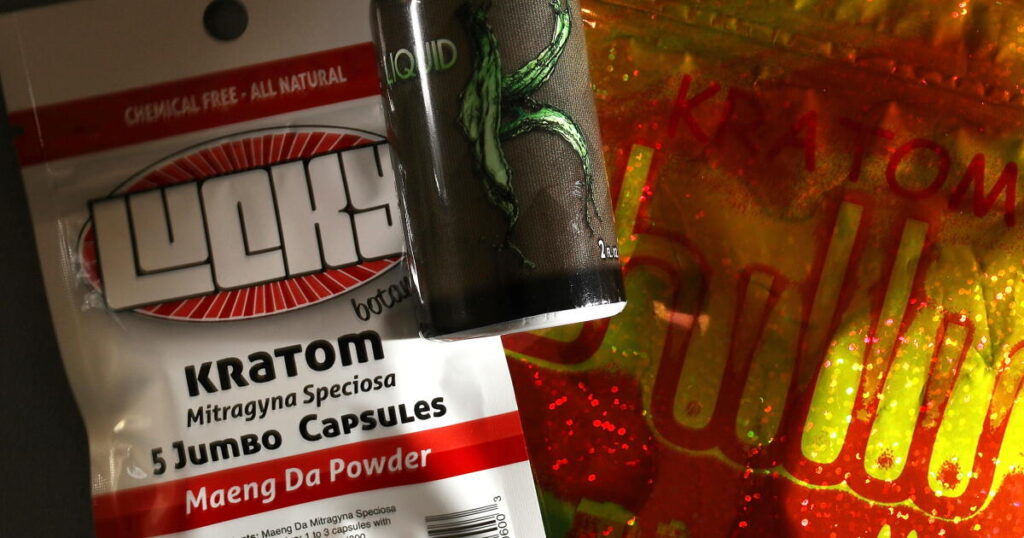
Today, teens can buy kratom products at gas station counters that are packaged like candy and labeled as a supplement. Kratom is a plant from Southeast Asia whose leaves have opioid-like effects. But what’s sold in stores is often a far more potent version: Manufacturers extract and concentrate a compound called 7-OH to sell as gummies, drinks, capsules and shots. These products are highly addictive, and regulators are only now moving to ban them.
Cannabis is sold in storefronts and promoted as wellness despite evidence to the contrary, often at potencies far beyond what previous generations experienced. Psychedelics are being decriminalized and touted as therapy. Ketamine, a medical anesthetic, is being used as a therapeutic treatment and a party drug. And pills that look exactly like ones in a family medicine cabinet may be counterfeits cut with fentanyl and, increasingly, other potent chemicals.
These products and substances are not medicine. But when corporations market their elixirs for widespread consumer adoption, they create confusion in the market. If everything is “natural,” “legal” or “therapeutic,” young people conclude that the products must be safe. Today, commercialization outpaces regulation, and marketing has gotten way ahead of science. Kids get the message that the benefits are clear and the risks have been worked out. Neither is true.
Parents are having a tough time being heard amid the torrent of misinformation coming from every direction. In a national survey of more than 2,500 people commissioned by Song for Charlie this summer, 73% of parents said they had talked with their kids about prescription pill misuse, yet only 27% of teens report having that conversation. Talking about a concern once is not the same as being heard.
The same survey shows how teens size up risk. Most, 88% of teens, said accepting a pill from a stranger is highly dangerous. But only 33% said the same about a pill from a close friend. Kids are judging danger by who hands them the pill, when what matters is what’s actually in it.
This is a complex and confusing drug landscape for parents guiding their children through adolescence, when young brains are developing and lifelong habits are forming. We all want to see the current generation grow up healthy and capable of leading us into a promising future. This means protecting youth from harmful drugs in the near term and helping them develop the resilience and critical thinking skills they need to make healthy decisions about substances as adults.
We know how to do this. Prevention science points to two of the strongest protections we have: perceived harm and social disapproval. When young people know a substance can hurt them (perceived harm) and sense that using it is uncool (social disapproval), fewer of them use the drug. The task of prevention is to increase these protective factors in combination since, when either one erodes, increased use tends to follow.
Normalization wears down both of these protections when every storefront, billboard and influencer post signals that substance use is common, accepted and endorsed by adults. Not because the substances got safer. In fact, the opposite is true. Lack of quality control, skyrocketing potency, deceptive marketing, contamination and mislabeling are problems in both the legal and illicit supply chains.
While industry leaders and politicians argue about regulations, families are left fending for themselves. And most of the information available to them comes from people with something to sell or something to gain, who emphasize supposed benefits and ignore potential risks.
When we asked why these conversations are so hard, young people’s biggest fears were judgment or a negative reaction, and many feared punishment. Parents’ biggest worries were saying the wrong thing and pushing their child away. Kids are afraid of being judged. Parents are afraid of getting it wrong.
That is a problem we can solve. Young people told us what would make it easier for parents to talk and be heard: stay calm, ask questions instead of lecturing and help solve the problem rather than leveling punishment. Parents want support too: 87% surveyed said tips for conversations with their kids would be helpful.
Ed Ternan’s son Charlie was just 22 when he died after taking a pill he thought was a Percocet. It was a counterfeit pill made with fentanyl. The Ternans didn’t get a second chance. The families who lost someone this season didn’t either. But every other family still has time to make sure their kids hear this: These substances can hurt you, the danger is often hidden, and you can always come to me.
Ed Ternan is the co-founder of Song for Charlie, a nonprofit educating about the new chemical drug landscape. Marcia Lee Taylor is the former president and CEO of the Partnership for Drug-Free Kids.
The post Recent overdose deaths should change how parents talk about drugs appeared first on Los Angeles Times.