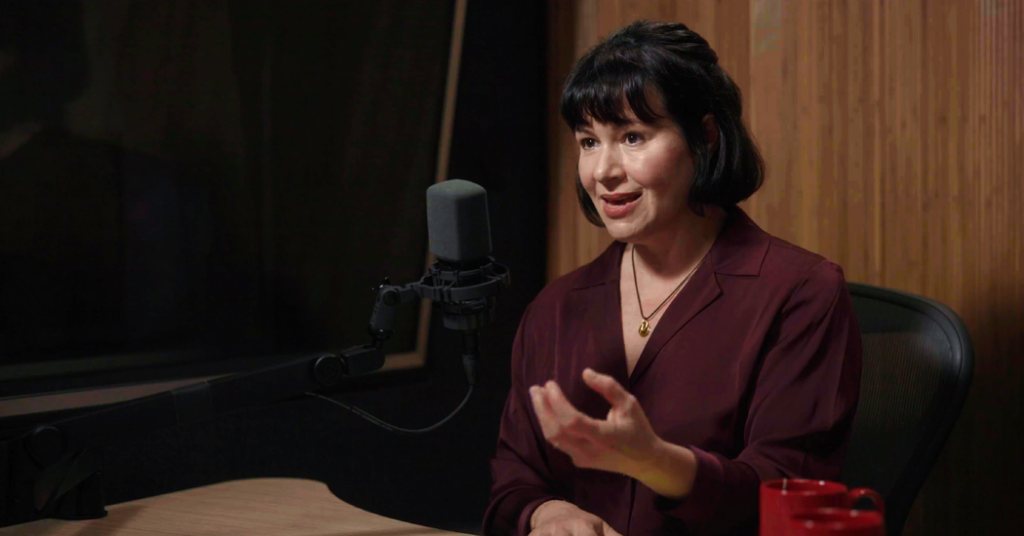
This is an edited transcript of “The Ezra Klein Show.” You can listen to the episode wherever you get your podcasts.
This election was full of so many extraordinary Democratic campaigns lifted, yes, by a wave that President Trump set into motion. But to get over the finish line in so many places, Democrats had to run the right candidates, and they had to run in very different ways in very different places.
I wanted to spend an episode looking at some of the ways they ran and what that could reveal about the Democratic Party that will emerge out of this election, as well as the lessons the Democratic Party will take going into the next one.
You can already feel these efforts at factional infighting beginning among Democrats. But I think what is uniting the campaigns that won on Tuesday is a lot more interesting and a lot more revealing than the differences between them.
My colleague Michelle Goldberg, who is also an Opinion columnist here at The New York Times, has done amazing work over the past year covering these different campaigns — going to Texas, Michigan, Maine and so many other places to see what the elections felt like on the ground. So she brings all this texture from when it wasn’t clear if these strategies could work out, nor whether a Democratic wave — to say nothing of a blue tsunami — would actually build.
I wanted to have her on the show now to talk about what actually worked, what she saw then and what that allows her to understand now about the Democratic Party that is emerging out of this election.
Ezra Klein: Michelle Goldberg, welcome to the show.
Michelle Goldberg: Thanks for having me.
So — big week.
I want to begin with Texas, which you covered extensively, and I think is the heart of both why this election feels — and even more than feels, really is — like an earthquake that will reshape the political landscape for a long time.
How did Democrats win Texas?
Well, look — they couldn’t have done it, obviously, without Donald Trump.
Donald Trump got a bunch of new voters among mostly Mexican American people in Texas, and then he absolutely terrorized them. So that’s part of the story.
But also, I think James Talarico was a phenomenal candidate. And he identified something really early.
When I profiled him, he was the underdog in the Senate primary. But even then, I think he had this very clear vision of what he thought people in Texas were going to be looking for — that people were so tired of being angry all the time.
He would always say he was tired “of being told to hate my neighbor.” It was, on the one hand, as he talked about this politics of loving your neighbor, this politics of kindness at a time when the right had polarized against the very concept of empathy. At the same time, he also identified an enemy, and an enemy that was, in its own way, uniting.
The way he talks about billionaires is not that different from the way Bernie Sanders talks about billionaires. I think the difference is that Talarico is often talking very specifically about tech billionaires.
He talks about Texas as a major center of the data center build-out. People in the rural part of the state hate them because they see them, and they’re eyesores. And sometimes people feel like they’re ruining their lives.
They’re loud.
They’re loud. You talk to people who can no longer sleep at night, who say that the noise is killing their livestock. And they want to move, but they can’t sell their property because their property value has fallen through the floor. So that’s one group of people.
Then there are people for whom the construction was a huge inconvenience. It’s ruining their views. They didn’t think they were moving into industrial areas. Maybe they were in favor of Donald Trump saying he was going to reindustrialize the heartland, but they didn’t think he meant their backyard. So there’s that.
But then there’s also just this ambient resentment of all of these tech bros who are saying: We’re remaking the future. Get on board or be left behind. And by the way, there’s a chance we’re going to destroy the world. And you’re going to pay for it.
It’s one thing to make sacrifices for an industry that you think you’re going to benefit from. It’s another to make sacrifices for a crypto mine. And so all these things come together.
Ask not what the crypto mine can do for you, but what you can do for the crypto mine.
[Laughs.] Yeah, exactly.
It actually feels that way with A.I. sometimes: Ask not what A.I. can do for you, but ask what you can do for A.I.
Right. I mean, that is kind of Sam Altman’s attitude half the time.
And then on the other side, you have Ken Paxton, who is uniquely loathsome. Although I suspect that maybe John Cornyn would have lost also.
Well, this is, I think, one of the really interesting things about Texas, because there was a story that I think people were fairly clued into before the election: Talarico is an excellent candidate.
In a way, you have to give Joe Rogan some credit here. It was Rogan ——
One hundred percent.
Inviting Talarico on and then lavishing him in praise that made, I think, a lot of Democrats think maybe Talarico’s thing actually works on the kind of people Democrats need to win over.
And then Trump intervenes and makes sure Paxton is going to be the nominee. So you’ve got this very, very talented, nice Democratic candidate running against a scandal-plagued Republican.
If we had ended up with an election night where James Talarico won for Senate, you might say: OK, Trump is unpopular. Paxton is a monster. [Laughs.] And Talarico is an excellent candidate.
That’s not what happened. Democrats won four of the five redistricted House seats. They won for governor. They’ve made huge gains in the Texas state House.
It wasn’t all scandal-plagued Republicans on the other side. I mean, Greg Abbott wasn’t considered a highly vulnerable Republican before this week.
So there are two different parts of that. On the one hand, Greg Abbott — there was huge resentment. And when you hear about this resentment, you never really can understand how anecdotal it is.
I was meeting a bunch of MAGA voters at Gina Hinojosa’s events. She put one of them in her ad.
She had a commercial with somebody who had been at the Capitol on Jan. 6. They were furious about data centers, and they were also furious about school vouchers. And I think this is maybe a sleeper issue in a lot of places, but not for parents who live in places where there aren’t a lot of private schools, and where they feel like their schools are being defunded.
So people are just livid about this. And they would talk about cutbacks in, say, after-school busing, so that students couldn’t do extracurriculars or sports or anything unless they had someone to pick them up.
So I met this guy at a rally in Longview, Texas. He’s a MAGA voter, superconservative. He told me that the last time he had voted for a Democrat was back in the ’90s, and that was only because back then, lots of Texas local officials were still Democrats. And not only is he voting against Greg Abbott, he’s at the Gina Hinojosa rally. And it’s because he was a school superintendent.
But he was so angry about vouchers and what vouchers were doing to his particular school system. So that’s part of it.
The other part is just the fact that you did have serious Democrats running in all these races. Which you can’t understate. So you had Democrats running up and down the ticket.
When I met Gina — before I went out there, I met her when she was in New York to hear more about her race. I said to her: Why should Democrats believe in this race when Texas is always Lucy and the football for Democrats? And she said: This time we have a ticket. This time we have a team.
Beto O’Rourke ran in 2018 and came pretty close to Ted Cruz. There wasn’t a competitive campaign for governor. There weren’t competitive races around him. It was just him.
There’s a magnifying effect of having all of these different candidates doing their own events, running their own commercials, doing their own get-out-the-vote efforts, and that’s compounding.
And so I think that part of party building, not just — I mean, James Talarico is a fantastic candidate. But not just relying on one marquee candidate to drag everybody across the finish line was, I think, really important.
I always think about politics as having content and texture. And a lot of what you’re describing here is content — the voucher issue, the A.I. data centers issue, high prices, what Donald Trump is doing in Iran. That’s all content.
And then there’s texture. Which is: How do politics feel to people?
And one interesting thing to me about the Texas arc here was Democrats actually had two very, very high-profile candidates running in the Senate primary, with Talarico and Jasmine Crockett. And Crockett is much more the traditional fighter candidate — takes on the right, had all these viral videos where she was lacing into Republican members of Congress.
The Democrats go for Talarico, and he infuses, I think, the campaign with this particular texture. I want to play a clip here of his victory speech:
Archival clip of James Talarico: My faith teaches me that love is the strongest force in the universe.
Love is not passive. Love is not neutral. Love is not weak. Love requires that we stand between the bullies and the bullied. Love requires that we look evil in the eye and not blink. That kind of love has always been a threat to the powers that be. That kind of love is revolutionary. That kind of love is creative.
Hate is predictable. Hate is boring. Hate can’t lower our energy bills. Hate can’t teach a child to read. Hate can’t build a future. But what hate can’t do, love can.
I love that.
Yeah, me, too.
I think it’s really beautiful. Something was happening in the texture of the campaign in Texas. Not only there — I think you see it with Adam Hamilton in Kansas, whom we’ll talk about. You see it with Abdul El-Sayed.
There’s this rise of a religious left, a more moralistic left — Jon Ossoff talking in the language of values. I think Talarico, in particular, exemplified this.
Can you step into the Trump era, can you win over Trump voters, not by mirroring Trump but by acting as this ——
Well, he’s the anti-Trump.
He’s the anti-Trump. Tell me a little bit about this side of it.
Yeah. So at the time I first met Talarico, there was still this idea in the Democratic Party that they needed their own Trump. That was, I think, around the time that Gavin Newsom was selling kneepads. And Talarico, I mean, his faith is real. He was a seminarian. He still eventually hopes to be a pastor when he’s done with politics.
He’s not a Christian nationalist by any stretch of the imagination. In fact, he developed his politics very much in opposition to Christian nationalism. He believes it’s kind of sinful. And he’s in a state where it’s so pre-eminent.
But he does believe that Democrats lost something as they became more secular and lost a language to talk about values and conviction and the things that make life meaningful. People slipped into atomization and despair. At least, for him, faith is what sustains him. And I think he thinks that other people — he would never try to push his faith on other people — but he does think people need something transcendent.
Well, the other thing, though, that I thought was very effective in what he did — Talarico is a progressive candidate. I mean, he had his points where he moderated on oil and gas, on certain trans issues, on immigration and pushing himself forward on border enforcement.
But I think some people think too much about politics as a single dimension of: Where do you stand on Medicare for all? People’s impression of what a Democrat or Republican is also: Do they have faith?
Oh, for sure.
Is also: Where do they live? How do they talk? How do they dress?
And one thing Talarico seemed, to me, to be doing throughout the campaign quite effectively — and many of the candidates did it in different ways — was sort of saying: I’m not like those other Democrats. First of all, I don’t hate you.
I mean, there’s been a clip going around of him on a podcast, when he is asked about Donald Trump. He begins by listing what he likes about Donald Trump. It’s a very Obama-like politics. There’s no red and blue, or at least those divisions do not fully define us.
And this has been a layer of politics that I think has been lost in the Trump era, because Trump made so many people feel it didn’t matter. And it has been really interesting, to me, to see it roar back.
Well, and it’s interesting because there are two dimensions to this. On the one hand, James Talarico is not a pushover. And he’s not a squishy centrist.
I mean, James Talarico will tell you that the Democratic Party has forgotten how to fight. He talks about flipping tables.
So it’s not that he’s saying that the Democratic Party needs to be more conciliatory. It’s more that it needs to be more willing to fight for the right things. And the right things are unchecked billionaire corporate power, economic inequality, the like. So it’s this everyone-against-the-billionaires kind of politics, which just is numerically much better than a red-blue divide.
He also is able to speak to the fact that people are so burned out on rage and so hungry for an alternative, and for the idea of a politics that can feel different.
There were also a lot of very conservative Christians who were apoplectic about the way he used faith. They would say he was a heretic. In some ways, they were more threatened by him than they were by a secular candidate.
When I would go to his rallies, I would talk to people who would say how good it felt that there was a Democrat who wore his Christianity on his sleeve, and who would say that they had felt in the past like the Democratic Party was not open to religious people, even though Talarico represented their faith much more than the Republicans did. And so there was a group of Texas voters who felt drawn into the party by him.
So I do think it’s really interesting the way this openhearted, love-thy-neighbor politics doesn’t have to feel like this appeal coexisted with populism.
You could see it also in Hinojosa’s campaign. We talked a little bit about the data center populism. I want to play this clip from an appearance she did on the campaign trail in August where she was talking about the data centers.
Archival clip of Gina Hinojosa: It is a fight for Texas. It is the fight in America. It is the fight about: Is this going to be a Texas that is by and for the people?
We need a governor who will defend the rights of the people, who will cancel contracts that jeopardize our water that we need to drink and live in our homes. It is common sense. We need to get back to a time — back to a time when our elected leaders did the bidding of the people and not the moneyed interests and not the billionaires.
There’s something, I can’t remember if you said it or she said it in an interview with you, but she talked about A.I. contributing to a feeling people had that they were losing control of their lives. That it was disordering.
So how did she build that populism?
Well, she would often say: The culture wars are over.
I think I was a little bit skeptical of that going in. I don’t know if you can just unilaterally say that this central source of division in American politics is no longer relevant. But there is a sense that it becomes kind of tired when people feel so directly threatened — in their immediate environment, in what their kids’ schools are going to look like, in these billionaires telling them that their jobs are disappearing, that their world might disappear.
It helped in some ways that Elon Musk moved to Texas and made himself the face, in a lot of ways, of the Republican Party there. In some ways, Hinojosa often seemed — and I think Talarico, even more so, often seemed like he was running as much against Elon Musk as against Ken Paxton. And then Hinojosa convinced people that those were going to be her priorities. Not that she was necessarily moderating.
She would say: I still believe what I believe, but we’re not going to get a consensus on this. So we’re going to do the things around the edges that we can all agree on, like making sure that women who are having miscarriages are treated in hospitals. But what really matters is the unchecked power of these billionaires.
I also think that there’s a kind of upper-middle-class person — take myself, not that I’m a swing voter. But if I think about who I find threatening now, it’s Elon Musk. It’s the tech bros. They seem to be the forces of not just inequality but incipient totalitarianism.
And they are culture warriors, it’s also worth noting.
Right. And they’re culture warriors, and they are the forces behind this presidency and the Republican Party.
I’ve written this in other instances before. Democrats have been bemoaning their loss of the white working class — and not just the white working class — for many, many years. And they wanted to bring back a sort of F.D.R. coalition. They wanted to bring back the political power of unions.
But also being the party, in many cases, of the educated upper middle class, which, for a long time, was very, very comfortable with Silicon Valley.
So for a long time, Silicon Valley was seen as a Democratic stronghold. And people who felt comfortable and optimistic about the role of technology in their jobs and in the future were a big part of the Democratic coalition.
People now, in polls, see the Republican Party as the elitist party. That was not true a few years ago. And it’s kind of obvious why that is, because you see Donald Trump and these billionaires and his Caligula-like Halloween parties and stuff.
But Donald Trump was always this extraordinarily gaudy and decadent figure. But the fact that he was kind of culturally in tune with parts of the working class overrode that, as did — and I think this gets lost — the fact that they saw him as a class traitor.
They saw him as someone who had seen the inside of the system and was going to blow it up. As opposed to just someone who wanted to get inside there so he could grab everything in sight.
And so again, this has created a problem for Democrats in terms of fund-raising, in terms of having hostile forces own a lot of these platforms. But it has also created this generational opportunity for a possible realignment.
If you go back to 2016 after Donald Trump wins, there’s a certain category of Democratic interpretation, which is: This is the last gasp of a dying, old political coalition.
But then in 2020, and particularly in 2024, he begins making really significant inroads with Hispanic voters, with Asian American voters, to some degree with Black voters, certainly in 2024 with young voters.
The Hispanic strength was always the most important and unusual change he was making to the electorate — and the most significant way in which Democrats have turned out to be wrong about him. And wrong about the right ways to combat him.
And then Donald Trump won office in 2024, turned over the entire immigration portfolio basically to Stephen Miller and Greg Bovino and Kristi Noem. And in the border counties of Texas, the swing versus the 2024 presidential election, to name just a couple of these: Cameron County, plus-44 swing to the Democrats. Hidalgo, plus 49. Webb, plus 50. I mean, these are heavily Hispanic border counties.
Part of the story here is not just Talarico’s kindness or Hinojosa’s A.I. populism, but as you were saying, a massive swing in the Hispanic electorate. Leading people like Bobby Pulido, who was running for the House — this amazing candidate, well-known singer in those communities. He wins by 25 points in a Trump district.
Right. And in some ways, that’s the easiest to explain. In retrospect, the idea that as the country became more diverse, Democrats were going to have this automatic demographic advantage. And people leaned into that. I think that maybe that was the substrate of a lot of emphasis on identity, even going up to the 2024 election.
But it’s one thing for people to be able to look beyond rhetorical disrespect, and it’s another thing to have masked men grabbing your relatives off their job sites, kids afraid to go to school. I mean, just the amount of terror that people were feeling.
There was a story that I don’t think got a lot of national attention, but it was something that people were talking about when I was in Texas: There were two young guys on their way to enlist — I mean, these are the kind of things you can’t make up, right? These two young guys are on their way to enlist in the Marines, and they’re citizens. They get picked up and roughed up by ICE.
Those kinds of encounters are things that people were seeing firsthand or hearing about from people that they knew.
So I want to then shift over to Georgia, where Jon Ossoff crushed Mike Collins by 18 points.
This was supposed to be an endangered seat.
The Ossoff victory, which I think has been one of the big stories coming out of the election — I would say that was not just a politics of loving thy neighbor.
[Laughs.]
This clip from one of the debates between Ossoff and Collins is, I think, maybe the single most brutal moment I have ever seen in a political debate.
Archival clip of Jon Ossoff: Mike Collins and Donald Trump: They’re still obsessed with overturning the 2020 election. Mike Collins still believes the 2020 election was stolen. Mike Collins has supported Donald Trump’s effort to overturn the election, and he wants to give your tax dollars to the violent thugs and criminals who sacked the U.S. Capitol on Jan. 6.
Mike Collins is attacking your voting rights. But that’s not a surprise when you consider who Mike Collins is. This is a man who cheered on a group of young men who were mocking a Black woman on a college campus with monkey sounds. If John Lewis were marching today, from Selma to Montgomery, Mike Collins would be grabbing a billy club.
“Mike Collins would be grabbing a billy club.” Mike Collins is standing there during this, just looking down at his papers.
You went out and reported on the Ossoff campaign. What did you see there?
Well, Jon Ossoff — in some ways, I don’t think any candidate does quite so much resistance fan service. And partly, it’s just that these are different electorates. There is this kind of resistance electorate in Georgia, in a way that there just isn’t in ——
Civil rights legacy.
Right. He grew up in a synagogue that was firebombed because of the rabbi’s commitment to civil rights and an alliance with Martin Luther King. He’s an intern for John Lewis. There is this historic Black-Jewish alliance that dates back to the civil rights movement and that he is very much rooted in and very much cognizant of.
You’ve seen it in both of his campaigns. You saw it in him and Raphael Warnock, basically running as a ticket, and this time he kind of ran as a ticket with Keisha Lance Bottoms.
He is able to speak, I think very successfully, both to Black voters who grew up in the civil rights tradition but also to some of these suburban women who were radicalized by the 2016 election.
So I just want to go back for a second. I was in such a bad place after 2016. And the first time I felt a teeny bit of hope was when I went to the Sixth District, which is where Jon Ossoff was running in a special election. There were all of these women who had not been political but had all this social capital from the P.T.A. and the stuff that you do as a suburban mom. And who all of a sudden became political fiends.
They could look at the map of the block and say: OK, this guy, he’s not going to vote Democrat, but the wife might, and she gets home from work first, so that’s when we’ve got to hit the door. And I remember Ossoff saying to me: I’m standing on the shoulders of these women.
He didn’t win that race, but obviously, eventually, a Democrat flipped that seat, and that was the seat of his political career. And so I think he has always understood these very outraged, middle-aged suburban women who are very, very important in the Georgia electorate.
I’ve compared him to Peter Magyar, in Hungary. That was the other race I covered this year — the Hungarian election. And what you saw with Peter Magyar was this combination of reclaiming Hungarian national identity — wrapping himself in the Hungarian flag, reciting Hungarian poetry — and just this relentless focus on Viktor Orban’s corruption.
Jon Ossoff is always talking about the Mar-a-Lago mafia. And so I think one of the things that he did so effectively is that, in the past, it’s been hard to get voters to care as much as maybe I think they should about all of Donald Trump’s authoritarian depredations.
But what Jon Ossoff does is connect those — and this was also something that happened in Hungary — connect those to the suffering you’re feeling in your own life. It’s not just that they’re enriching themselves, but they’re doing it at your expense.
Archival clip of Ossoff: Just think about this. When you are paying more for your health insurance, when a hospital in your community is closing down, Mike Collins voted to take that money out of your pocket and out of your community and give it instead to data center developers.
And that’s the problem, Mike. It’s not just that you’ve hired half the Third Reich to staff your congressional office and you have promoted neo-Nazi content online. It’s that you’re robbing your constituents to subsidize your donors. I want to know if you will commit to voting to repeal that data center tax scam that you voted for.
I mean, I think that so exemplifies the way he’s, on the one hand, able to make this kind of sweeping moral case against the right, but then, again, connect it to the immiseration of the voters.
Ossoff is really outraged by corruption. A big part of his story was that he was a documentarian before he was a politician and made documentaries about corruption. And someone he worked with was killed for his work on one of those documentaries.
I think this is an important point about him, because there are two things in that answer you just gave that I think are worth drawing out a little bit.
One is: He did not run a “Well, I think Trump has done a lot of good things” kind of purple-state campaign. That is one move. It would not have been a crazy move for him to try. It’s not what he did.
He became, I think, such an important part of the Democratic message in this election because what he showed is something that Democrats had long believed — but couldn’t crack the code on. Which is that Trump’s corruption should be a tremendous political vulnerability.
That is not a new insight to Jon Ossoff. What happened was Ossoff was the one who was able to weaponize the insight into consistent, viral, almost unanswerable clips. I want to play one of them here that I think shows a couple of the things that he was able to do so well.
Archival clip of Ossoff: Just listen to this: Last September, the president of Kazakhstan calls Donald Trump and says he wants to grant tungsten mining rights to an American company. And the very next month, Eric and Don Jr. get a stake in the American company pursuing the mining deal.
Six days later — six days after Prince Eric and Prince Don get their stake, Kazakhstan announces this company will get the largest known undeveloped tungsten resource in the world.
A few more weeks go by, and then the U.S. government, run by their father, sets aside 1.6 billion of your tax dollars to fund and finance their mining project in Kazakhstan. All of this while you pay more for gas, for groceries, for health care. And that’s just the tip of the iceberg. Billions from foreign princes and oligarchs, sweetheart real estate deals all over the world, taxpayer funding to Trump-backed companies.
And listen, here’s the bottom line: If you’re involved in any of this, next year you’ll be raising your right hand and swearing to tell the truth, the whole truth and nothing but the truth, so help you God, in front of the United States Congress. [Crowd cheers.]
This, I think, is why there’s been something different about the reaction to Ossoff’s victory. Because this is not: Look how much money I brought back to Georgia for highways.
I think this felt to many people like the case against Trump they had always wanted to see work and resonate — resonating not in San Francisco, not in New York City, but in Georgia, where Ossoff rode that case to an 18-point victory.
Right. And Jon Ossoff is also amazing at constituent service.
Yes, he is. That’s also part of it.
That’s the underlying part of it. But yeah, I think part of why this has been so cathartic is that in some ways this feels like the first election where people have responded to Donald Trump in what seems like a normal way. It’s how we expected them to respond to Donald Trump in 2016 and 2018 and all these elections when they didn’t.
Now there is this popular revulsion that Ossoff was able to channel. And one of his skills — and this again goes back to his background as a documentary filmmaker — is that he knows how to take these really wonky details — it’s hard to build a drama out of tungsten mining rights in Kazakhstan — but he knows how to tell a story about that and to make that story symbolic.
Because the other challenge in talking about Donald Trump’s corruption is that it’s beyond the realm of human consciousness to keep it all in mind at one time. Ossoff has been able to find these extremely salient examples and talk about them in this condensed, gripping way and bring people along with it.
He has this very old-school oratorical style. You hear the Black church in it, but you also hear the way they used to teach elocution.
[Both laugh.]
Well, and he and Obama, for sure.
And Obama. But I was watching him and Obama, and I was watching their — Obama actually does have a much less formal style of speech than Ossoff does. Ossoff has a self-consciously formal construction.
Every political era has almost, I think, the same structure, which is: Somebody wins doing something unusual, and then everybody tries to ape them for a little while.
You know, Donald Trump with his incredibly off-the-cuff, weaving, looping, discursive rhetorical style. The podcast election of 2024 — can you go hang with the Besties? And then everybody will try to do that for a bit — Gavin Newsom and his podcast. They’re all doing podcasts.
And then here comes Jon Ossoff talking as if he’s in the 18th century. And it’s refreshing, actually. Like: Oh, you wrote a speech.
Right.
You then went back over it, and you edited the speech. [Laughs.]
Right. And he writes his own speeches, which is somewhat unusual.
He’s a very earnest and reserved person. He doesn’t want to do casual, off-the-cuff, hanging out on a podcast ——
Nobody has heard about his workout routine.
Yeah, exactly. Even when they ask! [Laughs.]
Another candidate with the Ossoff bulk-up — I mean, we’ve heard about other candidates’ workout routines because that was part of the mimicking of the podcast style.
Right. I mean, Abdul El-Sayed, I think, had someone from The Times, I believe, interview him while he was working out.
Yeah, he did that with Hasan Piker, too.
Ossoff, it’s like he holds a lot backstage. He dribbles out his clips.
It’s interesting to me. Stylistically, he was doing something disciplined in an era when, almost, one of the lessons people had taken was: Discipline is dangerous.
Well, and he has a theory of this. And how much of this is just a rationalization — because I think he is a reserved and introverted person. But he also has a theory, which is that there’s power in not being in people’s faces all the time. That if you hang back, when you do intervene, people are more ready to listen.
His theory of attention is sort of the opposite of the theory of attention that people have been learning for the past however many years.
Yeah — they should want more of you, not want less of you.
Right, exactly. That you should be, maybe, a little bit coy.
So Georgia — I mean, going plus 18 for the Democrats, going to the Democrats in the governorship. Texas. These were not races that you were on the ground for, but I think you understood the night was going to be something different when the needle began swinging on South Carolina. For a while, I didn’t believe that. I was not ——
That was healing.
I was not ready to believe that. Mississippi — it looks like the Democrats are going to win that seat. When I think of what is now different in American politics, it will be sustainably different.
I’m not saying the South has realigned. People always talk about realignments. I think this is more of a de-alignment.
What has happened is the South has become unreliable now for the Republican Party. They have to defend it. Democrats are going to have an opportunity to say: This is what it is like when we govern Texas, when we govern Georgia, when you have a South Carolina senator, a Mississippi senator.
And just the collapse of the Republican Southern wall — I mean, we never even called that the red wall because you wouldn’t even have really thought to attack it. But now the entire political map is just a map again of states, right? It’s not all these borders.
Right. It’s hard to even imagine what the 2028 presidential looks like if people are fighting in Texas, in Kansas.
To say nothing of how the candidate recruitment goes. I mean, I think one thing that the Democratic Party was not doing, in the way you might have thought, was really thinking about who you recruit in South Carolina, you know? It ended up getting a great candidate, but a lot of these were ——
Were people who stepped forward themselves.
I mean, the Scott Colom story in Mississippi is so interesting. Maybe it’s worth saying, for a minute, how he ends up in this race, because he could have had another job.
He was appointed to the federal bench by Joe Biden. He is blocked by Mississippi Senator Cindy Hyde-Smith, and then he decides to challenge her in the election.
And now he has beat her for her Senate seat.
We think.
We think. But yeah, what does it mean that the South has fallen for the Republicans?
So I mean, look, obviously in some ways I think we’re still metabolizing this, because it’s just — I can’t think of another time when so many of our political assumptions have just exploded overnight.
There was kind of an attempt, after Mitt Romney was defeated, to reckon with what it means to be a conservative party in a multiracial democracy. And then Donald Trump kind of blew that up. But they’re going to have to start thinking about it again with Donald Trump being on the way out, right?
Because how does a candidate like JD Vance — sort of even more, I think, aligned with white nationalist forces in the Republican Party than Donald Trump — win in a state like Mississippi, if Mississippi’s votes can’t just be taken for granted from the outset?
And then, at the same time, maybe Marco Rubio is a better candidate for Mississippi, but maybe not a better candidate for an antiwar electorate. And so their coalition has evaporated overnight.
But there are also all of these questions for the Democratic Party. Because you’re going to start hearing demands from some of the more left-wing candidates, and some of those demands are going to be really popular, and I think that, again, is worth keeping in mind, right?
There are a lot of things that I think will both satisfy certain left-wing base voters and potentially help the Democratic Party solidify itself as a national party, and it has kind of been a while since we’ve understood the Democratic Party as a national party.
And then there’s another part of it that is less about messaging and such and is also just about investment and building and taking seriously that you need a strong Democratic Party in those places.
And I think it then gets into what happens in the places Democrats are more prepared to contest, right? Which is, like, the string of elections in the Midwest: You had Senate seats open for contest in Ohio, where Sherrod Brown won — running, again, a very anti-data center campaign, among other things. In Minnesota, where Peggy Flanagan won for the Democrats — Democrats weren’t that worried about that one. In Michigan, where that became a very marquee seat, because it was one of the few seats in the country where Republicans thought maybe they had a pickup opportunity.
Gary Peters, a Democratic senator from Michigan, had decided to retire this cycle. You did a bunch of reporting from Michigan, and now kind of everybody knows how it went.
But before we get to El-Sayed, I actually want to talk about Haley Stevens, who was the Democratic establishment choice in that election. I was never totally sure why, but Schumer recruited her.
Gov. Gretchen Whitmer endorsed her toward the end of that primary, hoping to push her over the edge. Who was Stevens — and how did she end up endorsing the Republican in the final days of the race?
I’ve been critical of Chuck Schumer’s intervention in some of these races. There were obviously races where he was really, really important, right? He was really important in convincing Sherrod Brown to run again.
I mean, Haley Stevens, as far as I can tell, her main attribute — and this is ironic given how things went down — was that she was a team player, you know? And she was just a kind of normie, solid Democrat who had a lot of patrons in the party — was not just kind of normally pro-Israel but incredibly, passionately pro-Israel for odd reasons. Because she’s not Jewish — although she might become Jewish, she says.
I always thought that was a huge mistake. I never understood why, if you don’t want Abdul El-Sayed to be the candidate, either because you are ideologically not in line with him or you think that he’s a risk — I mean, Mallory McMorrow was right there.
Yeah, I liked Mallory McMorrow a lot. I never understood why the establishment was moving toward Stevens. I like El-Sayed too, but I understood what the fears about him were for electability reasons.
In addition to some of the AIPAC dimensions you just mentioned, Stevens had originally won in a Trumpy district. Her 2018 and 2020 elections were in a district that, at least at that point, was R plus 4. And so there’s a feeling that she could win over Trump voters. And everybody’s so used to Michigan being these, like, supertiny margins. But you would watch her on TV, and she just wasn’t an impressive candidate.
It’s not just, I think, that she’s kind of not super-inspiring or charismatic. I mean, you could not see her campaign, right?
Like, I go to Michigan, and I wanted to go to some of her events. I understand I wrote critically about her. But I wrote critically about a lot of people, and their press people will still tell me where they’re campaigning. Or you sign up as a member of the public. She did so few events where — if you were just a member of the public as opposed to somebody who was recruited to be there — you could go see her.
It was bizarre. I don’t know that I’ve ever seen anything like it. She just was not accessible. And then, meanwhile, Abdul El-Sayed is going everywhere. Mallory McMorrow is going everywhere. I mean, I think Mallory McMorrow suffered from being the Goldilocks candidate.
Yeah, she was sort of in between the two of them.
And then, once she dropped out of the race, especially once she — I mean, I think it was always ugly, but it became especially ugly once it became a binary campaign.
I want to say that I think Schumer ended up doing a good job on a lot of measures here. They put money to Mississippi late in the game, when people thought that might be a completely crazy move. I mean, he took some risks. He got Roy Cooper.
The thing that I thought was interesting here — and reflected to me a way in which the Democratic establishment needs to update its sense of what makes a candidate electable — is it does not care about, and does not select for, star power. It does not care about, and does not select for, charisma. It does not care about, and does not select for, people creating authentic movement around them, right? People being genuinely excited.
But El-Sayed was exciting the hell out of people.
Yeah, absolutely.
He was both a kind of mobilizing and counter-mobilizing candidate. He mobilized his people and mobilized people against him, which is, I think, why the Republicans thought they might win. But there was, I thought, for a long time, an unwillingness to grapple with what it meant that so many Democrats in Michigan were so excited about El-Sayed.
There’s been a lot of attention to the Democrats who wouldn’t vote for him — Haley Stevens being one of them. I think we would have seen something similar and maybe even larger on the other side. Voters who wouldn’t have voted for Haley Stevens because of her passionate commitment to Israel.
There are some lessons that are hard to draw just because the tide was so high that it kind of carried so many people along. Like El-Sayed, on the one hand, when he was being really cocky, would say he was going to win by seven, and that seemed ridiculous — and I think he won by seven.
Yeah.
And also, that doesn’t look like that’s kind of an underperformance, relative to the rest of the field. And so it’s a little bit hard to draw direct lessons from it.
But I absolutely think that you could see it in Michigan. You could definitely see it in Maine. And again, beating Susan Collins is no small thing. But you could feel the difference in energy between when Graham Platner was the nominee and when — you know, I went to a Troy Jackson event — I have family in Maine, and I was visiting them. I went to a Troy Jackson event while I was there. He seems like a very nice man.
But didn’t have the energy of the Platner events you went to.
But yeah, you could feel the sort of deflation. And yeah, I mean, the Democratic Party maybe is not — it should be optimized for vibes, after the Obama experience.
But it wasn’t for a long time. And it, in some ways, maybe still isn’t. I want to play a clip of El-Sayed’s victory speech, because I think it speaks to the way he specifically ran in Michigan.
Archival clip of Abdul El-Sayed: We spoke of a brighter, a bigger, more hopeful Michigan. Theirs? An AstroTurfed, corporate-funded advertising campaign built to deceive and distract. Rather than try to unite us to contend with the crisis of gas or groceries, the opposition decided to try to divide us.
At first, they pointed to my name and my faith as if to say: You know, he’s a little different. And when it didn’t work, they tried to guilt me by association. And when that didn’t work, they went all in on one of the ugliest campaigns we’ve seen in our lifetimes. They might have been pointing to my name and my faith, but we all know that my name and my faith aren’t the reason you can’t afford your gas. Not the reason you can’t afford your groceries. Not the reason you can’t see a doctor.
I think you see there — I mean, you heard a sort of similar move at the end of basically every clip I’ve been playing — is this continuous bringing back to: They’re trying to distract you from what you know, which is that everything is too expensive.
In a way, what struck me as significant about El-Sayed’s campaign is not, you know, did he underperform by a little bit? He didn’t underperform by a lot, right? It’s like he had a normal performance for a Michigan Senate candidate.
I think you could debate whether it could have been five points more. That’s significant in a place like Michigan. On the other hand, you just saw a hard-core populist — with a huge amount of money spent to other him for his skin color and faith and name — win the Rust Belt, right? El-Sayed’s campaign worked.
Yeah. Right, and that was the gamble, right? That was the big test. The Bernie Sanders wing of the party has a theory of politics, which is that there’s a kind of more working-class coalition that you can bring together with a relentlessly populist message, and that you can increase turnout to make up for maybe some of the suburban moderates that you might lose. It worked here.
It’s also a reality. I mean, Bernie Sanders is in his 80s at this point. He doesn’t have all that many obvious successors in the Senate. He does in the House with Alexandria Ocasio-Cortez. He actually has it in the New York City mayoralty now. But now El-Sayed comes in and can be a champion for this politics there.
When you think about the Democratic Party as a big tent, people tend to talk about that. And what they’re thinking about is the right side of the tent expanding. Who do you run in Kansas? Who do you run in Iowa? But it also means having representation for the left side of the tent and having that kind of creative energy in the party, as well.
I could be wrong, but I think that the thing we’re going to hear Abdul El-Sayed talk about the most — my guess — is expanding Medicare. And that is really, really popular, right? And having somebody bang away at that over and over again, it can kind of only, I think, help the party. I mean, it’s also fascinating — I’m hardly the first person to point this out — that he ran on Medicare for All, which we used to think was, like, an extremely electorally dangerous position. And it barely registered as a point of attack.
It is a reflection of where the health care system is right now, that Medicare for all has never polled as well as it has this year. And you also have Dr. Annie Andrews in South Carolina, who really hammers home on health care.
So you’ve got these doctors coming into the Democratic Senate caucus at a time when I think there is going to be a revisiting of health care and health care reform, particularly in the run-up to 2028.
I want to move on to Kansas. The last time Kansas had a Democrat in the Senate was the 1930s. I remember, about two months ago, people started to tell me they thought Adam Hamilton really had a chance, and this was one of those— I could see a poll number, but I had a lot of trouble believing the poll number.
Right.
And he did have a chance. He won convincingly. And so, I want to get at the way he sold himself in Kansas. I think this clip is really telling.
Archival clip of Adam Hamilton: I have people say to me: I can’t figure you out. Are you liberal or conservative? And my answer is: Yes, of course. And they’re like: No, no, which are you? I’m like: I think we can be both.
To be a liberal means to be generous of spirit, open to seeing things and with new eyes, and to be open to reform. And to be conservative means holding onto values or beliefs that are really important. We can be both of those things at the same time. And I know this about all of you. Even the most liberal in this room, you’re conservative compared to somebody you know. And all of you who are more conservative are liberal compared to somebody you know. And so, we need each other.
What did you make of his campaign?
I think we’ve talked about this idea of transcendence, right? But people, I think, are so exhausted from being enraged all the time. There have been so many families that have been split apart over politics, friendships split apart. And I think people want to move beyond that.
We’ve paid a lot of attention to the way James Talarico did it— this was maybe, like, a slightly more sedate Midwestern version of that. And if you are a well-spoken Democratic mainline pastor right now, I imagine that Democratic operatives are knocking on your door.
Because it has a signal, right? That’s not what people are used to from Democrats. And so, just hearing that this is what you do, right? You are a pastor. I think it opens the door from the beginning to: Well, maybe this person is different.
Right, and the fact that he has a big church, right? He already has this credibility in the community, and clearly, he can’t be painted as an interloper in the same way. But yeah, we talked about vibe shifts. There is even, maybe, among people who voted for Trump, an exhaustion and just a desire for some sort of national reconciliation.
I think there’s also a dimension here where looking at his campaign is a good moment to remember that populism, even though we sometimes use it as a synonym for progressive or leftist, is not a position point on the left-right spectrum. Because he went really hard against his opponent, Roger Marshall, for the way Marshall had hounded past patients over their debts, and the amount of interest Marshall had demanded they pay. And then some of them ended up in jail after Marshall turned it over to collections.
So Hamilton was running, in some ways, a very populist campaign against Marshall. On the other hand, running as both liberal and conservative. His line on this was: Pro-life “with a heavy heart.”
Scott Colom in Mississippi also ran as personally pro-life. I think both of them were also pro-choice as a policy matter. Hamilton felt to me more like the kind of candidate Democrats used to run, like, in the ’90s.
Oh, yeah, for sure.
Where you had this sort of Southern populist tradition, but it was more culturally conservative. It wore its faith on its sleeve. He feels like something new now, but he actually felt to me like something very recognizable from when I was growing up.
Yeah. I think 100 percent. I mean, part of this is just about both the declining power of what people call the groups. And also a sort of acknowledgment, I think, among a lot of Democrats that, on the one hand, abortion rights, for example, can turn people out on its own.
Kansas did pass this abortion rights referendum. A lot of these red states did. But it doesn’t necessarily motivate people to vote for Democrats. I mean, if anything, some of these referendums kind of gave people permission to vote for Republicans because they had protected their abortion rights.
And there’s also, I think, just a sense that people want to feel like their representatives are sincerely grappling with these issues instead of repeating the team’s rhetoric. The Republicans tried to make trans issues so salient, right?
Partly, this is just their playing the hits from the last election. But I also have a theory that voters reward the side that seems to care about that issue less, right? That part of the reason it was damning for Kamala Harris in 2024 wasn’t because people were so concerned personally about whether people are getting their hormones in prison, as just that it was such a statement about her priorities, right? And then it was like: They care about this stuff, they don’t care about what you’re facing.
As you watch this play out, what do you think ties all these candidates together? What does this new Democratic Party, with all this talent — and I want to note, we’ve been focusing very strongly here on the Senate and a couple of governors. It’s very hard to get at the House races because there are so many of them.
But Democrats look to be on track for 250 to 260 House seats. It is an incredible, incredible number. So I mean, this was happening there. This was all happening at every level. State legislatures flipped. But it does feel to me like there’s a lot of new talent.
Not all these candidates are millennials, but a lot of them are millennials. It feels like a very big moment of generational turnover in the Democratic Party, which is one reason Sherrod Brown and Roy Cooper’s victories — which are both very, very, very impressive — I think are getting a little bit less attention. Because I think people are looking to see what this new generation is going to be like.
What do you think this new generation is going to be like? What do you think is different about the Democratic Party that is emerging out of the 2026 midterm, from the Democratic Party that emerged out of the 2018 midterm?
I mean, fundamentally, the focus on “oligarchy” — I don’t even remember our using that word in 2018 — and corruption. And to some degree, this is just a function of the fact that Donald Trump has been so unleashed and has been able to bestow so many favors on the coterie of people around him.
But it has — and I’ve said this before — it has created the conditions for Democrats to be the anti-elite, anti-corporate, anti-billionaire class. And so that can mean a lot of different things in practice, right? I would be very surprised if they’re able to, say, raise taxes or institute a wealth tax anytime soon.
There’s going to be this debate in the new Congress about holding Trump accountable or moving forward. The middle of that Venn diagram, I think, is investigating corruption, right? Investigating the siphoning of public goods to all of these vulturous figures.
And so, again, it’s not so much just an anti-Trump party, where the most exciting new faces are faces of the resistance. The gestalt is people who believe that our entire system has been taken over and that the power of these malevolent figures needs to be broken.
I both think that’s true, and in some ways, I don’t think this is going to be so salient between 2026 and 2028.
Because Donald Trump is going to remain the center of American politics. And Democrats are not going to have to manage some of their own internal tensions.
But the difficult thing about a big tent isn’t so much running as one but governing as one. And I’ve been very interested to see, right after the election, how some of these different candidates are speaking, as they think about what it is going to mean to hold a Senate seat and be popular among your constituents in Kansas. Or in Texas.
Talarico went on Fox News the day after the election. I think that’s a signal unto itself. But I thought what he said was interesting.
Archival clip of Talarico: I’m not interested in retribution. The people of Texas did not elect me last night for retribution. They elected me to deliver for them, to make their lives easier and better and less stressful, and that’s what I plan to do. And I plan to do it even for the Texans who didn’t vote for me. It’s why I’m on here, on Fox News, the morning after the election.
Dana Perino: No, we appreciate you coming on. We really do. I have a last, easy, quick question for you.
Talarico: Yeah.
Dana Perino: Are you so glad you did that Joe Rogan interview?
Talarico: Well, I had a great time with Joe Rogan, and I’m always willing to go onto shows or podcasts with hosts who disagree with me on any issue. Because we have to build bridges in this country. We have to repair the ties that bind us together. That is the new form of politics that we pioneered in Texas. It’s how we won by double digits in the largest red state in the country, and I think it can be a blueprint for our nation going forward.
This, to me, is a big difference between 2018 and 2026.
In 2018, I think the Democratic Party still sort of felt this Trump thing was an aberration. That a butterfly had flapped its wings, and James Comey had taken a laptop, and Hillary Clinton had lost in a fluke, and you might just be able to bottle this thing back up. Like, shove it back into the basement of the country.
And so, you had this resistance politics. But it was a little bit of a doubling-down politics, right? It’s like: We thought Donald Trump was bad for these reasons in 2016. Now you can see he’s really bad for these reasons. Let’s end this forever.
And I think now you have this Democratic Party that doesn’t believe that. They got chastened after 2024. They got power back, and whatever they did with that power, it wasn’t good enough. And instead, Trumpism roared back stronger than before, more popular than before — and fundamentally more dangerous and destructive than before.
And so the sense of what happens if you wield power in a way that pushes people back to the other side, I think that’s going to be much more front of mind for Democrats. They still have to win in 2028, to say nothing of, if they do win, then what they do after that.
I mean, to me, the biggest difference there is their theory about how you peel people off from that coalition. In 2018, and really going through the Kamala Harris campaign, there was a sense that the people you could win over were educated, upper-middle-class suburbanites who were appalled and found Donald Trump vulgar and were responsive to appeals about democracy.
I remember Gina Hinojosa saying to me: The people that we’re going to win are not the country-club Republicans, it’s MAGA. And I was like: Really?
And obviously, that can be overstated. There are a lot of people, I think, who were in MAGA — for the mass deportations, who are in there for the cruelty.
But there are people who — and this is something that’s hard for me to understand — still believed, even after the first four years of Donald Trump that Donald Trump was going to make their lives better. That he really was the man whom they saw on “The Apprentice.” That he really was this sort of financial genius. And that they are going to be open to people who they feel like are not speaking to those anxieties and to the fact that their lives have been so hard, right? Who are speaking to them with respect, and who can do something for them.
I mean, that’s the hard part, right? Especially when you have Donald Trump in office.
You can do certain things. This new generation of Democratic senators might be able to restore the A.C.A. subsidies. But I think there’s a sense that their potential coalition, going forward, is a different one than the one they imagined a few years ago.
I think that’s a good place to end. Always our final question: What are three books you’d recommend to the audience?
So I read, almost exclusively, fiction in my spare time. And a book that came out this year that I absolutely loved — and I think it did well, but I feel like I didn’t hear people talking about it — was this book called “Good People” by Patmeena Sabit.
It’s a book about a very assimilated Afghan family in Virginia, where the teenage daughter is killed in what may or may not have been an honor killing. It’s about a killing, so it has these kind of page-turning thriller elements, but it’s just such a good book about assimilation and the limits of assimilation. So heartbreaking. So anyway, that is one of them.
A book I’ve been thinking about recently, for no particular reason, is about the last days of a decaying dictatorial cult of personality: “The Feast of the Goat” by Mario Vargas Llosa. It’s a book about the assassination of Rafael Trujillo, in the Dominican Republic. And, I mean, it’s a brutal book. So just, like: trigger warning.
There are scenes in it that maybe will never leave my mind. But the reason I’ve been thinking about it recently is you just get this sense, on the one hand, of this man whose presence is all-encompassing, and then it kind of disappears.
Again, it’s a book that you can’t stop reading, but I think it has certain echoes of this moment, although obviously not in a violent way.
And then, finally, I’m going to recommend — I hope it’s OK to recommend a book that I’m halfway through, only because as I’m reading it, I’m like: How come I had not heard of this book before? And maybe half your readers have, and they’re just like: Where have you been? This book is called “The Man Who Loved Dogs” by Leonardo Padura.
Have you heard of it?
No, I haven’t.
OK. So I actually bought it a few months ago, when I was going to Mexico City. It didn’t come in time, so I’ve only just started reading it now. It’s this big, fat, kind of like a Russian-style historical novel about the assassination of Leon Trotsky. I actually love these novels that are novelizations of exciting historical events.
Yeah, I do, too.
And this is the assassination of Leon Trotsky — a fascinating and kind of wild story.
Again, I’m halfway through, so maybe it falls apart. But so far, I feel like it should be more of a classic than it is.
Michelle Goldberg, thank you very much.
Thank you.
You can listen to this conversation by following “The Ezra Klein Show” on the NYTimes app, Apple, Spotify, Amazon Music, YouTube, iHeartRadio or wherever you get your podcasts. View a list of book recommendations from our guests here.
This episode of “The Ezra Klein Show” was produced by Annie Galvin. Fact-checking by Michelle Harris with Kate Sinclair and Julie Beer. Our senior engineer is Jeff Geld, with additional mixing by Aman Sahota and Gautam Srikishan. Our recording engineer is Aman Sahota. Cinematography by Bets Wilkins. Video editing by Steph Khoury, Dani Dillon, Brandon Belk-Yee and Julian Hackney. Our executive producer is Claire Gordon. The show’s production team also includes Marie Cascione, Rollin Hu, Jack McCordick, Kristin Lin, Emma Kehlbeck, Marina King and Jan Kobal. Original music by Pat McCusker. Audience strategy by Shannon Busta. The director of New York Times Opinion Shows is Annie-Rose Strasser. Transcript editing by Filipa Pajevic, Kate Wilkinson and Marlaine Glicksman.
The Times is committed to publishing a diversity of letters to the editor. We’d like to hear what you think about this or any of our articles. Here are some tips. And here’s our email: [email protected].
Follow the New York Times Opinion section on Facebook, Instagram, TikTok, Bluesky, WhatsApp and Threads.
The post How the Democrats Did It appeared first on New York Times.