After last week’s stunning political defeat at home, the Trump administration is looking for new ways to settle the disastrous wars in Ukraine and Iran.
Finding an off-ramp from Iran is the most urgent and difficult challenge, given public anger over the war. President Donald Trump has threatened to resume military action, and Defense Secretary Pete Hegseth has prepared for possible escalation. But Treasury Secretary Scott Bessent, with Trump’s support, has reached out to China, asking Beijing to use its influence with Iran to end the war. China has delivered that message to Tehran, according to a knowledgeable U.S. official.
The administration’s Iran diplomacy has been driven by Vice President JD Vance, who sent a conciliatory letter last month to Iran’s hard-line security chief, Mohsen Rezaei, and this week blamed the war for the GOP’s crushing midterm defeat. That drew fire from Vance critics, but it earned him some points in the Middle East, according to Ali Al Thawadi, the Qatari official who has been acting as the White House’s intermediary with Tehran.
“Iranian leaders are waiting to see whether this election has really changed American behavior,” Al Thawadi told me Friday. “They saw Vance’s letter as a gesture of respect, and they appreciated that Vance said the war was a mistake. Now they would like the United States to follow through on an issue that seemingly brings Democrats and Republicans together. Like America’s allies in Europe and the Gulf, the Iranian leaders want to be sure that the U.S. is reliable.”
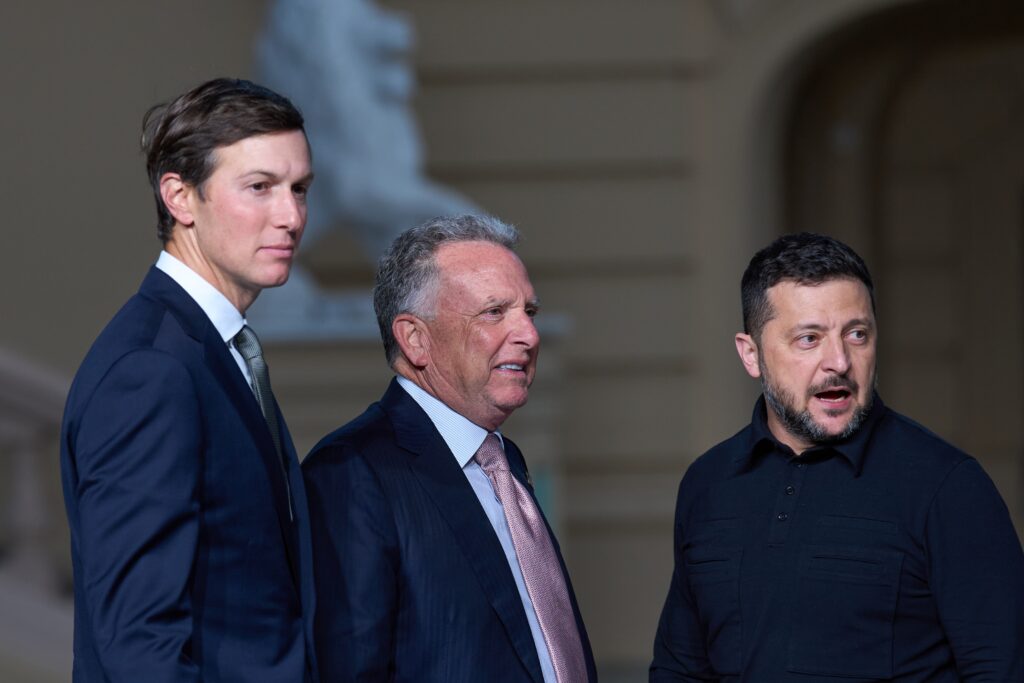
Ukraine is also at a crunch point, as Kyiv and Moscow head into another winter slugfest that could ravage both sides. Recent diplomatic developments are mildly encouraging. Special envoy Jared Kushner has brokered a trilateral meeting that will be held Tuesday in Abu Dhabi, where representatives of the United States, Ukraine and Russia will begin discussions about the compromises needed to reach a ceasefire.
Kushner has linked his push for a Ukraine truce with a call for broader multilateral talks between Russia and Europe about postwar security for the continent. According to an official familiar with the negotiations, Kushner’s model is the NATO-Russia Council, which was established after the Cold War but suspended in 2014 after Russia invaded Ukraine and seized Crimea.
“If progress is made” next week in Abu Dhabi, Kushner said in a statement posted Thursday night on X, he hopes European nations will “move to a broader multilateral format with their direct participation.” He listed his overall goals: “permanent security consultations, reliable crisis communications, greater military transparency, reciprocal measures to reduce escalation risks, and an enduring framework for long-term European security and stability.”
European officials told me Friday that they are ready for dialogue with Russia but will agree on a security framework only after a Ukraine ceasefire is achieved. “Both tracks are on,” messaged a knowledgeable official from a close U.S. ally. But the official cautioned: “Ukraine peace agreement has to be settled before agreement on security architecture.”
A senior official from another key European country explained in a message: “Many risks for us in this approach, but better to engage than not. Our approach is still that these issues can be discussed only after the war. … Not gonna be easy talks.” This official underlined that although key European leaders support Kushner’s effort, there is “broad unity in Europe” around the idea that a ceasefire must precede any Europe-Russia discussions.
This sequencing will be the crucial issue. Kushner wants a simultaneous process, with both trains arriving at the same time, so to speak. Europe, standing with Ukraine, is insisting that the ceasefire track come first.
Russian President Vladimir Putin is said to have been enthusiastic about the Europe-wide security plan during an Oct. 21 meeting with Kushner’s fellow U.S. envoy, Steve Witkoff, in St. Petersburg, which Kushner joined by video. Trump met with Putin’s emissary Kirill Dmitriev at the White House on Thursday. The president boasted afterward that he was close to making a “big, beautiful agreement” covering Ukraine and “all of Europe.” That’s wildly premature, given what I heard Friday from European officials.
As Trump deals with Russia and Ukraine, he must reckon with postelection reality: His ability to deliver a peace deal that’s favorable to Putin is waning — and the possibility of greater American support for Ukraine is increasing. The new Congress probably will have large bipartisan pro-Ukraine majorities in both houses.
In January, Democrats will have the votes for stronger sanctions against the Kremlin and more weapons for Kyiv. And with support from Republicans who will be less intimidated by Trump, these majorities may even be veto-proof. A to-do list: Congress could reimpose the new Russia sanctions that Trump waived last month. It could halt purchases of diesel oil from Russia. It could authorize new arms sales to Ukraine for offensive strikes against Russian targets and defense against Russian missiles.
As talks in Abu Dhabi begin, Democrats and Republicans could give Ukraine some leverage by offering new protection for its cities this winter. The best way would be to press Elon Musk’s Starlink to expand its coverage into Russia so that Ukrainian drones could use the technology to target Russia’s mobile ballistic missile launchers. With supplies of Patriot missiles nearly exhausted, Ukraine has no other way to defeat the missiles. In exchange for this new power to protect civilians, Kyiv might agree to stop hitting Russian refineries, as Trump has demanded.
Bessent, meanwhile, has continued to manage the U.S.-China relationship as Trump heads toward his third summit this year with President Xi Jinping. Trump asked Xi for help on Iran when they met in Washington in September, and Xi told him privately that he agrees Iran should never have a nuclear weapon, a knowledgeable U.S. official told me. The issue will resurface when they meet Nov. 18 in Shenzhen. Putin will also attend, and the Chinese are insisting that the meeting be “well scripted,” according to the official.
Elections have consequences abroad as well as at home. Ukraine gained some leverage with the Trump wipeout; so did the rest of Europe; Iran probably did, too. Russia lost some ground, while China held steady. But a wounded U.S. presidency also means a weaker America on the world stage, at least for the next two years.
Like most lame-duck presidents, Trump will probably spend more time on foreign policy, where his power is less constrained. If he wants to be remembered as a peacemaker, the tasks ahead are clearly labeled — Iran and Ukraine. Democrats should push him to do the right things.
The post Trump’s wounded presidency turns to two unresolved wars appeared first on Washington Post.