This article is part of Overlooked, a series of obituaries about remarkable people whose deaths, beginning in 1851, went unreported in The Times.
His work can be seen in the preservation of the racehorse Phar Lap, whose mounted hide is on display at the Melbourne Museum in Australia, in the majestic herd of elephants in the Akeley Hall of African Mammals at the American Museum of Natural History in Manhattan and in the lifelike Henry, an 11-ton elephant demanding respect in the Smithsonian National Museum of Natural History in Washington.
Yet few know of Sinclair Clark, the taxidermy tanner whose handiwork made these displays possible — and who was one of the taxidermy industry’s first African American practitioners.
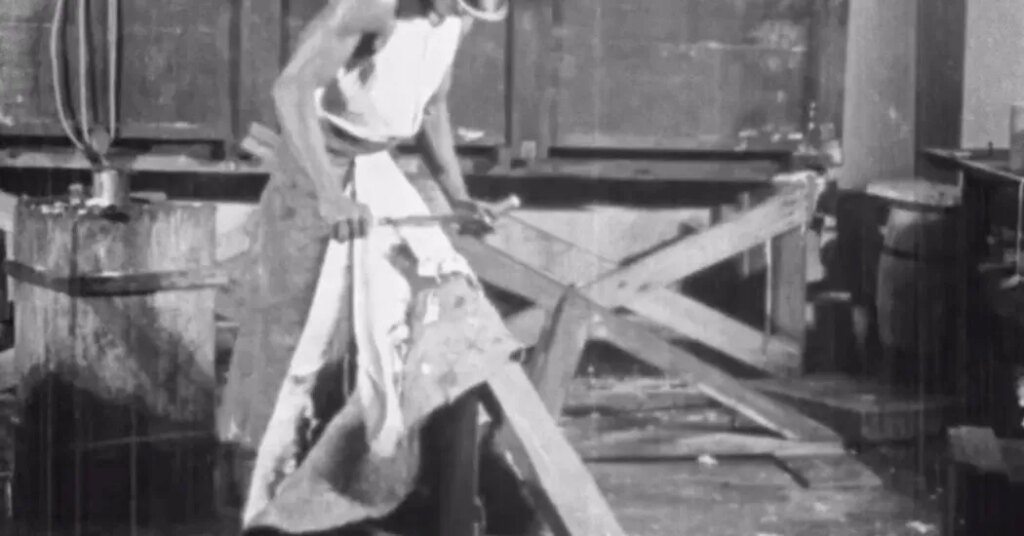
Clark worked tirelessly to maintain the appearance of life, making tough, heavy, thick skins workable for taxidermists. Tanning is a crucial part of the process. Without pliant, clean, well-preserved skin to work with, taxidermists would not be able to create the exhibits seen in institutions around the world. And while tanning is a better known skill for turning the skin of an animal into shoes or a handbag, Clark’s labor-intensive practice focused on preserving the memory of the animal — history frozen for the future.
“The way he handled every knife, tool and machine was masterful,” Tori Lee, an exhibition developer, wrote in a 2022 article for Chicago’s Field Museum of Natural History.
Taxidermy is sometimes a maligned practice, often associated with poachers and the morbid; but experts in the field describe it more as a nearly alchemical combination of art and science, a visceral practice whose goal is to help people feel closer to animals, to tell a story that resonates with a viewer emotionally in a way that even digital technology cannot achieve.
It requires, said Thomas Holloway, the senior media and communications officer for Melbourne Museum and Museums Victoria in Australia, a “knowledge of anatomy, form and function to complete a scientifically accurate and compelling pose,” that is combined with “artistic skills in sculpting, painting and finishing to bring lifelike expression and color to the mount.”
“When both disciplines are employed well,” he added in an email, “it is hard not to be drawn into the piece and want to know more about it.”
Clark’s knowledge and control over his process has garnered admiration and respect across the industry — including his skills with blades and his uncanny control over the chemical mixtures used in tanning his hides. One of his protégés, John Janelli, often said that Clark determined if his concoctions were complete by dipping a hand in the vat and tasting them, much like a wine connoisseur.
Though Clark spent most of his career as a freelancer, he achieved a spot in the taxidermy pantheon, his work standing all over the world for millions of people to view. He helped set up tanning facilities and trained generations of younger practitioners. He was inducted into the National Taxidermists Association’s Hall of Fame in 2021.
Sinclair Nathaniel Clark was born on Jan. 31, 1902, in the Saint Andrew parish of Barbados to Lita and Grant Clark.
He moved to the United States in 1924, as many from Barbados did in those times, looking for work opportunities. He soon landed employment as an assistant in the prep and exhibits department at the American Museum of Natural History. There he began to learn the tanning trade and met Carl Akeley, a pioneer in American naturalism and taxidermy, who invited Clark to accompany him on an African safari. (Clark did not go on the trip; Akeley never returned, and his death, in 1926, made front-page news.)
For the rest of his career, Clark carried forward Akeley’s methods, emphasizing the mounting of exhibits in natural environments and using lifelike effects, practices still used industrywide.
Clark’s legacy has gained recognition thanks to the efforts of his granddaughter Diane Patrick. Patrick, a journalist who documented Clark’s legacy for PBS, found that, as a Black man, her grandfather had brief and, unsurprisingly, tenuous brushes with fame.
A handful of newspapers mentioned him in the 1950s and ’60s, and he appeared in a photo in the April 26, 1954, issue of Life magazine, unnamed, working in the belly of a whale.
“To the taxidermy industry, he was totally well known, because it was all about your work,” Patrick said by phone. But “as a Black person,” she added, “to the regular public, I think he was just seen as a laborer.”
Patrick eventually tracked down her estranged grandfather after navigating a maze of lost family connections. She first connected with a paternal uncle, who told her that her grandfather was alive and wanted to meet her. She made her way to his home in the Bronx in the late 1990s.
“I interview people for a living,” Patrick said. “So I had all these questions I wanted to ask him. But when I met him, he was in his 90s and he wasn’t one of those conversational guys. So we took a picture and that was kind of it.”
He died on May 14, 1999, in the Bronx. He was 97.
Today, Clark’s name and work still carry the weight of legend. When Divya Anantharaman, who operates Gotham Taxidermy in New York, was studying the trade, she was inspired to learn that Clark was Black.
“As a woman of color,” she said by phone, “I’m clinging to any representation in this field.”
Anantharaman reached out to Patrick, and the two met by the elephants at the American Museum of Natural History, exploring Clark’s handiwork. These were two people who would never have met if it hadn’t been for Clark’s preservation work.
“It’s incredible to feel seen and feel the connection to something exciting and bigger,” Anantharaman said. “To see the living links of history — it was really electric.”
The post Sinclair Clark Made Museum Masterpieces. Why Was His Name Left Out? appeared first on New York Times.