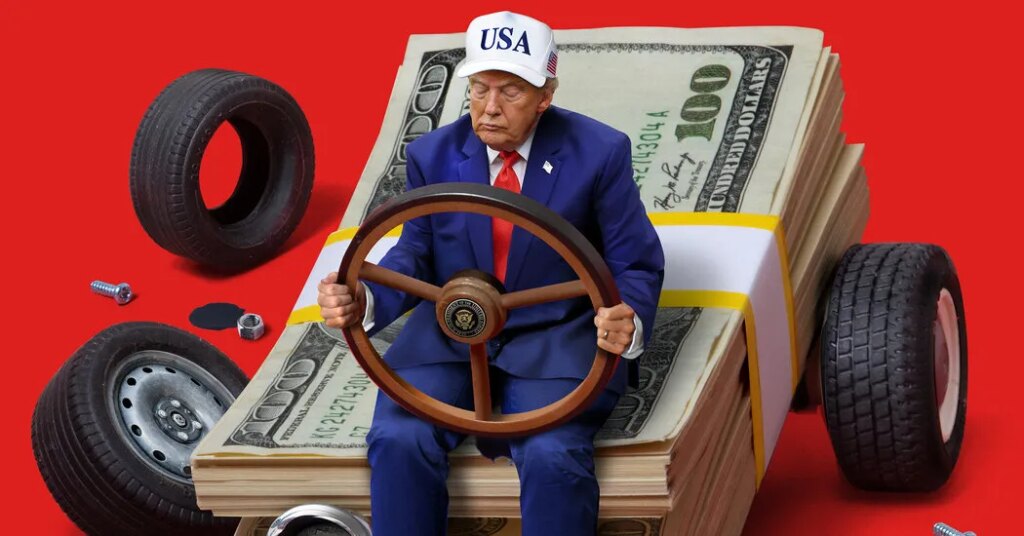
Of the many losers in this year’s midterm election, one stands out: President Trump’s populist economic platform. Many Republicans have always known that Trumponomics is a false promise. On Election Day, America showed that it agrees. The best course forward — for Republicans or any other politicians seeking a record of economic success — is a return to traditional limited-government values.
Trumponomics is a Frankenstein’s monster that mashes together progressive, conservative and origin-unknown economic and fiscal policies. The good elements are effective but few: pro-growth tax policy and a rollback of the regulatory overreach of past administrations. The bad list is lengthy: protectionist tariffs, government stakes in private industry, price-setting, payoffs to favored constituencies and the abdication of responsible fiscal stewardship.
Take tariffs. Imposing protectionist taxes on imports has had prominent supporters on the left, with generations of leaders from that side — John Dingell, Richard Gephardt, Bernie Sanders — who have built economic platforms including them. For the past quarter century or so, right-leaning populist commentators have pushed for aggressive use of tariffs, too. The idea of sweeping tariffs seems popular. The reality is not.
Mr. Trump began saddling the country with relatively limited new tariffs in his first term, and the Biden administration mostly continued them. On “Liberation Day” in 2025, Mr. Trump blitzed Americans with new tariffs on a scale and scope not seen for a century. Traditional conservatives understood what this really meant: large tax increases that hit low-income families hardest and damaged small businesses and entrepreneurs. The public response was also unsurprising: With costs going up, the tariffs became deeply unpopular.
Politically, this episode flipped the script. Democrats developed an anti-tariff fervor, spending nearly $60 million on ads attacking Republicans who supported the tariffs. The upshot? Tariffs are a political loser.
The administration can’t even argue that its tariffs have brought jobs and manufacturing back to America. Look at steel tariffs, initially imposed in Mr. Trump’s first term, retained by President Joe Biden and raised again by Mr. Trump in his second term. If Trump-style populist economics were right, the country should have had a surge in new steel mills and in employment in the industry. Yet after nearly a decade, the needle has barely moved on either. The nation has seen a large increase in steel prices, though, and that has driven up the costs of things such as housing and canned food.
Apparently still under the impression that government intervention can help the economy — or at least himself, politically — Mr. Trump has tried to appeal to key voter blocs with insalubrious handouts. The president has offered $5,000 checks, Medicare “rebates,” Obamacare “refunds,” diesel subsidies and aid to farmers to offset their losses stemming from tariffs. These failed to improve Republicans’ midterm chances — or enhance economic growth. The money would have been better spent if it had remained in the private economy rather than taxed and redistributed according to the president’s whim. Or the Treasury could have retained it and kept the deficit a little lower.
The lack of interest in fixing America’s increasingly dangerous budget situation is another irresponsible element of Trumponomics, which holds that huge, expensive entitlement programs such as Medicare and Social Security should remain untouched. The federal deficit in the 2026 fiscal year was about $2 trillion, or around 6 percent of gross domestic product. (By contrast, deficits averaged only 2.1 percent of G.D.P. from 1960 to 2000.) Publicly held federal debt now equals G.D.P. and is projected to rise uncontrollably in the future. Borrowing costs, faith in the government’s solvency and the security of the dollar are all on the line, and Mr. Trump has no plausible plan to deal with the problem.
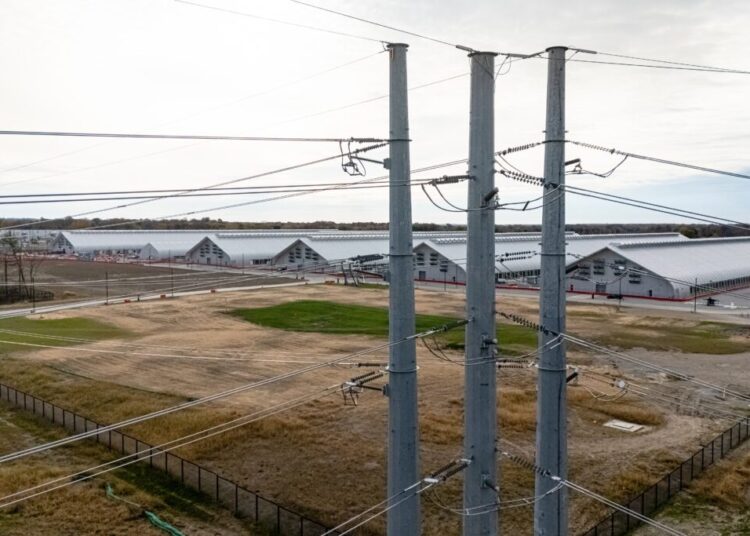
The artificial intelligence infrastructure boom — not a direct result of Trumponomics — has been a strong tailwind for the economy, masking some of the detrimental consequences of the president’s economic policy and of the Iran war misadventure. But it has also strengthened the inflationary effects of both and put affordability front and center as an issue.
The combination of government intrusiveness and budgetary waste is anathema to traditional conservatives, who see it as another marriage of right-populist economics with the creed of the progressive left. Unfortunately, Social Security’s Old-Age and Survivors Insurance Trust Fund is projected to be exhausted in 2032, which means the public will surely demand reforms to avoid big cuts to retirees’ benefits. This moment is coming soon, and politicians who have real answers should have an edge.
To be fair, the president’s agenda is not all bad. The Trump administration’s efforts to control the regulatory state have worked. It permits federal agencies a limited budget of regulatory costs that they may impose on businesses, and it enforces this restraint. In the past, Republicans spoke about the need to control red tape but often failed to act. Mr. Trump demanded action and got it. Future administrations should copy this regulatory budget policy, limiting the economically costly overgrowth of the state.
Similarly, the 2017 Tax Cut and Jobs Act delivered long-overdue business tax reforms, cutting taxes on corporations to a rate that enables us to compete internationally, rewards retention of intellectual property in the United States and promotes business research, development and investment. The G.O.P.’s 2025 reconciliation law fine-tuned business taxation and made the investment incentives permanent, so businesses now have the certainty they need.
There is a pattern here: Trumponomics worked when it removed government from economic decisions; when it put government rather than individuals and businesses in charge, it failed. The most damaging notion in populist thinking is that government is the source of material prosperity — that the state knows better than business about what investments are valuable or than families about how to achieve work-life balance.
A return to a traditional platform of contained, efficient government with a well-targeted social safety net and a responsible budget will best serve the country’s economic needs. Now that Americans can see that populist economics have failed, leaders who embrace this platform might win some elections, too.
Douglas Holtz-Eakin is the president of the American Action Forum and a former director of the Congressional Budget Office. He was the chief economic adviser to John McCain’s 2008 presidential campaign.
The Times is committed to publishing a diversity of letters to the editor. We’d like to hear what you think about this or any of our articles. Here are some tips. And here’s our email: [email protected].
Follow the New York Times Opinion section on Facebook, Instagram, TikTok, Bluesky, WhatsApp and Threads.
The post The Tariffs Were a Mistake appeared first on New York Times.