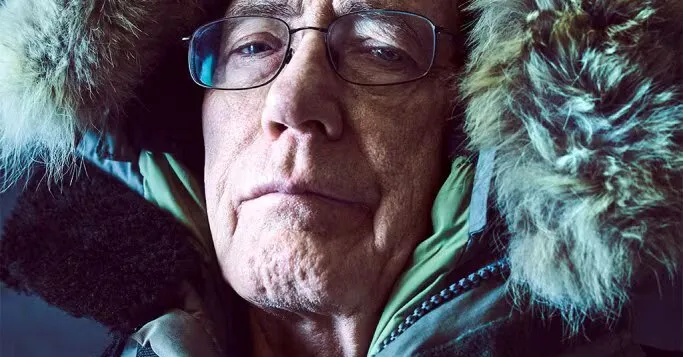
Lonnie Thompson, a climate scientist who over five decades ventured more than 60 times into the planet’s most daunting highlands to collect and preserve samples of the melting mountain ice, becoming one of the first researchers to document the effects of global warming in real time, died on Monday at his home in Columbus, Ohio. He was 78.
Ohio State University, where Dr. Thompson was a professor in the school of earth sciences, announced the death but did not provide a specific cause.
With his wife and fellow glaciologist, Ellen Mosley-Thompson, Dr. Thompson was an early leader in the study of tropical glaciers, which sit on high peaks in the world’s warmest regions.
Early in his career, most researchers believed those glaciers were of little scientific interest. In Greenland and Antarctica, the ice was hundreds of thousands of years old. By analyzing the dust, volcanic ash and air bubbles trapped inside, as well as the chemical properties of the water itself, scientists could decipher ancient swings in temperature, precipitation and atmospheric makeup.
The tropics, by contrast, were thought to be unwaveringly humid and rainy. And besides, tropical ice had presumably melted too much for it to be very old.
Dr. Thompson’s work upended those ideas. Over the course of at least 66 expeditions, he and his colleagues hauled heavy equipment up mountains in South America, Africa, Asia and beyond. They camped on the ice for weeks at a time, drilling into the glaciers and pulling out cylindrical cores that could total hundreds of feet in length.
Studying these cores back in the lab, they uncovered variations in the tropical climate going back millenniums. By returning to the same peaks repeatedly, they noticed something else, too: These glaciers were shrinking, fast.
Dr. Thompson’s research was labor intensive and conducted in unpredictable environments. Local communities sometimes viewed his work with suspicion, even hostility. His response was to explain the science and why it mattered. He did this, in his unfailingly patient, friendly manner, with tribal communities in Indonesia, truckers in China, government officials in Tanzania and presidents in Peru.
To reach endangered ice caps, he and his teammates dodged avalanches, negotiated crevasses, fended off bandits and rode horses up steep slopes through whiteout conditions. They moved gear on yaks where trucks couldn’t tread.
“Mountaineers trying to summit a challenging peak would meet Lonnie coming down with an ice core,” said Richard Alley, a professor of geosciences at Pennsylvania State University.
To his fellow climate scientists, the parallels to Indiana Jones were irresistible. The genial, bespectacled Dr. Thompson found the comparison “amusing,” said Mary Davis, an Ohio State geologist who worked with him for 43 years.
“I’ve never sought extreme adventure,” Dr. Thompson told the journal Science in 2002. “It scares me. I only want the data.”
Dr. Thompson’s observations helped establish shriveling mountain glaciers as an unmistakable consequence of human-caused warming. He testified on climate change before a Senate committee and contributed to climate research that was presented to Pope Benedict XVI. Yet he was discouraged in recent years by what he saw as scant progress toward halting warming.
“We have done very little to stop this process, or even slow it down,” he said in an interview in July with The New York Times. “Unfortunately, I think we’ve come to the point where we’re going to have to start paying the bill for not having done it.”
Lonnie Gene Thompson was born in Huntington, W.Va., on July 1, 1948, and grew up in Gassaway, W.Va. His father, Roscoe Thompson, worked odd jobs and died when Dr. Thompson was in 12th grade. His mother, Frances (Riffle) Thompson, never remarried and worked various jobs, including as a seamstress, to support her children.
They were so poor that they sometimes had to forage for food in the woods, according to “Thin Ice” (2005), a book about Dr. Thompson by the writer and physicist Mark Bowen. “You go without eating; pretty soon you decide, ‘I don’t want to be here,’” Dr. Thompson told Dr. Bowen.
As a boy, Dr. Thompson’s fascination with meteorology helped him earn lunch money. He built his own weather station and offered forecasts to his schoolmates, many of whom came from farm families. He was paid only if his forecast proved correct.
He studied geology at Marshall University in Huntington, where he met Dr. Mosley, who at the time was the university’s sole female physics student. They graduated in 1970 and married the next year.
Dr. Thompson received a master’s degree (1973) and a doctorate (1976) from Ohio State, then worked there as a research scientist and professor for the rest of his career. In addition to his wife, a professor in the university’s geography department, he is survived by a daughter, Regina Thompson; and a brother, Roscoe Thompson II.
As a graduate student in the early 1970s, Dr. Thompson and his mentors thought studying mountain glaciers might connect some dots between what scientists were discovering about past climates from Arctic and Antarctic ice.
They became intrigued after stumbling across an aerial photograph of the Quelccaya ice cap in the Peruvian Andes — the largest ice cap in the tropics and 18,600 feet above sea level — and proceeded to make scientific breakthroughs.
No one was ever documented to have set foot there, let alone examined the ice. Parts of South America were so poorly mapped at the time that it wasn’t even clear how they would travel there.
That fed Dr. Thompson’s curiosity. “My philosophy is if you want to find something new, go where no one has ever been,” he told Dr. Bowen.
After several failed attempts, Dr. Thompson and his colleagues extracted the first deep ice cores from Quelccaya in 1983. The 1,500-year climate record that he and Dr. Mosley-Thompson decoded from those cores established their reputations.
“Quelccaya didn’t exist as a research site before Lonnie,” Gustavo Valdivia, an anthropologist who worked with him in Peru, said in an interview. “It became the most important scientific site in the Andes.”
Later, Dr. Thompson worked on Mount Kilimanjaro in Tanzania, where he and his colleagues found that the ice cap had withered by 80 percent in the 20th century. In western China, he helped discover 15,000-year-old viruses in the ice, most of them previously unknown to science. And in Indonesia, he helped collect the first and potentially last cores of the sole remaining glaciers in the tropical western Pacific.
His relentless productivity ran up against persistent health issues, and he received a heart transplant in 2012. Even in his final years, he was still leading trips into the field and publishing new research. He was preparing to visit Quelccaya again soon, to assess how badly this year’s strong El Niño conditions had ravaged the glaciers.
Part of his legacy is the vast archive of ice that he and Dr. Mosley-Thompson managed at Ohio State. More than 7,000 cores from nine countries are stored in enormous freezers there. If you laid all the cores out end to end, they would stretch 4.5 miles.
Dr. Thompson once said that ice-core research wasn’t only about discovering something new right away, said Donaldi Permana, a climate scientist at the Indonesian Agency for Meteorology, Climatology and Geophysics.
It was also about preserving ice that might soon be lost forever, Dr. Permana said. It was about giving future generations, with their improved technologies and methods for analyzing the ice, a chance to understand and care for this planet better than their forebears ever could.
The post Lonnie Thompson Has Died. He Dodged Avalanches to Preserve Climate History. appeared first on New York Times.