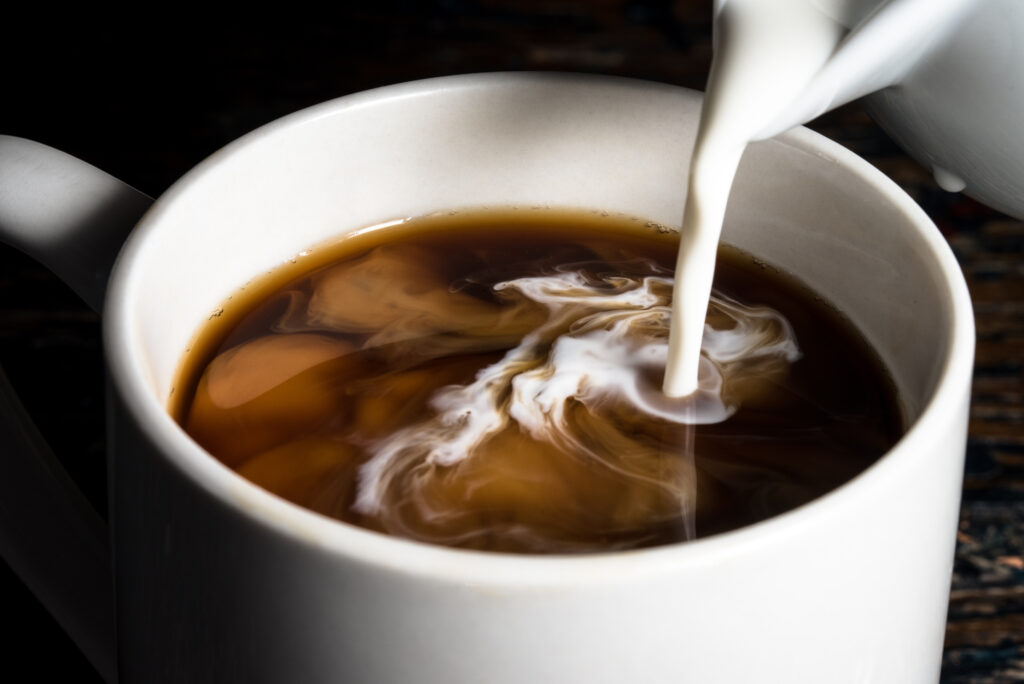
Coffee is one of the healthiest beverages you can drink.
But a new study suggests that many Americans may be negating coffee’s health benefits because of what they’re adding to it. The new research, published in the Journal of the Academy of Nutrition and Dietetics, found that Americans are consuming a growing number of calories from coffee, in large part because they’re increasingly adding sweeteners and nondairy creamers.
While both can add flavor and creaminess to your coffee, they can also add a lot of calories and potentially have unwanted metabolic effects. Many nondairy creamers contain added sugars and ultra-processed ingredients that have been linked to health problems.
If you drink coffee, you should absolutely enjoy it — but consider adding milk and skipping the sugar and nondairy creamers, said Fang Fang Zhang, an author of the study and chair of the division of nutrition epidemiology and data science at the Friedman School of Nutrition Science and Policy at Tufts University.
“Nondairy creamers contain a lot of saturated fat and calories,” she said. “If you consume them every day in your coffee, it adds up over time, and that could cumulatively become a health concern.”
What are nondairy creamers? How do they affect your health?
Nondairy creamers are liquids and powders that are designed to look and taste like milk or cream when added to coffee.
They come in different flavors, such as French vanilla, hazelnut, caramel and pumpkin spice. Some of the most popular nondairy creamers contain more than a teaspoon of added sugar per serving. The American Heart Association recommends that women limit themselves to no more than six teaspoons of added sugar per day, and that men consume no more than nine teaspoons of added sugar daily.
Nondairy creamers also contain industrial oils, emulsifiers such as mono- and diglycerides, stabilizers such as dipotassium phosphate, and artificial flavors and sweeteners such as sucralose and acesulfame potassium.
“There’s been research showing that these additives impact our gut microbiome and could be potentially harmful to our health,” Zhang said.
Studies have linked artificial sweeteners and other additives in ultra-processed foods to a higher risk of developing heart disease, Type 2 diabetes and other health problems. Although most of the research shows only correlations, not necessarily causation, experts say it is best to limit your consumption of ultra-processed foods.
What you add to your coffee may reduce its health benefits
About two-thirds of U.S. adults drink coffee every day, making it the most commonly consumed beverage behind only water. While most people drink coffee to get a buzz and a boost in their energy levels, hundreds of studies have shown that coffee consumption is associated with numerous health benefits.
One large meta-analysis that reviewed decades of research found that, on average, people who consume several cups of coffee daily are nearly 20 percent less likely to die early compared with people who rarely or never drink coffee. Other studies have found that drinking coffee is associated with a lower risk of developing Type 2 diabetes, chronic liver disease, cardiovascular disease and even Parkinson’s disease.
These studies have found that most of the health benefits associated with drinking coffee extend to various types, such as espresso, instant coffee, and both caffeinated and decaffeinated coffee. Scientists say this is because coffee contains thousands of plant compounds, many of which have anti-inflammatory and antioxidant properties.
But what you add to your coffee appears to make a difference. In previous research, Zhang and her colleagues found that while coffee consumption is linked to a lower likelihood of dying early, the benefits diminish when coffee is consumed with sweeteners or rich sources of saturated fat, such as creamers and half and half.
“We found that when you add excessive amounts of sugar and saturated fat to your coffee, the health benefits vanish or decrease,” said Yongyi Pan, an author of that study and a PhD candidate at the Friedman School.
500 calories a day from coffee
For the latest study, Zhang and her colleagues wanted to get a sense of what Americans are adding to their coffee and whether their coffee habits have changed over time.
So, they analyzed data on roughly 30,500 U.S. adults who were tracked from 2003 to 2018 as part of a long-term health and nutrition survey. The participants routinely answered questions about their dietary habits, underwent physical exams, and provided blood and urine samples. The researchers said that 2018 was the most recent year for which they had data because the survey was suspended during the pandemic.
The researchers found that the amount of coffee Americans consumed stayed fairly steady, at an average of about 1½ eight-ounce cups per day. But the amount of calories they got from their daily cups of coffee rose by almost 40 percent, from 43 to 60 calories per day.
The researchers found that by 2018, nondairy creamer made up the largest percentage of calories in a typical day’s coffee intake (with an average 19 calories per day), followed by sugar (an average 16 calories per day) and then cow’s milk (an average 11 calories per day).
Recent sales figures suggest the appetite for nondairy creamers hasn’t waned: Global sales of nondairy creamer products reached an estimated $2 billion in 2025, and the market is growing rapidly.
While the calorie amounts might not sound like a lot, they can add up over time — especially when consumed day after day, multiple times a day. And the researchers pointed out that the numbers are just an average: Many Americans are consuming far more calories from each cup of coffee they drink.
“We found some very excessive amounts,” Pan said. “We found people who were getting as much as 500 calories a day from their coffee.”
Try this instead of nondairy creamer
The study highlights that coffee creamers can be a sneaky source of calories that quickly add up, said Bethany M. Doerfler, a clinical research dietitian at the Northwestern Medicine Digestive Health Center who was not involved in the study. “You can really accumulate a lot of calories throughout the course of the day depending on what you’re adding to your coffee,” she said.
Doerfler said she tells her patients that coffee is a healthy beverage they should enjoy. If you can’t drink it black, she said, then the best way to drink it is with cow’s milk or soy milk.
One of the downsides of nondairy creamers is what they’re missing. Unlike cow’s milk and plant-based milks, nondairy creamers are typically low in protein and are not fortified with vitamin D and other vitamins and minerals.
“Soy milk is my preferred nondairy substitute because it’s rich in protein, it’s fortified nicely, and if you get the unsweetened variety, it’s naturally creamy and doesn’t have added oils,” she said.
If you’re used to adding sugar or nondairy creamers to your coffee, consider cutting them from your diet, Doerfler said. Because so many foods contain sugar and sweeteners, our palates have been conditioned to like and expect sweet flavors. But you can train your palate to prefer less sugary foods, Doerfler said.
“Your first couple days of having a less sweet coffee are going to feel a little difficult,” she added. “But after a couple of weeks, you’re definitely going to get used to that new flavor.”
Do you have a question about healthy eating? Email [email protected] and we may answer your question in a future column.
The post Nondairy creamer is more popular than ever. But is it healthy? appeared first on Washington Post.