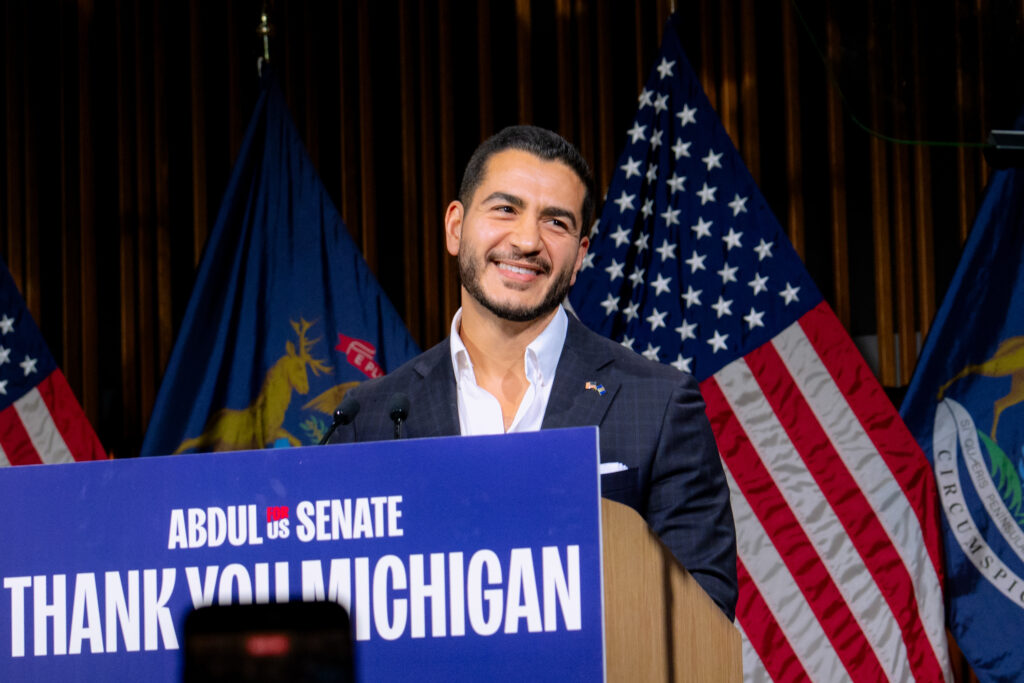
Democrat Abdul El-Sayed had a message for Vice President JD Vance during his speech Wednesday following his Michigan Senate win.
“JD, habibi, there is this delicious irony in the fact that you’re constitutionally obligated to swear me in in January,” El-Sayed said to cheers.
His quip prompted a spike in Google searches for “habibi,” with many curious about what the term means.
Formed of the word “habib” (“beloved”) and the suffix “i” (meaning “my”), habibi is an Arabic term of endearment — often said to romantic partners, family and friends, but also used with strangers and acquaintances. It’s normally said as a sign of warmth, but can — as in this case — be used ironically.
During the campaign, President Donald Trump and top Republican allies targeted El-Sayed with Islamophobic attacks, while Vance called El-Sayed “a very, very evil” person.
In his speech this week, El-Sayed responded to attacks on his religion and identity, saying parents “who struggled to explain why the president openly mocked someone for their name or how they pray” could now tell their children “the bad guys lost.”
He also addressed Trump: “I know you struggle with my name … you could just go on and call me Senator.”
‘JD, habibi, swear me in.’ Abdul El-Sayed became the first Muslim elected to the Senate after a hostile campaign in which his religion was frequently highlighted by critics. Live blog: https://t.co/6D0lVz2gvQ pic.twitter.com/aAzzPOBkax
— Sky News (@SkyNews) November 4, 2026
The post ‘JD, habibi … swear me in’: What El-Sayed’s quip to Vance means appeared first on Washington Post.