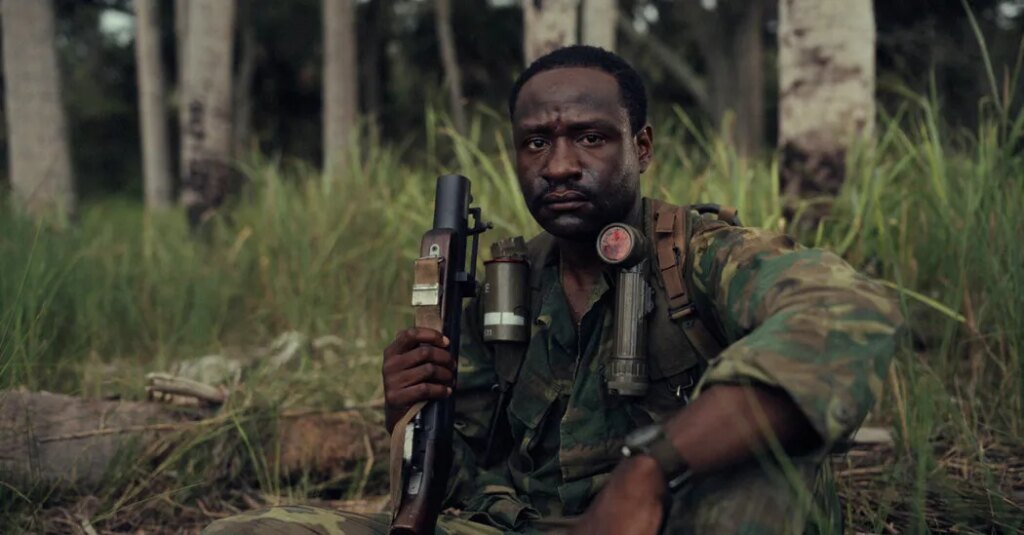
In the beginning of J.M. Harper’s Vietnam War documentary, “Soul Patrol,” a veteran turns the corner of a grocery store aisle and locks eyes with a somber soldier in jungle fatigues — a younger version of himself. The moment is eerie and melancholic, encapsulating the veteran’s ambivalent relationship to a past that continues to grip him, and whose story this elegiac documentary conveys with striking honesty and rich contextualization.
Ed Emanuel, the heavy-eyed veteran, is one of the members of the first all-Black elite reconnaissance units and the author of a 2003 memoir detailing his team’s experiences in Vietnam in the summer of 1968. Archival imagery of the unrest back home, when antiwar protests dovetailed with the Civil Rights movement, captures the emotional dissonance of Black soldiers at the time, fighting for a country that continued to deny them their rights.
Super 8 footage shot by Willie Brown, another member of the squad called the “soul patrol,” shows the young men in a hauntingly childish light. They goof around, play cards, and strike karate poses in these real-life scenes, which makes the hushed, brooding dramatization of a traumatic episode in their tour of duty sting with particular cruelty.
All of this plays like a vivid flashback from Emanuel’s point-of-view. In the present timeline, we follow him as he leads a hotel reunion of his squad and their spouses sharing their feelings and memories in lip-quivering close-ups that alternate between color and silvery monochrome. It’s these beautifully weathered faces, etched by a painful shared legacy, that will linger in the mind past the credits.
Soul Patrol Not rated. Running time: 1 hour 40 minutes. In theaters.
The post ‘Soul Patrol’ Review: A Veteran’s Past Continues to Haunt Him appeared first on New York Times.