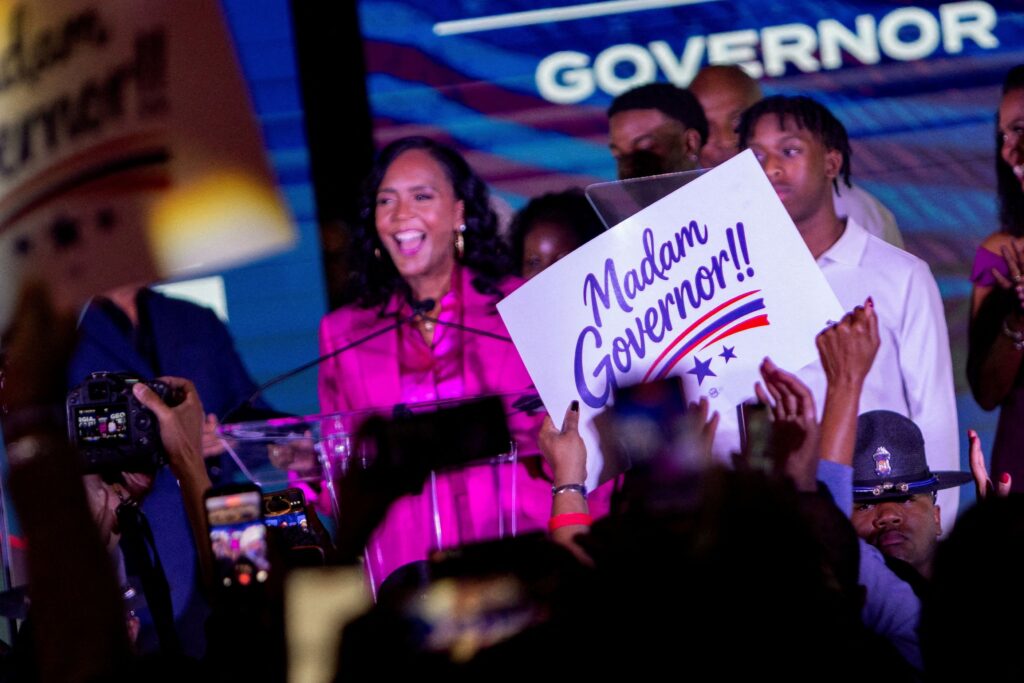
The Democratic Party was listless after sweeping losses in 2024, undone after four years of leadership that failed to effectively address Americans’ economic concerns. But two years later, elected Democrats and party operatives woke up Wednesday with something the party hasn’t had in years: hope.
But with power comes responsibility, and those same Democrats face a new unifying question: Now what? Conversations with more than a dozen top Democrats, including multiple openly considering running for president in 2028, showcase a euphoric party that is slightly divided on the way forward.
“It’s about being common sense and results-oriented,” Pennsylvania Gov. Josh Shapiro told The Washington Post ahead of sweeping wins across his state including Democrats ousting four House Republicans. “And it’s not about a political ideology. It’s about that get-shit-done mentality that I have.”
Rep. Ro Khanna, a progressive California Democrat openly discussing a possible 2028 run, said the party “needs a brawl in 2028″ when asked about Shapiro’s comment.
“We need an open clash of ideas, and let’s expose the hollowness of a lot of the incrementalism and corporatism that has gotten us to Trump two terms,” Khanna said, seemingly accusing Shapiro of practicing that kind of politics. He said he won’t announce any decision on a presidential run until after the holidays.
Democrats across the political spectrum were prepared to fight over the party’s future after Tuesday’s results. With nearly every Democrat in high-profile races winning, progressive and centrist alike, few could argue that solely their side powered the party to victory.
But the results also set the terms of the 2028 presidential election. And the future of the party will be on the line as Democrats decide who to elevate to standard-bearer after arguably the party’s best election since the 1970s.
Democrats ran in 2026 with a total focus on prices, two years after voters roundly told them they failed to deliver on their promises to improve the economy. Each candidate this year put their own spin on the issue. Some linked perceived corruption in Washington to rising costs; others focused intently on gas prices plastered on American street corners as in-kind donations to the party.
Sen. Mark Kelly, an Arizona Democrat who traveled the country stumping for Democrats, said that the election showed people outside Washington, D.C. know what works politically in the nation’s premier battlegrounds.
Kelly, who is considering a presidential run, said those stances include support for a strong border and “reasonable immigration enforcement.” He said some in his party had been distracted in the past by issues that don’t “matter to people.”
“If you can’t feed your kids, you don’t care about a lot of other things,” Kelly said.
But progressives saw the results as evidence the party shouldn’t be afraid to stand up to the rich and big industries. New York Mayor Zohran Mamdani urged progressives to put their “foot on the gas” after the election, adding he “cannot wait to see what we do with this opportunity because it is one we now must deliver on.”
Democrats raised four times what Republicans did from grassroots donors in 2026, but the wealthiest Americans overwhelmingly backed Republicans, with Elon Musk alone pouring more than $400 million into Republican causes this year.
To Rep. Greg Casar (D-Texas), chair of the Congressional Progressive Caucus, the results proved that “being friends with billionaires is no longer the advantage that it once was.”
“That old way of thinking has totally fallen apart,” he said. “The Democrat who will be successful in leading our party in 2028 is going to be the Democrat who can speak to the working class and cement our party as the pro-worker, anti-billionaire party.”
One thing many Democrats agreed on as the sun rose on Wednesday was that the election results dispel assumptions that Democrats can’t win in large swaths of the nation because they are perceived as ungettable or too conservative.
Latino, non-college-educated White and rural voters — three voting blocs that President Donald Trump performed well with two years ago — all shifted toward Democrats, according to exit polls, as did essentially every other voting group. The party also made inroads in every geographic area, chipping away at Trump’s success with rural and suburban voters and deepening Democrats’ hold on urban corridors.
“It was an astounding rebuke of an American president and his enablers in Congress,” said Sen. Cory Booker, a New Jersey Democrat who won reelection and is openly considering a 2028 run.
Booker was particularly dumbfounded by Trump’s focus on his effort to remake Washington from the Reflecting Pool on the National Mall to the new White House ballroom. “It was like watching Marie Antoinette,” Booker said. “And what we experienced was the revolution that finally went to hold her accountable.”
Exit polls also found that even 7 percent of voters who backed Trump in 2024 said they voted for Democrats this year.
“You invited in the disaffected independents, and you helped us create a whole bunch of what I like to call future-former-Republicans who were ready to join our coalition,” former presidential candidate Pete Buttigieg told Democrats in Michigan on Tuesday night. “We didn’t go out there and say ‘I told you so.’ We went out there and said, ‘join us, and we will make things better.’”
For Joe Maxwell, Missouri’s Democratic former lieutenant governor, the midterm results offered a watershed lesson for the party he left years ago to become an independent, believing Democrats simply forgot to ask rural voters for their support. Maxwell watched as Democrats won Senate races in predominantly rural Maine, Kansas and Iowa, and made major inroads by winning rural House seats.
“What I would suggest for presidential candidates is not to read too much into this,” he said. “It’s not that people became Democrats,” he added, instead urging Democrats to “make sure that people will trust them” by delivering.
It’s a mistake Democrats have made before. Democratic operatives conceded that the party took far too much confidence out of the 2022 midterm election that saw Republicans make only marginal gains, with Trump and Republicans winning unified control of Washington just two years later.
“We are being given an opportunity,” said Rep. Jason Crow (D-Colorado), who said he has already spoken to Democrats considering presidential runs. “The message should not be that people are completely happy with the Democratic Party, that they think we’re crushing it, and we’re back. … They are open to giving Democrats a chance.”
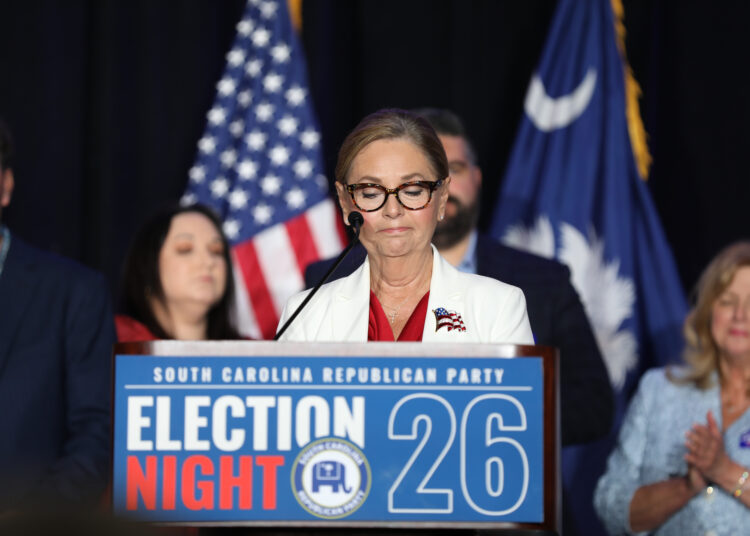
For Republicans, the election raised existential questions about its future. Florida Gov. Ron DeSantis labeled it an “extinction-level event for Republicans.” And Vice President JD Vance, himself a possible 2028 candidate, quickly distanced himself from the president by blaming the Iran war Trump started for the repudiation (though Trump later agreed with him).
Democrats chuckled, privately and publicly, at Vance’s maneuvers in this new political environment, viewing his comment as the earliest sign of Republican worries about 2028.
“This is really rich coming from JD Vance, who’s been complicit in the Trump administration’s policies that go in the opposite direction from everything he just said,” said Sen. Chris Van Hollen (D-Maryland), who is considering a presidential run, and argued that Democrats need to “use our power to end the war.”
Whether a scorned-by-voters Trump will be willing to deal with legislation that Democrats send to the White House is another story. Trump said ahead of the election that he would be “Mr. Veto” in the final two years of his presidency, but some Democrats are skeptical that a man known for wanting to strike deals will be willing to make none at the end of his eight years in the White House.
“You never know with him,” Kelly said. “He is often unpredictable. What does he want the last two years of his presidency to be like?”
Khanna and others said ending the war in Iran should be the first priority, given the role it played in driving up costs. Kelly and others have pitched a cost-of-living emergency bill to force the administration to address the issues. Progressives are also eager to push more sweeping legislation on issues such as health care and immigration.
One complicating factor could be how Democrats balance a desire to curb Trump’s corruption through impeachment with voters’ clear demand for economic relief.
To Democrats who won in battleground districts, like Sam Forstag, the young Montana smoke jumper and union leader who won in a Republican-leaning district in Western Montana, Congress should prioritize affordability over investigations.
“Improving people’s lives needs to come first,” Forstag said in an interview.
And Evan Ross Smith, a longtime Democratic campaign consultant and pollster, warned that voters are simply “punishing parties and politicians who can’t seem to move the needle on prices and cost of living,” and doing anything that distracts from that, like impeaching Trump, could be “counterproductive.”
“Voters delivered their verdict on Trump and the Trump administration last night,” Smith said. “They did not elect Democrats to do the sentencing. They elected Democrats to do something different.”
Erin Cox, Annie Gowen and Alexei Koseff contributed to this report.
The post What the midterms taught us about the future of the Democratic Party appeared first on Washington Post.