This is an edition of The Atlantic Daily, a newsletter that guides you through the biggest stories of the day, helps you discover new ideas, and recommends the best in culture. Sign up for it here.
Democrats were jubilant last night, and for good reason: Few midterms in modern American history have produced such a thorough repudiation of a party as the Republicans experienced in this election. But celebrations have a pesky way of being followed by hangovers. For Democrats, the cause of their morning-after headache is affordability.
Across the country, Democratic candidates campaigned and won by railing against Donald Trump’s handling of the economy. When they take control of Congress in January, however, they’ll find themselves with few direct levers to bring down prices. We don’t need to guess what happens to politicians who campaign on affordability and don’t deliver. We saw it last night.
Democrats can hardly be blamed for placing affordability concerns at the center of their campaign, alongside discussion of rampant corruption. This was good electoral politics—you want to run against your opponents’ weakness—and also good republican politics: It’s healthy for candidates to respond to voters’ concerns. The price of orange juice is up nearly 25 percent since Trump returned to office. The price of the candy that trick-or-treaters received on Halloween has risen 71 percent in five years. The average national price of a gallon of gas was more than $4 on Election Day for the first time in history.
These price increases are a drag on many Americans’ budgets. Real wages—the difference between nominal wage growth and inflation—have declined over the past year, according to Bureau of Labor Statistics numbers released this week. For the Democrats, this has been a perverse political godsend. Long the undisputed party of workers, the Democratic Party has recently developed a reputation among voters for caring more about elites and cultural issues than basic economics.
Trump demonstrated the power of focusing on inflation in 2024, when he assailed President Biden and Vice President Harris over rising prices. Trump never demonstrated any sort of plan for how he’d bring prices down, but his emphasis on the matter—along with Democrats’ muddled messaging about it—helped him overcome voters’ deep hesitations about his character.
Since taking office, though, his lack of any vision for whipping inflation has been obvious. He has not pursued policies to fight high costs. He has demanded, in vain, that the Federal Reserve lower interest rates, which would be inflationary. He has mocked and dismissed the concept of affordability as a “hoax.” And although presidents typically have very limited short-term power to affect an economy, he found a way to make inflation worse by launching an ill-advised war in Iran, which he now has no idea how to end. This made Republicans very vulnerable in the midterms.
But even with impressive wins in both the Senate and the House, Democrats will have few ways to bring prices down. On corruption, by some measures the top issue in the election, Democrats have room to hold Trump and his administration accountable using investigative powers. But on affordability, rhetoric and doomed bills designed to send a message are almost all they can offer.
If reliable methods of bringing prices down in the short term existed, Republicans in Congress would have tried them this year. With unified Democratic control, Congress will be able to pass legislation, but Trump has already vowed to become “Mr. Veto.” Democrats can and will attempt to pressure Trump to end the conflict with Iran, but as the United States has seen repeatedly this century, starting a war is a lot easier than getting out of one.
“People are impatient. They want answers now. They’re economically insecure,” Gina Raimondo told me in an interview last week. Raimondo, the commerce secretary under Biden, is often mentioned as a potential 2028 Democratic presidential candidate. “If we’re sitting here in a year and a half and we haven’t done a damn thing about cost and prices, people might say, Well, forget about you; I’m going to try the other guy.”
Any parallel with voter rejection of Trump is imperfect. A president tends to shoulder more blame from voters than Congress does, a dynamic that is likely to be exacerbated with Trump, who is compelled to dominate attention, although it is sometimes to his disadvantage. But even if voters don’t blame Democrats specifically, they may still feel disillusioned with all politicians’ inability to bring quick change. That points to another risk for Democrats in 2028: not that people who voted blue in the midterms will turn against them, but that they will tune out entirely, just as the many disaffected Trump voters who opted not to vote in 2026, rather than flipping to Democrats, did.
The fact that party leaders are aware of these challenges doesn’t give them any easier answers to the affordability conundrum. Democrats had no choice but to campaign on high costs, but they may still pay a price for it.
Related:
- The simple message that produced a Democratic landslide
- America’s latest inflation check-in doesn’t look good for Trump.
Here are four new stories from The Atlantic:
- A new kind of blue wave
- Helen Lewis: A night of pure Trumpenfreude
- How Texas turned blue
- Tom Nichols: Donald Trump wanted to be Viktor Orbán.
Today’s News
- Democrats won control of the Senate and are on track to secure their largest House majority since 2008 after flipping many Republican-held seats across the country in yesterday’s midterm elections.
- Vice President Vance blamed Republicans’ losses in the midterm elections on the U.S. war with Iran, saying that voter frustration over the conflict had cost his party control of the Senate. Vance also cited inflation, the cost of living, and U.S. relations with Israel as concerns among voters, while President Trump acknowledged that the war had contributed to the losses.
- House Speaker Mike Johnson said he will not seek another term as Republican leader, according to a top aide.
Evening Read
The Socializing That’s Replacing Friend Time
By Faith Hill
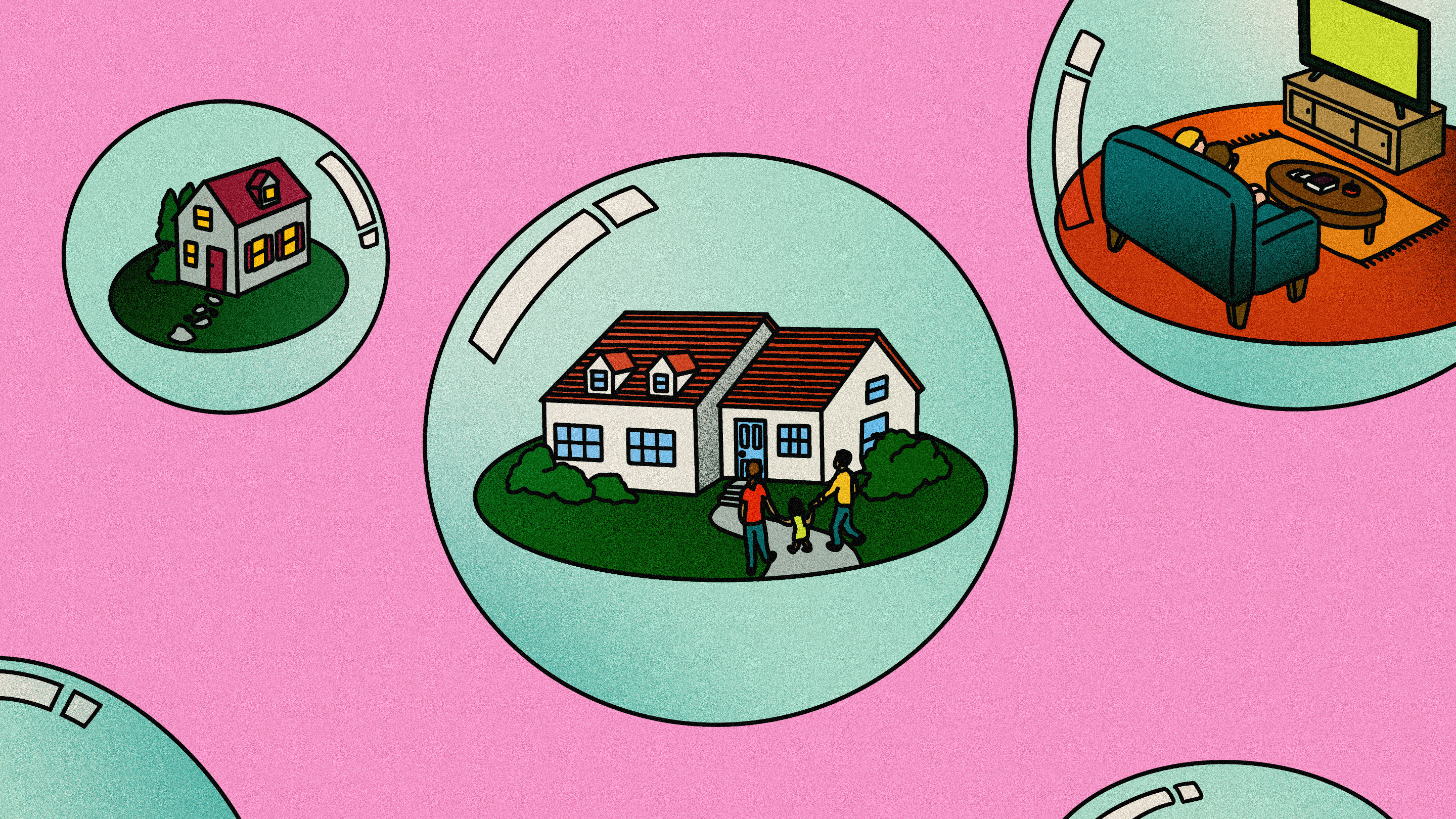
What is your favorite way to spend an evening? Perhaps, hearing this question, you’d picture a big, steaming plate of spaghetti from a beloved neighborhood restaurant. Maybe you’d imagine going dancing with friends, shimmying off the stress of a long week. Or you’d belt along with a crowd of perfect strangers at a concert, play Frisbee in the park, or stroll aimlessly with a cone of sprinkled soft serve.
Yet last year, when more than 2,000 survey participants answered this open-ended query, many of them described a very different kind of scene: a night at home, cozied up with family. When researchers analyzed the long answers, they found that 43 percent of respondents mentioned time with family or a romantic partner—the most common activity, tied with watching a TV show. For Jeffrey A. Hall, a University of Kansas communication professor and a co-leader of the project, this was heartening. He knew, of course, that the average American is staying in more now compared with past decades, and hanging with friends less. But he was reminded: Time at home is not necessarily time alone.
More From The Atlantic
- Charlie Warzel: $500 million bought Elon nothing.
- Alexandra Petri: America is over!
- Susan Collins didn’t have a chance.
- Texas Republicans get washed.
- The biggest victory of the night
- The unlikeliest Democratic win of all
Culture Break
Read. Some books have twists and turns that compel readers to keep coming back, Kristen Martin writes. She listed six titles that need to be read twice.
Watch. In 2020, David Sims recommended 25 feel-good films you’ll want to watch again and again.
Rafaela Jinich contributed to this newsletter.
When you buy a book using a link in this newsletter, we receive a commission. Thank you for supporting The Atlantic.
The post The Democrats’ Affordability Trap appeared first on The Atlantic.